The Banff Need to Reside Rule, Explained
The Banff need to reside rule: anyone may own a federal leasehold there, but only eligible residents may live in it, so it cannot be a second home.
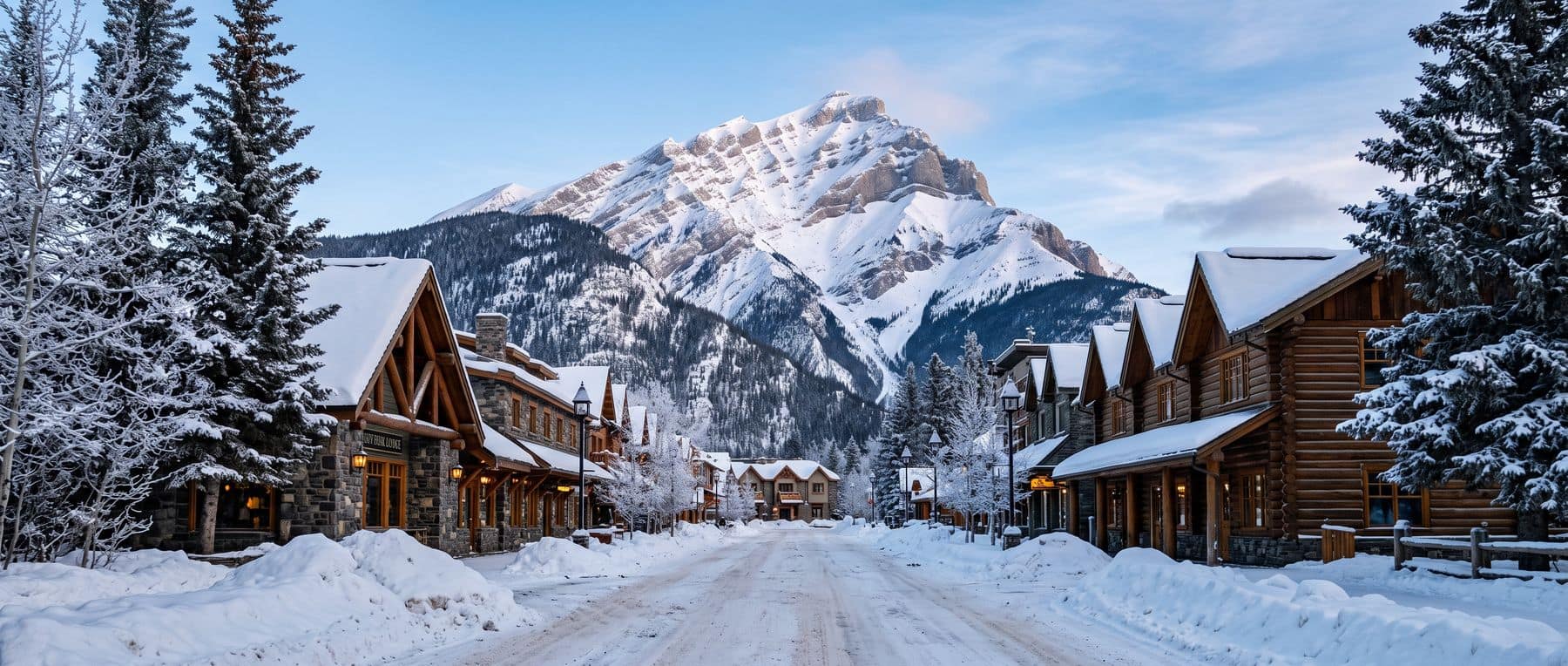
- Parks Canada is blunt about it: you cannot buy land in Banff National Park, only lease it.
- Ownership does not create eligibility. Buying a Banff lease does not entitle you to live there.
- Remote work does not qualify. If your job or business is based outside the park, you are not an eligible resident.
- Leasehold homes in Banff cannot be used as secondary or vacation homes, and eligibility is checked by sworn declaration at every sale and mortgage.
- Canmore is 20 minutes east, outside the park, with freehold title and no residency rule, which is why Banff demand lands there.
Most people searching Banff real estate are looking for something they cannot have. Land inside Banff National Park is not sold, it is leased from Parks Canada, and a home in the townsite may only be occupied by an eligible resident. That is the Banff need to reside rule. It is federal, it is enforced by sworn declaration at every sale, and it explicitly rules out vacation and second homes. Understanding it explains both Banff's tiny market and why Canmore, 20 minutes east and outside the park, absorbs the demand.
What the Banff need to reside rule means for buyers
It comes from the National Parks of Canada Lease and Licence of Occupation Regulations. Residential leases in park towns include a term providing that if the leased land "are at any time occupied by any person who is not an eligible resident, the Minister may terminate the lease." Parks Canada administers eligibility, so it is the federal department, not the Town, that decides whether you need to reside. The Town of Banff verifies it for municipal programs but does not decide it.
Parks Canada's own summary is the clearest statement of the position: "You cannot buy land in Banff National Park. Land is leased from Parks Canada." And on use: "Leasehold properties cannot be used as secondary homes or vacation homes." Those two lines set the outer edges of the Banff need to reside rule: you take on a lease and a building, and you may occupy it only as an eligible resident.
Who counts as an eligible resident of Banff?
The regulations set out the categories, and they are the gate every Banff transaction has to pass through. You need to fall into one of them, or live with someone who does. You are an eligible resident if you are:
- an individual whose primary employment is in the park;
- an individual who operates a business in the park and whose presence at the place of business is necessary for its day-to-day operation;
- a retired individual who resided in the park and, for five consecutive years immediately before retiring, was employed primarily in that park or operated a business there;
- a retired individual who resided in the park at retirement and resided there on July 30, 1981;
- a full-time student at an educational institution located within the park;
- a lessee of public lands in the park from before May 19, 1911, or a descendant of one; or
- the spouse, common-law partner or dependant of anyone in the categories above.
| Situation | Eligible? |
|---|---|
| Employed by a Banff hotel, school, hospital or Parks Canada | Yes |
| Owns and runs a Banff Avenue business, present daily | Yes |
| Full-time student at an institution in the park | Yes |
| Retired after five consecutive years of park employment | Yes |
| Remote employee of a Calgary or Toronto company, living in Banff | No |
| Runs an online business from a Banff home (home occupation) | No |
| Operates a bed-and-breakfast home | No |
| Holds a Banff business licence but works elsewhere | No |
| Bought a Banff lease and wants to use it on weekends | No |
The Town of Banff puts it plainly: ownership does not confer eligibility. Buying a leasehold home in Banff gives you no right to live in it. If nobody in the household meets one of the categories above, the lease can be terminated, and the purchase does nothing for you except tie up capital in an asset you cannot occupy. The same test governs buying a house in Banff as governs a leasehold apartment.
Do you own anything at all in Banff?
You own the building and the lease, not the land. Under the regulations the Minister may grant leases for any term not exceeding 42 years, with renewals not exceeding 21 years in aggregate and a hard ceiling of 49 years for the initial term plus all renewals. Selling means assigning the lease, which needs Parks Canada's consent, and the regulations restrict assignment of residential leases in eligible-resident areas.
Parks Canada's published service standards give a sense of the timelines: allow 10 business days for consent to an assignment or mortgage on a sale, 10 business days for a lease renewal, and up to six months for a lease replacement. Build those into any closing date. The same structure applies to apartments, see Banff condos for sale for how leasehold changes financing and pricing.
The broader constraint sits in the Canada National Parks Act, which makes the town of Banff a park community with fixed boundaries and permits disposition of park land only by lease or easement. Banff cannot expand outward, and its housing supply cannot grow the way a normal town's does.
How is the Banff need to reside rule enforced?
By statutory declaration, at the moments when it is hardest to avoid. Parks Canada confirms eligibility "during realty transactions, such as home purchases," using affidavits or solemn declarations. Lessees can be required to declare on demand following a complaint or investigation, and to complete declarations on behalf of their tenants. Making a false statutory declaration of eligible residency is a criminal offence. This is not a municipal fine.
What are the options if you are not eligible?
If you do work in the park, look at the Town of Banff's housing programs: Banff Housing Corporation runs price-restricted and equity-share home ownership with a Registered Resale List, plus rental buildings including Ti'nu, which opened in 2018. Wolf Street Housing is planned to add 75 affordable rental suites and 15 below-market homes for purchase.
If you do not work in the park, the honest answer is that the Banff need to reside rule closes the town to you, and Canmore is the market you are actually shopping in.
A local REALTOR® sees this weekly: buyers start out shopping Banff real estate, learn about eligible residency, and are looking at Canmore the same afternoon. It is not a consolation prize. Canmore is outside the park, title is freehold, there is no residency test, and the trail access is comparable. It is also why Canmore prices carry a permanent premium: the entire mountain-town demand for two towns lands in one of them. Canmore's median assessed single-family home passed $1 million for the first time on the 2024 roll, reaching $1.383M (Rocky Mountain Outlook, June 2024).
How Canmore compares
Side by side, Banff real estate and the Canmore market differ on almost every point a buyer cares about:
| Banff | Canmore | |
|---|---|---|
| Land tenure | Leasehold from the federal Crown, up to 42 years | Freehold, Alberta land titles |
| Who may occupy | Eligible residents only | Anyone |
| Second or vacation homes | Not permitted | Permitted |
| Nightly rentals | Governed by park and Town of Banff rules | Only in Tourist Home or Visitor Accommodation zoning, with a business licence |
| Growth | Fixed community boundary under the Canada National Parks Act | Constrained by terrain and wildlife corridors, but expanding at Three Sisters |
| Extra tax on non-primary homes | n/a, second homes not allowed | Livability Tax, about 0.377% of assessed value, for non-Albertan owners |
Two Canmore rules do apply once you get there. Nightly rental depends on zoning, not preference, see the tourist-home zoning guide. And if you live outside Alberta and the home will not be a primary residence, budget for the Livability Tax at roughly 0.377% of assessed value each year.
What this means if you're buying
The Banff need to reside rule decides this for you. If someone in your household works, runs a business or studies full-time in the park, Banff is worth pursuing: start with the lease terms, Parks Canada's consent timelines and the Banff Housing Corporation programs, and read our leasehold ownership in Banff guide. If nobody in the household needs to reside there for work or study, stop pricing Banff and start pricing Canmore: freehold title, no eligibility test, second homes permitted, twenty minutes from the park gate. Compare the two on lifestyle in how the two towns compare for living, then look at what is actually available among Canmore homes for sale and condos. The same rule is why Airbnb in Banff is effectively closed to investors.
A licensed Bow Valley REALTOR® can walk through your work situation, what a Banff lease would require, and what the same budget buys in the Canmore real estate market. Free, no obligation.
Frequently asked
What is Banff's need-to-reside rule?
It is the eligible residency requirement in the National Parks of Canada Lease and Licence of Occupation Regulations. A residential lease in the Banff townsite includes a term allowing the Minister to terminate it if the property is occupied by anyone who is not an eligible resident. Parks Canada administers it; the Town of Banff verifies eligibility for its own programs.
Who qualifies as an eligible resident of Banff?
Someone whose primary employment is in the park; someone operating a business in the park whose presence is necessary day to day; a retiree who worked or ran a business in the park for five consecutive years before retiring; a full-time student at an educational institution in the park; certain pre-1911 leaseholders and their descendants; and the spouse, common-law partner or dependant of any of those people.
Can I buy a vacation home or second home in Banff?
No. Parks Canada states that leasehold properties cannot be used as secondary homes or vacation homes, and the Town of Banff confirms the regulations prevent use as vacation or secondary residences. This is the rule that sends most second-home buyers to Canmore, where no residency requirement exists.
Does working remotely from Banff make me eligible?
No. Parks Canada is explicit: if your job or business is based outside Banff National Park, you are not an eligible resident. Home occupations and bed-and-breakfast homes do not satisfy eligible residency either, and holding a business licence does not by itself make you eligible.
Do you actually own property in Banff, or is it leasehold?
Leasehold. Land in the park is leased from the federal Crown, which is why Banff house prices buy a building and a lease. The regulations allow leases for terms of up to 42 years, with renewals capped so that the initial term plus all renewals does not exceed 49 years. Selling means assigning the lease, which requires Parks Canada's consent.
How is the rule enforced?
Through sworn statements. Eligibility is confirmed during realty transactions such as a purchase or mortgage using affidavits or solemn declarations, and lessees can be asked for statutory declarations on demand or on behalf of their tenants. Making a false statutory declaration of eligible residency is a criminal offence.
- Parks Canada: Eligible residency, Banff National Park
- National Parks of Canada Lease and Licence of Occupation Regulations (SOR/92-25)
- Parks Canada: Realty and municipal services, Banff National Park
- Town of Banff: Housing
- Canada National Parks Act
- Rocky Mountain Outlook: Canmore house sells for $7.5 million, highlights need for non-market housing
Keep reading

Tell us what you’re looking for and get a straight answer, usually the same day. Free, and no obligation.