Living in Canmore
What living in Canmore is really like: cost of living, housing, work, healthcare, schools, winter, the Calgary commute and the honest pros and cons, written for people deciding whether to move here.
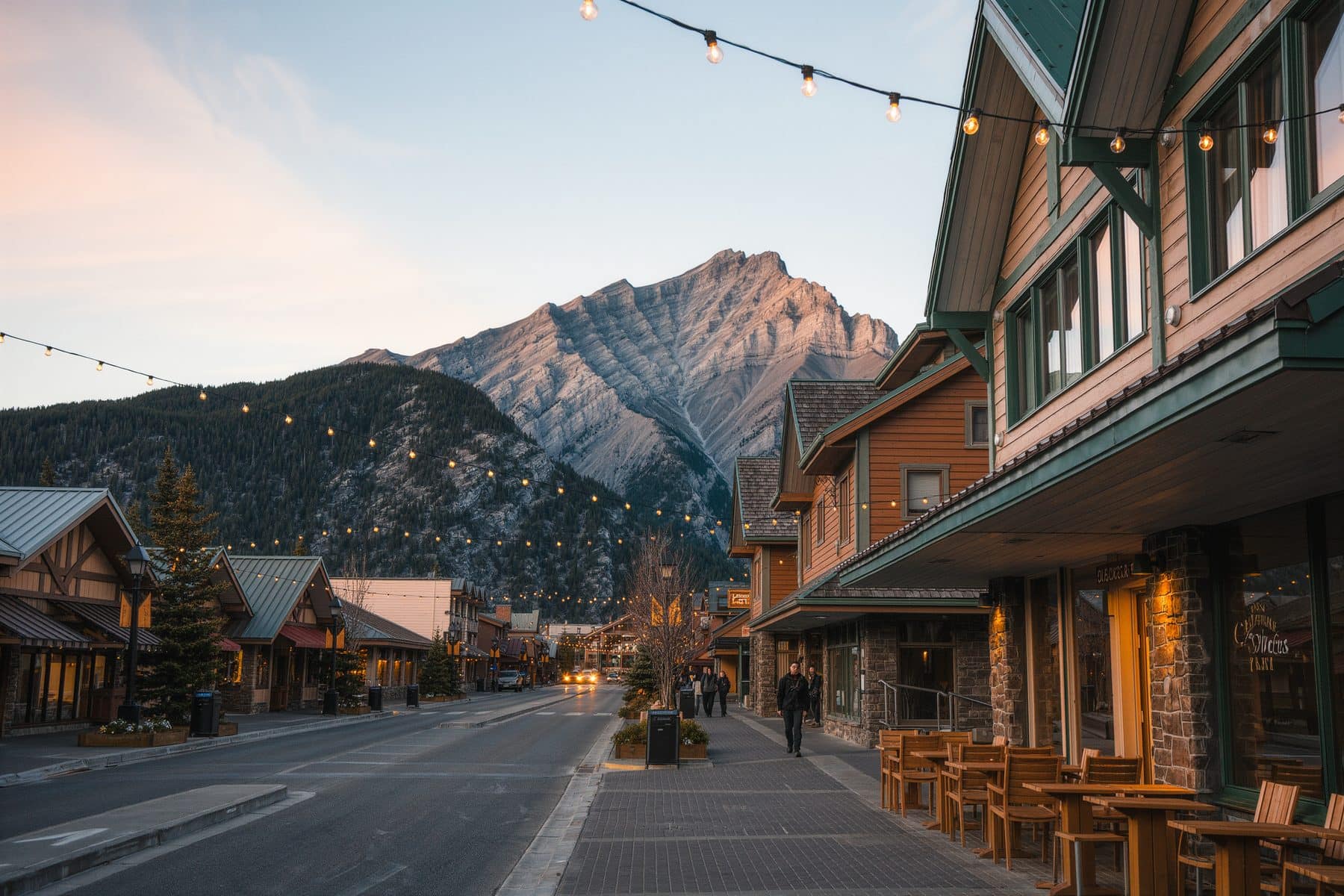
- Housing is the whole problem: a median home sale of $1,084,950 (July 2026), two-bedroom rents averaging $2,446 (2025) and Alberta’s highest 2023 living wage at $38.80 an hour (2023, the last year Canmore participated).
- Everything else is unusually good for a town of 17,000: Canmore General Hospital with 24-hour emergency, three public schools plus a K–12 Catholic academy, free local buses and trails from every street.
- About a quarter of homes are second homes; the full-time population grew 10.4% in five years to 17,341 (2025) and 92% of residents rate quality of life good or very good.
- Winter is long and real, about 184 cm of snow a year and 23 days below −20°C at the Banff station, but sunny, dry and the reason many people move here.
- Calgary is 105 km away; the drive is about 65 minutes in good conditions and there is no scheduled public bus in 2026.
Living in Canmore is not the same as visiting Canmore, and most of the people who move here on the strength of a good weekend find that out in February. This guide is the honest version for anyone weighing moving to Canmore: what the town costs, what it offers, who thrives here and who leaves, with the numbers dated and sourced. It covers population, housing and the cost of living, work and wages, healthcare, schools, winter, safety, getting around and the Calgary commute, then links to a detailed guide on each. If you are deciding whether to move to Canmore, or whether to buy here at all, start with the direct answer below.
The short answer on living in Canmore
Canmore is a good place to live if you can afford the housing and you want the mountains every day. It has a 24-hour hospital, public, Catholic and French-immersion schools, free local buses and trails from every street, and 92% of residents rate their quality of life good or very good. The costs are a median home near $1.08M, Alberta’s highest living wage and a long winter.
That answer holds for most of the people we talk to. The qualifications matter, though, so the rest of this page takes each part in turn.
Who is actually living in Canmore
Canmore’s permanent population was 15,990 at the 2021 federal census and an estimated 17,341 in 2025, up 10.4% over five years and down slightly on the year (Alberta Regional Dashboard). The 2021 census counted 9,173 private dwellings but only 6,804 occupied by usual residents, 74%, which is the statistical shape of a town where about 26% of properties belong to people who live somewhere else most of the time (Town of Canmore; CBC).
That mix defines the place. Weekends and holidays the town swells; midweek in November it is a small town where you see the same faces at the rec centre and the grocery store. The full-timers skew toward outdoor professionals, tradespeople, healthcare and hospitality workers, post-2020 remote workers and retirees. In the Town’s 2025 survey 99% of residents said they feel safe here.
Housing and the cost of living
Housing is the one thing that makes living in Canmore hard. The median sale across all property types was $1,084,950 in July 2026 (Wahi); apartment condos averaged about $814,000 and detached homes about $2.15M in 2025. Renting is no relief: the average two-bedroom in a purpose-built rental building was $2,446 a month in 2025, up 7.8% in a year, and a one-bedroom $1,880, up 13% (Alberta Regional Dashboard). Numbeo’s user-reported figures for June 2026 put a one-bedroom at $2,150–2,275 and a three-bedroom at $4,700–5,000.
Outside housing, costs run about 3% above the Alberta average. Utilities for an 85 m² home are about $389 a month, internet $98, petrol $1.46 a litre and an inexpensive meal out $25 (Numbeo, June 2026). Local Roam buses are free. Property tax on a $1.2M home is about $5,500 a year for an Alberta-resident owner at the 2026 primary-residential rate of 0.457%, and about $10,000 for an out-of-province second-home owner at the non-primary rate of 0.833% once the Livability Tax applies (Town of Canmore, Rate of Taxation Bylaw 2026). The cost of living, Canmore edition builds a full monthly budget.
The housing figures side by side, each with its date, because they move quickly and are measured differently:
| Housing cost | Figure | Period and source |
|---|---|---|
| Median sale, all property types | $1,084,950 | July 2026 (Wahi) |
| Average detached home sale | about $2.15M | 2025 |
| Average apartment condo sale | about $814,000 | 2025 |
| Average two-bedroom rent, purpose-built building | $2,446 a month | 2025 (Alberta Regional Dashboard), up 7.8% in a year |
| Average one-bedroom rent, purpose-built building | $1,880 a month | 2025 (Alberta Regional Dashboard), up 13% in a year |
| Property tax on a $1.2M home, Alberta-resident owner | about $5,500 a year | 2026 primary-residential rate of 0.457% |
| Property tax on a $1.2M home, out-of-province second-home owner | about $10,000 a year | 2026 non-primary rate of 0.833% with the Livability Tax |
- Permanent population
- 17,341
- 2025 estimate · Alberta Regional Dashboard · +10.4% in five years
- Median home sale
- $1,084,950
- July 2026 · Wahi · all property types
- Average two-bedroom rent
- $2,446 / mo
- 2025 · Alberta Regional Dashboard · +7.8% YoY
- Living wage
- $38.80 / hr
- 2023 · Alberta Living Wage Network · Canmore’s last published figure
- Second homes
- 26%
- of properties · 2021 Census via CBC
- Quality of life good or very good
- 92%
- Town of Canmore 2025 resident survey
Work and wages
Canmore’s living wage was $38.80 an hour (2023), the last year the town took part in the Alberta Living Wage Network’s calculation, and the highest in the province against Calgary’s $23.70 that year. The Network’s update of 13 November 2025 did not change it: Canmore was not among the 21 communities covered, where Jasper was highest at $31.80 and Calgary had risen 8.4% to $26.50. So $38.80 remains the most recent Canmore figure, and it is a 2023 one. That gap is entirely housing. The local economy is tourism, construction, healthcare, education and a growing remote-work population; hospitality and retail wages do not reach the living wage, which is why the Town runs Perpetually Affordable Housing and employee-housing programs.
The people who make the numbers work fall into three groups: households with a Calgary-level salary earned remotely or hybrid, two-income professionals in healthcare, education or trades, and people who arrived with equity from a sale elsewhere. The working in Canmore post goes deeper.
Healthcare
Canmore General Hospital at 1100 Hospital Place is an Alberta Health Services facility with 24-hour emergency services, inpatient surgery, CT, X-ray, ultrasound, endoscopy, inpatient cardiology and orthopaedic services, and the Bow Valley Community Cancer Centre on site (AHS), an unusually complete hospital for a town this size, and a reason many retirees choose Canmore. AHS lists no obstetrics or birthing service at Canmore General, so babies are delivered in Calgary; the hospital does provide gynaecological surgery, lactation support and newborn hearing screening. Specialist care generally means Calgary too, and finding a family doctor takes persistence. New residents must register for Alberta Health Care within three months of arriving; coverage begins on the first day of the third month after you establish residency (alberta.ca).
Schools
Canadian Rockies Public Schools runs three schools in town: Elizabeth Rummel School at 1033 Cougar Creek Drive (K–4, about 335 students, English and French immersion), Lawrence Grassi Middle School at 610 7 Avenue (grades 5–8) and Canmore Collegiate High School at 1800 8 Avenue (grades 9–12, about 600 students, with outdoor education, French immersion and dual-credit programs). The division also runs Alpenglow School, a Waldorf-inspired K–6 nature programme housed at the Collegiate. Our Lady of the Snows Catholic Academy at 3100A Stewart Creek Drive offers K–12 through Christ the Redeemer Catholic Schools. French immersion runs continuously from kindergarten to grade 10. The schools guide covers programs, locations and which neighbourhoods are walkable to which school.
Winter
Winter is the thing newcomers underestimate and the thing long-term residents love. At the Banff climate station (1991–2020 normals, 1,397 m), January averages −8.5°C with a daily low of −13.5°C, annual snowfall is about 184 cm and there are roughly 23 days a year below −20°C. Canmore sits lower and a little warmer, and chinook winds give real thaws. The shortest day offers under eight hours of daylight, and which side of the valley you live on decides whether you see any of it: Silvertip, Eagle Terrace and the north-side benches keep winter sun; parts of the south side lose it for weeks. The winter guide covers sun exposure by neighbourhood, heating, driving and the upside.
Getting around and commuting to Calgary
Inside town, Roam Transit’s three local routes, 5C Cougar Creek, 5T Three Sisters and Route 12, are free, with seasonal service to the Nordic Centre and Quarry Lake from May to October (Roam; Town of Canmore). The regional Route 3 to Banff runs daily for $6 one way, and most of town is bikeable in summer on the pathway network.
Calgary is the catch. Downtown is about 105 km east on the Trans-Canada and just over an hour in clear conditions (Tourism Canmore Kananaskis), longer in snow, and the highway closes several times each winter for multi-vehicle crashes. On-It, the seasonal Calgary–Canmore–Banff bus, did not run in 2026 (Roam Transit notice) and the Bow Valley Regional Transit Services Commission received no bids when it tendered the route, leaving paid airport shuttles, the Banff Airporter charges $85.90 one way from the airport, as the only scheduled option. Most Canmore residents who work in Calgary commute two or three days a week. The commuting guide has costs, timings and the winter reality.
Community and lifestyle
The rhythm of Canmore life is set by the trails and the calendar. The Nordic Centre about five minutes from the town centre, Grassi Lakes, the Bow River pathway and four downhill areas within about an hour, Norquay, Nakiska at roughly 35 minutes, Sunshine at about 45 and Lake Louise at about 50 (Kananaskis), mean most social life happens outside, backed by a library, a rec centre, artsPlace and a strong volunteer culture. Wildlife is part of it: bear-proof bins, elk in the schoolyard and cougar advisories are ordinary.
The trade-offs are what you would expect from a small resort town: summer gridlock and full trailheads, visitor pricing, renters who leave when a landlord sells, and a shoulder season that can feel thin in a town where a quarter of the homes sit empty on a Tuesday.
- Trails, skiing and rivers from your door; four ski areas within about an hour
- A real hospital with 24-hour emergency and a cancer centre
- Free local transit, good public and Catholic schools, French immersion K–10
- Small-town safety and community: 99% of residents feel safe (2025 survey)
- No land transfer tax in Alberta; Albertan owners exempt from the Livability Tax
- Sunny, dry winters compared with the B.C. Side of the Rockies
- Housing: median sale near $1.08M, two-bedroom rent near $2,450, living wage $38.80
- A 105 km commute with no scheduled bus in 2026 and winter highway closures
- Five months of snow and short December days, with sun exposure varying by street
- Tourist crowds and visitor pricing from June to September
- Limited local job market; specialist healthcare and most maternity care in Calgary
- High turnover among renters and seasonal workers
Buying a second home here “to see if we like it” and then trying to convert it into a full-time life. The home that works for ski weekends. A tourist-home condo on Bow Valley Trail, a north-facing unit with a great summer deck, is often the wrong home for a full-time winter. Decide which life you are buying for first; the neighbourhood and the tax class follow from that.
Come for a week in late January, not July. Rent in the neighbourhood you are considering, do the Calgary drive on a weekday, walk to the grocery store at 4 p.m. When the sun has gone, and see whether you are still excited. Most people are. The ones who are not have saved themselves a great deal of money.
Newcomer resources
The practical links people ask for in the first month, all official or local, none of them ours.
- Job Resource Centre: the Bow Valley's free employment service, with a live job board and settlement help for newcomers.
- Town of Canmore, Work for Us: municipal postings, one of the valley's largest year-round employers.
- Canmore Community Housing: the Vital Homes ownership and rental programs, with eligibility rules and waitlists.
- Rocky Mountain Outlook: the valley's weekly newspaper, the place council decisions and rental listings surface first.
- Roam Transit: local routes, the Banff regional service and the fares; free local routes in Canmore.
What this means if you’re buying
If the lifestyle case for living in Canmore holds for you, the buying decision comes down to neighbourhood and housing type. Full-time residents should weight winter sun, walkability to school and the rec centre, and proximity to the highway for the Calgary commute far more than a visitor would; the neighbourhood guide compares every area on exactly those points. Then run the real cost of ownership: mortgage, property tax, condo fees, utilities, through the buyer cost calculator and read the buyer’s guide before you look at a single listing. The town rewards people who arrive with clear eyes.
Fifteen minutes with a local REALTOR®, which neighbourhoods suit a full-time life, what it really costs, and what to see on your next visit. Free, no obligation.
Frequently asked
Is Canmore a good place to live?
Yes, for people who can carry the housing cost and want an outdoor life. Residents rate it highly, 92% called quality of life good or very good in the Town’s 2025 survey, and it has a hospital, good schools and free transit. It is a poor fit if you need a big-city job market, cheap housing or mild winters.
How much do you need to earn to live in Canmore?
The Alberta Living Wage Network puts Canmore’s 2023 living wage at $38.80 an hour (2023, the last year Canmore participated), the highest in the province and well above Calgary’s $23.70. A household buying at the July 2026 median of about $1.08M with 20% down needs income in the $200,000-plus range under normal lending rules; renters need roughly $100,000 for a two-bedroom at 2025 average rents of $2,446 a month.
What is the population of Canmore?
The permanent population was 15,990 at the 2021 federal census (Town of Canmore) and an estimated 17,341 in 2025 (Alberta Regional Dashboard), up 10.4% over five years. On top of that, about 26% of properties are owned by people who do not live here full-time, so the town feels larger on weekends and holidays.
Is Canmore expensive to live in?
Yes, mostly because of housing. Excluding housing, day-to-day costs run roughly 3% above the Alberta average. Numbeo’s June 2026 figures show utilities for an 85 m² home around $389 a month, internet about $98, petrol $1.46 a litre and an inexpensive restaurant meal about $25. Rent and mortgage payments are what push the budget far above Calgary or Cochrane.
What is winter like in Canmore?
Long, dry and sunnier than people expect. The Banff climate station (1991–2020 normals) records a January average of −8.5°C, about 184 cm of snow a year and roughly 23 days below −20°C. Cold snaps come in stretches of a few days. Which side of the valley you live on matters: some south-facing slopes see winter sun all day, some north-facing pockets lose it for weeks.
Can you live in Canmore and work in Calgary?
Many people do, usually two or three days a week. Downtown Calgary is about 105 km and 65 minutes on the Trans-Canada in clear conditions, longer in snow, and the highway closes several times a winter for crashes. There was no scheduled Calgary–Canmore bus in 2026 after On-It suspended its service, so the Canmore to Calgary commute means driving or a paid shuttle.
Is Canmore nicer than Banff?
For living, most people say yes, and the reason is practical rather than scenic. Banff's need-to-reside rule limits who can live there and a leasehold cannot be a second home, so the town stays small and transient. Canmore is bigger, sits outside the park, and anyone can own. The trade-offs are compared in Canmore vs Banff for living.
- Town of Canmore: Community statistics
- Alberta Regional Dashboard: Canmore population
- Alberta Regional Dashboard: Canmore average residential rent
- Alberta Living Wage Network: Reports
- Alberta Health Services: Canmore General Hospital
- Canadian Rockies Public Schools: French Immersion
- Environment and Climate Change Canada: Banff CS 1991–2020 climate normals
- Numbeo: Cost of living in Canmore (June 2026)
- Roam Transit: Fares
- Roam Transit: On-It Regional Transit service notice 2026
- Wahi: Canmore housing market report (July 2026 data)
- CBC: Canmore’s real estate market and the second-home effect
- Alberta Living Wage Network: 2025 living wage rates in partnership with 21 communities
- Canadian Rockies Public Schools: Schools
- Our Lady of the Snows Catholic Academy
- Tourism Canmore Kananaskis: Getting here
- Kananaskis: Skiing and snowboarding in the Canadian Rockies
- Town of Canmore: 2026 tax rates
Every guide in this cluster
Keep reading

Tell us what you’re looking for and get a straight answer, usually the same day.