Banff Real Estate
How Banff real estate really works: the Parks Canada need-to-reside rule, leasehold land, what homes cost, and why so many Banff searches end with a Canmore purchase.
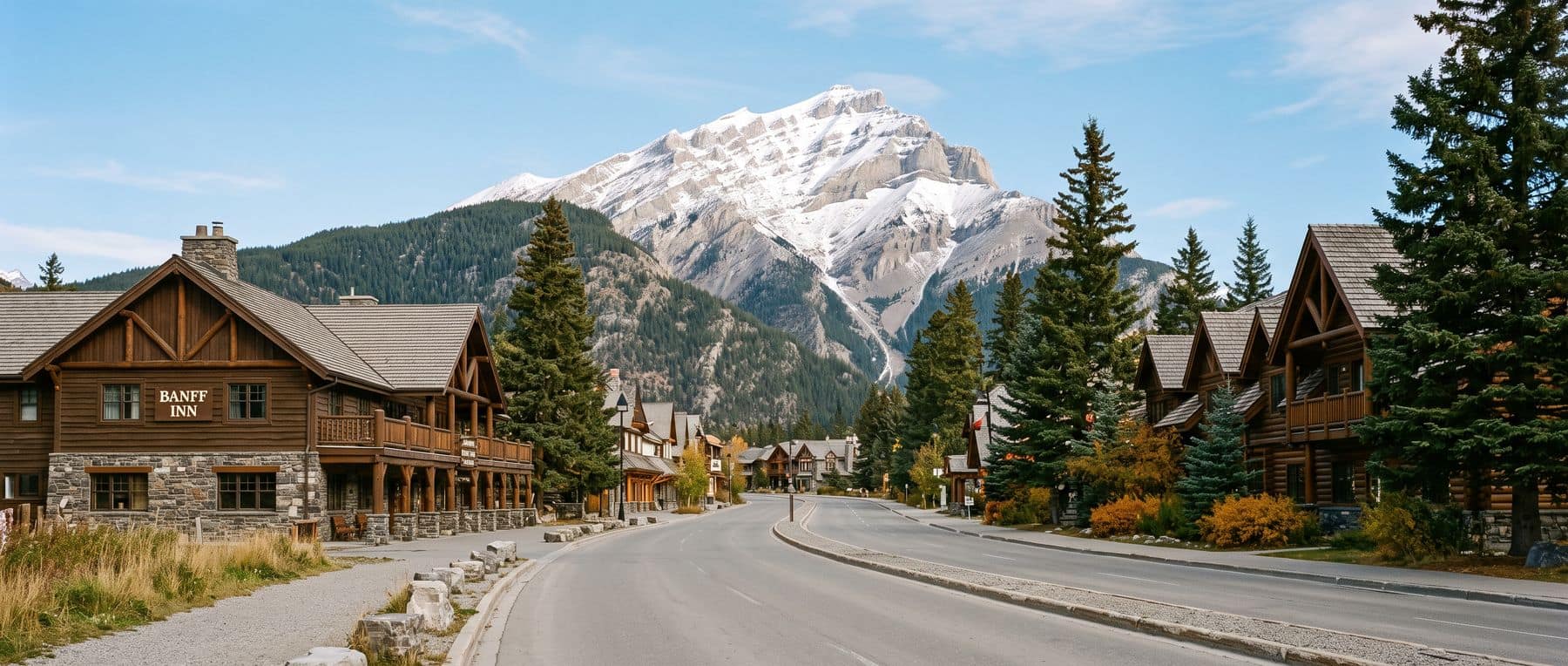
- Banff sits on federal Crown land inside a national park: every home is leasehold, not freehold, under the National Parks of Canada Lease and Licence of Occupation Regulations.
- Owning a Banff lease does not give you the right to live there. Occupants must meet Parks Canada's eligible-residency (need-to-reside) test.
- Parks Canada is explicit that leasehold properties cannot be used as secondary or vacation homes.
- Banff's townsite boundary is fixed by federal law at 3.93 km², so supply is permanently capped and sales volumes are tiny.
- Canmore, 25 minutes east, has no residency test and freehold title, which is why so many Banff searches end in a Canmore purchase.
Banff real estate obeys a rule that catches almost every out-of-town buyer off guard: you can generally buy a home in Banff, but you cannot necessarily live in it, and you definitely cannot keep it as a vacation home. A non-resident can own a Banff leasehold; what they cannot do is live in it or use it as a vacation home. The town sits on federal Crown land inside Banff National Park, every property is leasehold, and Parks Canada decides who is allowed to reside there. This page explains the need-to-reside rule, the leasehold system, what Banff homes actually cost, and why so many Banff searches quietly end with keys to a Canmore property instead.
The need-to-reside rule that governs Banff real estate: who is allowed to live here
Everyone who lives in Banff must qualify as an eligible resident under the federal National Parks of Canada Lease and Licence of Occupation Regulations. The Town of Banff summarizes it plainly: "You must meet a 'need to reside' threshold. For most people, that means being employed in the national park in a job that requires you to work in the park."
The regulations define an eligible resident as, among other categories:
- "an individual whose primary employment is in the park"
- "an individual who operates a business in the park and whose presence at the place of business is necessary for the day-to-day operation of the business"
- a retired individual who, for five consecutive years immediately before retirement, worked or ran such a business in the park
- "an individual who is a student in full-time attendance at an educational institution that is located within the park"
- the spouse, common-law partner or dependant of any of the above
Parks Canada is the authority on eligibility and can demand proof: leases in the Town of Banff must include a term providing that if the leased lands "are at any time occupied by any person who is not an eligible resident, the Minister may terminate the lease", and lessees can be required to provide evidence by affidavit or solemn declaration. The Town adds that "it is a criminal offense to make a false statutory declaration of eligible residency."
Parks Canada's own wording: "Non-residents may own leasehold properties without living in Banff. However, leasing property does not make you eligible to live in the park." And the part that ends most plans: "Leasehold properties cannot be used as secondary homes or vacation homes." A non-eligible owner is, in practice, a landlord to eligible residents, nothing more.
Leasehold, not freehold: what Banff real estate actually is
There is no freehold residential land in Banff. The land is federal Crown land, and what you buy is a leasehold interest under the same 1992 regulations. Leases may be granted for terms of up to 42 years, with renewal covenants "for terms that do not exceed 21 years in the aggregate, where the initial term of the lease and the terms of all renewals do not exceed 49 years." Lease replacements and renewals are routine Parks Canada business rather than a crisis, but they are paperwork a Canmore buyer never sees.
Selling a Banff home means assigning the lease. Parks Canada's realty services list "Consent to Assignment/Mortgage (Sale of home, buyers and sellers)" with a processing time of about 10 business days, and a full lease replacement can take up to six months. Your lawyer and lender both need to be comfortable with leasehold security. Most Alberta lenders are, but it is one more layer of diligence. Alberta land titles, RPRs and the closing process work differently inside the park than for a standard Canmore purchase. What a Banff house for sale actually conveys, and what it costs to finance, is set out on its own page.
Banff homes for sale: a permanently small real estate market
Banff cannot grow. The Town states that "Banff's townsite boundaries are fixed by federal law" at 3.93 square kilometres, the municipality "may not expand its land base," and commercial space is capped by regulation. Around 8,300 permanent residents (2021 federal census) share that footprint, and close to a third of the population turns over every five years as park jobs change hands.
The result is that Banff houses for sale and condos alike trade in single digits:
- Average sold price
- $1,187,900
- Zolo, June 17 – July 15, 2026: five recorded sales
- New listings
- 14
- previous 28 days, Zolo, July 2026
- Selling-to-list ratio
- 92%
- Zolo, July 2026
A meaningful share of Banff's ownership stock is also outside the open market entirely: the Banff Housing Corporation, the Town's non-profit housing arm, holds a portfolio of 216 price-restricted and equity-share properties, 32 single-family homes, 63 townhomes, 78 duplexes and 43 apartments. That are "bought and sold to eligible Banff residents on the Registered Resale List," with resale caps designed to keep them perpetually below market.
Banff vs Canmore: what homes actually cost
On price alone, Banff real estate and Canmore are closer than most people expect. On everything else, they are different countries.
| Banff | Canmore | |
|---|---|---|
| Average sold price | $1,187,900 (Zolo, Jun 17 – Jul 15 2026, 5 sales) | ~$1.4M all types (Zolo, July 2026, skewed by large sales); average house $1,203,130 (Zolo, Dec 2025) |
| Land tenure | Leasehold on federal Crown land | Freehold title |
| Who may live there | Eligible residents only (need-to-reside) | Anyone |
| Second / vacation homes | Prohibited by Parks Canada | Permitted (Livability Tax may apply to non-Albertans) |
| Nightly rentals | Not for residential leaseholds | Legal in tourist-home zoned properties only |
| Active listings | 14 new in 28 days (Zolo, July 2026) | ~154–160 active (Realtor.ca / REW, August 2026) |
| Market growth | Boundary fixed at 3.93 km² by federal law | Three Sisters Village: up to ~7,000 homes over decades |
Canmore is not a consolation prize on price. It is a comparable market with radically more freedom attached to the title. The Canmore homes for sale guide breaks down what each budget buys, and the Livability Tax guide covers the one Canmore-specific cost out-of-province buyers should model.
Why so many Banff searches end with a Canmore purchase
Run the typical buyer profiles against the Banff real estate rules and the funnel empties fast. A Calgary family wanting a weekend base in the mountains: prohibited, no second homes. An investor wanting nightly rental income: residential leaseholds cannot be vacation properties, so the only lawful tenants are long-term eligible residents. A remote worker whose employer is in Toronto: not eligible, primary employment is not in the park. A retiree who always dreamed of Banff but worked in Edmonton: not eligible.
Who is left? People who genuinely live and work in the park, and they are competing for a handful of listings inside 3.93 square kilometres. Everyone else drives 25 minutes east on the Trans-Canada and discovers that Canmore delivers the same Rockies with none of the federal conditions, which is exactly why we built this site around buying in Canmore and the surrounding Bow Valley communities.
Most weeks bring at least one enquiry that starts with "Banff homes for sale" and ends with viewings in Canmore, Harvie Heights or Dead Man's Flats. The turning point is rarely price. It is the moment a buyer reads Parks Canada's line about vacation homes. If Banff-adjacent matters more than Banff-postal-code, Harvie Heights sits five minutes from the park gate with none of the eligibility rules.
Working with a Banff realtor vs a Canmore realtor
If you are an eligible resident buying in Banff, use professionals who handle Banff real estate files regularly: leasehold conveyancing, Parks Canada consent timelines and Banff Housing Corporation resale rules are specialist territory. If you are not eligible, or you want a property you can use freely. A Bow Valley buyer's agent will save you weeks by starting the search where you can actually complete it. A local REALTOR® works the whole corridor from Banff's park gate to Kananaskis and can tell you within one phone call which side of the boundary your plans belong on. If you are weighing who to call, our reviews page publishes each one verbatim with its source.
What this means if you're buying
Banff real estate rewards one group and frustrates everyone else, so check your eligibility before you fall for a listing. If your work, business or studies are in the park, Banff is open to you, budget for leasehold diligence and thin inventory, and look at the Banff Housing Corporation's resale list alongside the open market. If not, Banff ownership only works as a landlord to eligible residents, with no personal use. For a mountain home you can occupy, rent long-term, or hold as a weekend place, start with Canmore and the communities around it, same valley, your name on a freehold title. Nightly rental is its own question there; Airbnb in Banff sets out what the town allows and why almost nothing qualifies.
A 15-minute call with a local REALTOR®: your eligibility, your budget, and whether Banff, Canmore or a Bow Valley hamlet actually fits. Free, no obligation.
Frequently asked
Can anyone buy a house in Banff?
Mostly yes. Parks Canada states that non-residents may own leasehold properties without living in Banff. The catch is occupancy: only eligible residents (people who work, run a business, or study in the park, plus certain retirees and their families) may actually live in the home, and it cannot sit empty as a vacation property.
What is Banff's need-to-reside (eligible residency) rule?
Under the National Parks of Canada Lease and Licence of Occupation Regulations, everyone living in Banff must qualify as an eligible resident: primarily people employed in the park, operators of park businesses who must be on site, five-year retirees, full-time students, and their spouses and dependants. Parks Canada is the authority and can require sworn declarations.
Can I buy a vacation home or Airbnb in Banff?
No. Parks Canada states that leasehold properties cannot be used as secondary homes or vacation homes, and the Town notes it is a criminal offence to make a false statutory declaration of eligible residency. Nightly rental of residential property is not a lawful workaround. Buyers wanting a legal short-term rental look at Canmore's tourist-home zoned properties instead.
Is Banff real estate freehold or leasehold?
Leasehold. The land belongs to the federal Crown, and homeowners hold a lease, typically granted for terms of up to 42 years, renewable within limits set by the regulations. Selling a home means assigning the lease, which requires Parks Canada's consent; the agency quotes about ten business days for consent to assignment on a sale.
How much does a house in Banff cost compared with Canmore?
Zolo's Banff market report for June 17 to July 15, 2026 shows an average sold price of $1,187,900, on only five sales. Canmore's average sold price across all types was roughly $1.4 million in July 2026 (skewed by large sales), with the average detached house at $1,203,130 in December 2025. Prices are comparable; the rules are not.
Why do people looking at Banff end up buying in Canmore?
Because most of them are not eligible to live in Banff, and Banff prohibits second homes outright. Canmore is 25 minutes east, outside the park boundary, with freehold title, no residency requirement and a much larger pool of Canmore homes for sale, about 154 to 160 active listings in August 2026 versus a handful in Banff.
- Parks Canada: Eligible residency, Banff National Park
- Parks Canada: Realty services, Banff National Park
- National Parks of Canada Lease and Licence of Occupation Regulations (SOR/92-25)
- Town of Banff: Housing
- Town of Banff: Learn About Banff
- Banff Housing Corporation: Ownership
- Zolo: Banff housing market trends (July 2026)
Keep reading

Tell us what you’re looking for and get a straight answer, usually the same day. Free, and no obligation.