Selling a Second Home in Canmore
Selling a second home in Canmore: how capital gains work, why only one property per family can be designated a year, and what non-residents face on closing.
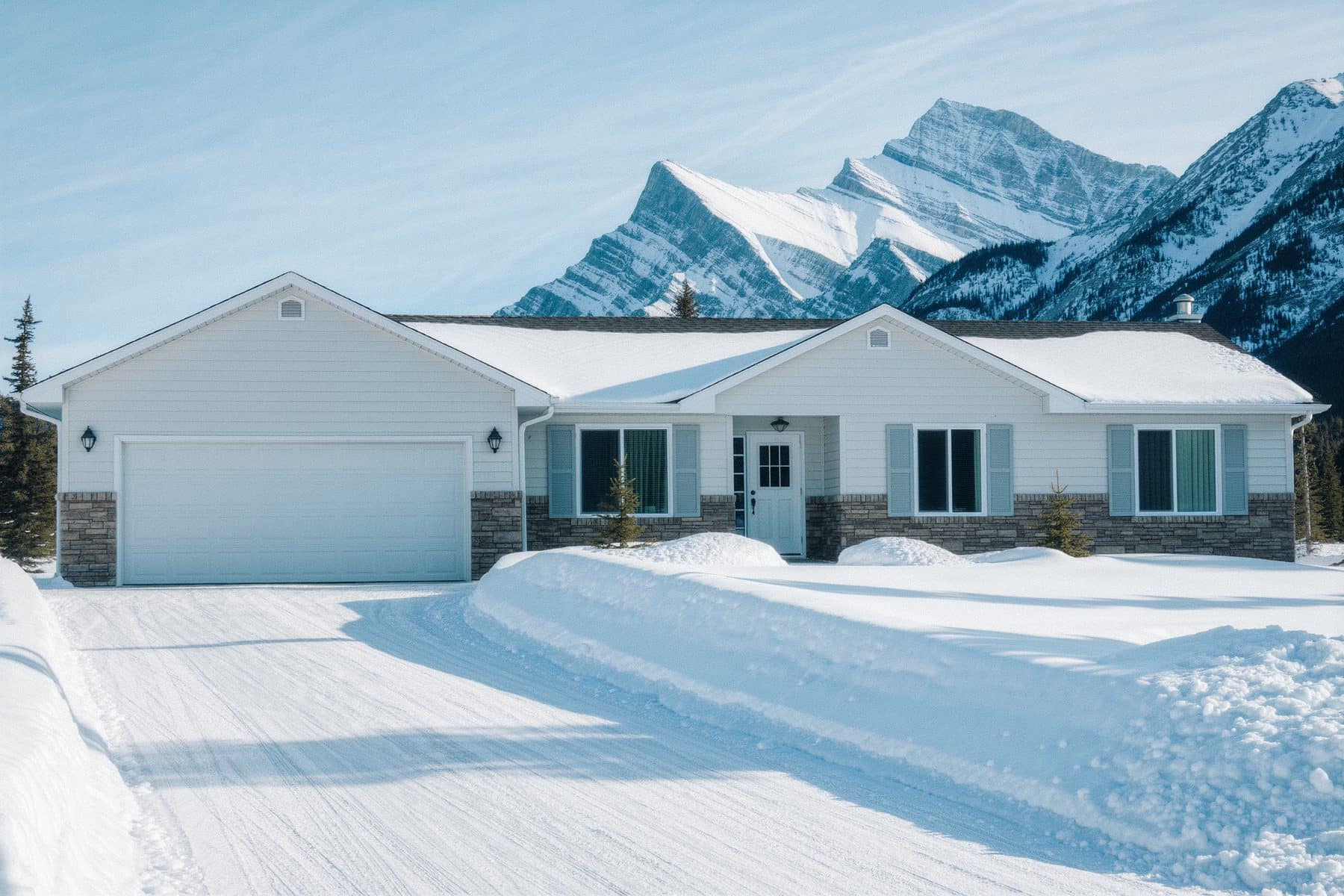
- Only one property per family unit can be designated as a principal residence for each year, for 1982 and later years, so a weekend place normally carries a taxable gain.
- CRA requires every principal residence disposition to be reported on Schedule 3 with Form T2091(IND), even when the whole gain is exempt.
- The capital gains inclusion rate remains one-half. The proposed increase to two-thirds was cancelled, not deferred.
- Non-residents must notify CRA of the disposition within ten days. Failing to do so attracts a penalty of $25 a day, minimum $100 and maximum $2,500.
- Without a section 116 certificate the purchaser is liable for 25% of the cost of the property, and is entitled to hold that back from your proceeds.
Roughly a quarter of Canmore's homes are owned by people who do not live in them full-time, so the seller with a weekend place is not an edge case here, they are a large part of the market. The mechanics of selling are ordinary. The tax position of a second home is not, and it is where the avoidable money is lost. This page sets out the capital gains rules on selling a second property, the principal residence designation, and the extra steps that apply if you are a non-resident of Canada. The sale itself runs the same way as any other, and is covered in how to sell a house in Alberta. It is general information, not tax advice, and the situations below are exactly the ones worth taking to an accountant.
Selling a second home in Canmore: the tax position
The direct answer: expect a taxable capital gain, because you almost certainly cannot shelter the Canmore years with the principal residence exemption in Canada.
CRA's rule is that for 1982 and later years you can only designate one home as your family's principal residence for each year. For 1993 and later tax years the family unit is you, your spouse or common-law partner throughout the year, and your children other than a child who was 18 or older during the year or who had a spouse or common-law partner. So a couple with a Calgary house and a Canmore condo can shelter one or the other in any given year, not both, and selling the second one crystallises the years they did not designate to it.
Where a gain is taxable, one half of it is included in your income and taxed at your marginal rate. The capital gains inclusion rate remains one-half; the proposed increase to two-thirds was cancelled rather than deferred.
| Situation | Typical result on sale |
|---|---|
| Canmore home was your only home throughout | Gain generally fully exempt, but the sale must still be reported |
| Canmore is a second home, city home designated every year | Whole gain taxable, one-half included in income |
| Designation split across the years of ownership | Exemption prorated by designated years, calculated on Form T2091(IND) |
| Property rented out for part of the period | Gain apportioned; capital cost allowance claimed may be recaptured |
| Sold within 365 days of acquiring it | Deemed business income rather than a capital gain, unless a listed life event applies |
Designation: the choice most people make by accident
The designation is not made when you buy. It is made when selling, year by year, on Form T2091(IND), and reported on Schedule 3 of your return. That means you can look back at which property appreciated fastest per year of ownership and designate accordingly, within the one-per-family-per-year limit.
Two details are worth knowing before you sell.
The plus one rule allows both properties to be treated as eligible in a year when one principal residence is sold and another bought, even though only one can be designated. CRA is explicit that to qualify for the plus one you must be resident in Canada during the year the residence is purchased.
The reporting requirement is absolute. Since 2016, CRA will only allow the principal residence exemption if you report the disposition and the designation on your return. A late designation can sometimes be accepted, but a penalty may apply. This catches people who sold a home they believed was fully exempt and therefore did not mention it. It applies to the city home as much as to the second one.
If you rented the Canmore place, long-term or nightly, part of the gain relates to income-producing use. CRA treats a change in use as a deemed disposition at fair market value, and if you claimed capital cost allowance on the building you can face recapture in the year of sale, on top of the gain. There are elections under subsections 45(2) and 45(3) that postpone the deemed disposition, but they have to be filed by letter with the return for the year of the change, not reconstructed afterwards. If the second property was ever rented, put the whole history in front of an accountant before you list. If it was rented nightly, read the guide to selling a tourist home as well, because GST may apply to the sale itself.
If you are a non-resident of Canada
This is the part where selling can stall for weeks after possession, and it is entirely procedural.
Section 116 of the Income Tax Act requires a non-resident vendor disposing of taxable Canadian property to notify CRA either before the disposition or within ten days after it. You can file in advance under subsection 116(1), and CRA recommends sending that notice at least 30 days before the disposition so there is time to review it. Otherwise the notice of actual disposition goes by registered mail no later than ten days after the property was disposed of.
- 1File Form T2062 with CRARequest a certificate of compliance for the disposition, sent to the tax services office serving the area where the property is located. For real property that is based on the legal or municipal address, so a Canmore sale goes to the Alberta office.
- 2Pay or secure the tax on the gainCRA issues the certificate once it has received an amount covering the tax on any gain, or acceptable security for it.
- 3The purchaser holds back until it arrivesWithout a certificate the purchaser is liable under subsection 116(5) for 25% of the cost of the property, and is entitled to withhold that from the price. Fifty percent applies to certain property under subsection 116(5.3), including depreciable taxable Canadian property.
- 4The certificate releases the holdbackCRA sends a copy to the purchaser. Their lawyer then releases the held funds, less anything the certificate limit requires.
- 5File a Canadian return for the yearThe withholding is not the final tax. You file, the actual liability is assessed, and any excess is refunded.
Two consequences follow. First, timing: build the section 116 process into your possession date rather than treating it as an afterthought, because the money genuinely does not move until the certificate exists. Second, penalties: a vendor who fails to report a disposition under subsection 116(3) may be assessed under subsection 162(7), which is a penalty of the greater of $100 and $25 per day, to a maximum of $2,500.
Note also that purchaser liability assessments are not subject to any time restriction, which is why a buyer's lawyer will be firm about the holdback even when everyone is in a hurry. It is not obstruction. It is their client's exposure.
The Canmore layer
Two local items sit on top of the federal position.
The Livability Tax. A residential property in Canmore that is not somebody's primary residence and has no Alberta-resident owner is taxed at 0.833% of assessed value in 2026, against 0.457% for a primary residence. That difference, 0.377%, is roughly $4,520 a year on a $1.2 million assessment. It is charged for the whole year and prorated with your buyer on the statement of adjustments, and the Town confirms a buyer inherits the subclass the previous owner declared. Declarations close at 11:59 p.m. on 31 December.
Presentation. A second home used a dozen weekends a year usually shows well and inspects poorly, because nobody has been there to notice the slow problems, and that gap is where selling a second property most often goes wrong on the inspection report. The page on what to fix before a weekend place goes on the market covers what a mountain-town inspection turns up, and the cost to sell a house in Alberta page has the rest of the closing arithmetic.
A local REALTOR®'s recurring frustration on second-home sales: the seller has owned the place for fifteen years, spent real money on a new roof, a deck rebuild and a kitchen, and can produce none of the invoices. Capital improvements add to the adjusted cost base and reduce the taxable gain; ordinary repairs do not. Every receipt you cannot find is gain you will be taxed on. Spend an evening on the file before selling, and ask the accountant what qualifies rather than guessing. The home value tool will give you the other half of the arithmetic.
What this means if you are selling a second home in Canmore
Treat the tax work as part of the sale, not as something that happens next April. Establish your adjusted cost base with documents, decide which years you will designate and to which property, and if the second home was ever rented, get the change-in-use and capital cost allowance history reviewed before you sign a listing agreement. If you are a non-resident, start the section 116 filing early and tell your lawyer at the outset, because a 25% holdback on a $1.2 million sale is $300,000 sitting still. None of this changes what the property is worth. It changes how much of the price you keep, and unlike the market, it is entirely within your control.
Sellers who want the full picture around selling a second home in Canmore, tax questions included, should read the main selling page.
A local REALTOR® can give you a price range from closed comparables, the Livability Tax position on your address, and a realistic timeline. Free 15-minute call, no obligation.
Frequently asked
Do I pay capital gains tax when I sell a second home in Canada?
Generally yes, on the portion of the gain for the years the property was not designated as your principal residence. One half of the gain is included in income at your marginal rate. Since 1982 only one property per family can be designated for any given year, so a Canmore weekend place almost always produces a taxable gain. This is general information, not tax advice. See how capital gains on second property Canada-wide are worked out.
Can I designate my Canmore place instead of my city home?
You can, year by year, and it is sometimes the better answer if the Canmore property has appreciated faster. The designation is made per year on Form T2091(IND) when you sell, and designating a year to one property means you cannot designate it to another. The property must still qualify, which means you, your spouse or common-law partner, or one of your children lived in it at some time during the year.
What is the plus one rule?
A special rule that lets you treat two properties as eligible for the exemption in a year when one principal residence is sold and another is bought, even though only one can be designated for that year. CRA states that to be eligible for the plus one rule you must be resident in Canada during the year the residence is purchased.
What is a section 116 certificate and do I need one?
It is CRA's certificate of compliance for a non-resident disposing of taxable Canadian property. You notify CRA before the disposition or within ten days after it, using Form T2062, and pay or secure the tax on the gain. CRA then issues the certificate. Until it exists the purchaser can withhold 25% of the price, so the certificate is what releases your money. Selling from abroad also interacts with the non-resident buyer rules.
How much is withheld when a non-resident sells Canadian property?
The purchaser is liable to pay 25% of the cost of the property, or the amount by which it exceeds the certificate limit if a certificate has been issued, and is entitled to withhold that amount from the price. For certain property including depreciable taxable Canadian property, subsection 116(5.3) sets the figure at 50%. Which applies depends on how the property was used, so get advice early.
Does the Livability Tax affect selling a second home in Canmore?
Yes, at the margins. A second home with no Alberta-resident owner that is not somebody's primary residence is taxed at 0.833% of assessed value in 2026 against 0.457%, and the whole-year bill is prorated with your buyer. The buyer also inherits the subclass you declared, or failed to declare, by 31 December. Details in the Canmore Livability Tax guide.
- Canada Revenue Agency: Principal residence
- Canada Revenue Agency: Form T2091(IND), Designation of a Property as a Principal Residence by an Individual
- Canada Revenue Agency: IC72-17R6, Procedures concerning the disposition of taxable Canadian property by non-residents of Canada, section 116
- Canada Revenue Agency: Form T2062, Request by a Non-Resident of Canada for a Certificate of Compliance
- Town of Canmore: Livability Tax Program, Primary Residence Declaration
- Town of Canmore: Tax Rates 2026
- CBC: Canmore's second-home market and its impacts
Keep reading

A human evaluation from a licensed Bow Valley REALTOR®, built on real comparable sales, not an algorithm.