HBP Repayment: How the 15-Year Schedule Works for Canmore Buyers
HBP repayment runs 15 years at 1/15 a year, and a 2026 withdrawal is not due until 2031. What you owe, and what a missed year costs.
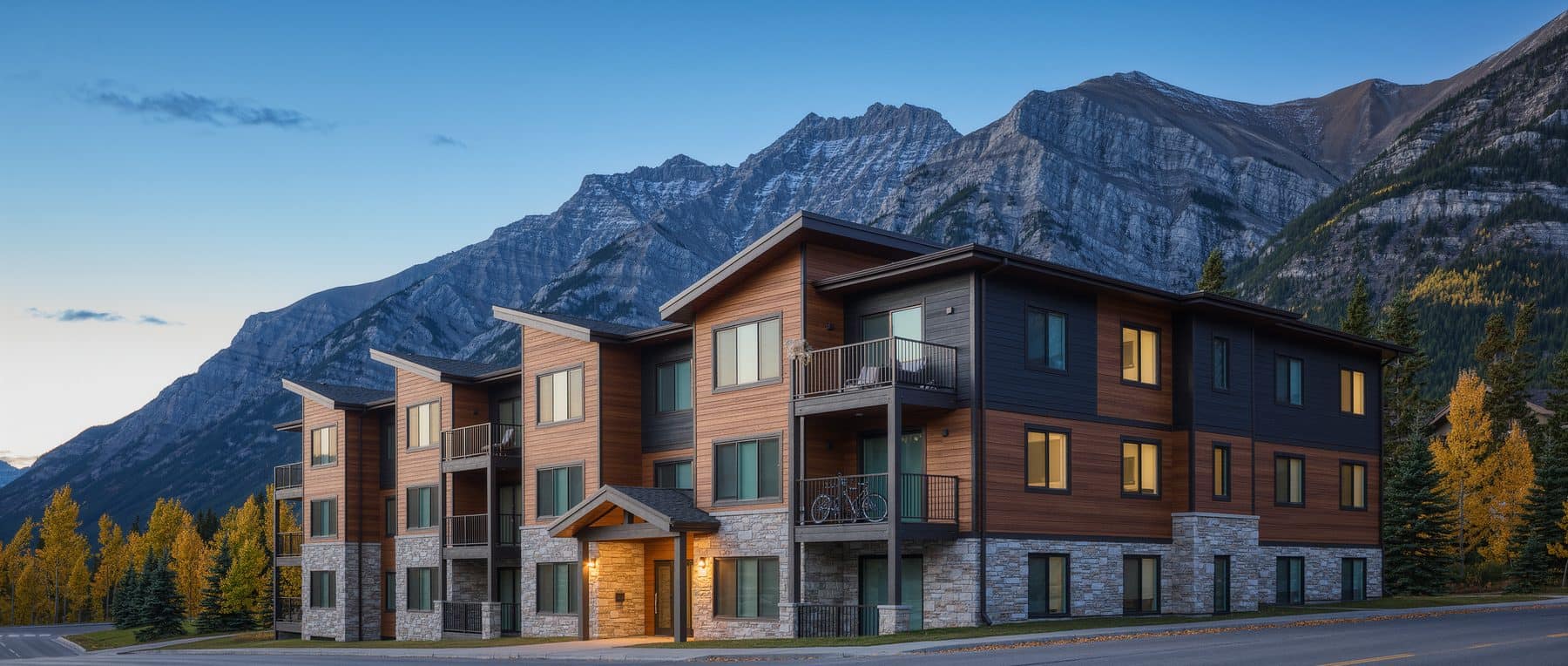
- The minimum annual HBP repayment is your outstanding balance divided by the years left in the repayment period. On a full $60,000 withdrawal that is $4,000 a year for 15 years.
- Temporary relief defers the start by three years for first withdrawals made from 1 January 2022 to 31 December 2028, so a 2026 withdrawal is first repayable in 2031 (CRA, September 2026).
- A repayment is an RRSP, PRPP or SPP contribution that you designate on Schedule 7 and report at line 24600. It earns no deduction and uses no RRSP deduction room.
- Repay less than the minimum and the shortfall goes into income at line 12900 as RRSP income for that year. Nothing is added to your balance, and the schedule does not extend.
- The home has to be occupied as your principal place of residence within a year, which rules out a Canmore tourist home bought to rent nightly and a weekend place kept as a second home.
- A couple's $120,000 is about 14.7% of the 2025 Canmore average apartment condo of $814,000, more than the minimum down payment but well short of 20%.
HBP repayment is the half of the Home Buyers' Plan nobody reads until the money is already spent. The rule is 15 years at a minimum of one fifteenth a year, paid back into your own RRSP rather than to anyone else, and the clock now starts later than most articles say: a first withdrawal made in 2026 is not repayable until 2031. This page sets out the schedule, what a missed year actually costs, and what a full $60,000 does against a Canmore price. The withdrawal side, the $60,000 limit and the conditions you have to meet before the money leaves the account are in the RRSP Home Buyers' Plan guide. It is general information, not tax advice.
How HBP repayment works: 15 years at 1/15 a year
You have up to 15 years to repay what you took out, and the minimum for any given year is your outstanding HBP balance divided by the number of years left in the repayment period. Nothing is paid to the CRA and nothing is paid to a lender. You make a contribution to your RRSP, pooled registered pension plan or specified pension plan, then tell the CRA on your return that the contribution is a repayment rather than a fresh deduction.
Your HBP balance is the total of all eligible withdrawals minus everything you have designated as an HBP repayment and everything already brought into income because you fell short. It only ever goes down. Each year the CRA sends an HBP statement of account with your notice of assessment or reassessment, and sometimes on a Form T1028, showing the balance and the minimum required repayment for the coming year. You can also read the figure in your CRA account, which is the fastest sanity check before you file.
Two features surprise people. There is no interest and no penalty in the ordinary sense, and the 15 years are fixed. You cannot stretch the schedule by paying slowly, and you cannot shorten it by paying quickly.
When your first HBP repayment is actually due
Later than the older articles say. The default rule is that repayment begins in the second year after the year of your first withdrawal. Temporary relief defers that start by an additional three years, so the 15-year repayment period begins in the fifth year following the year of the first withdrawal. The CRA's repayment page applies the relief to first withdrawals made between 1 January 2022 and 31 December 2025, and its main Home Buyers' Plan page extends the same relief to first withdrawals made between 1 January 2026 and 31 December 2028.
Put together, that is a continuous window: any first HBP withdrawal from 1 January 2022 to 31 December 2028 gets the deferred start. A 2022 withdrawal is first repayable in 2027. A 2026 withdrawal is first repayable in 2031.
| Year of first withdrawal | Rule that applies | First repayment year | Last repayment year |
|---|---|---|---|
| 2021 | Second year following | 2023 | 2037 |
| 2022 | Deferred start | 2027 | 2041 |
| 2025 | Deferred start | 2030 | 2044 |
| 2026 | Deferred start | 2031 | 2045 |
| 2028 | Deferred start | 2033 | 2047 |
| 2029, unless relief is extended again | Second year following | 2031 | 2045 |
The practical value of that gap is the first four or five years of ownership, which in Canmore is when the surprises land: the first condo fee increase, the first full tax year in the right assessment class, the first winter of parkade and roof work. Nothing stops you from starting early, and there are good reasons to, but the obligation does not bite until the fifth year.
People search for a home buyers plan repayment extension and an HBP grace period as though they were something you apply for. They are not. There is no form, no request and no discretionary relief. The deferred start applies automatically to anyone whose first withdrawal falls inside the window, and the CRA's own statement of account will show the first repayment year without you doing anything. Equally, there is no mechanism to extend the 15 years once they begin, and no hardship provision that pauses them. The only lever you have in a hard year is to designate less than the minimum and accept the income inclusion, which the next section prices.
How much you have to repay each year, with a worked example
Divide the outstanding balance by the years remaining. Take the maximum: a single buyer withdraws the full $60,000 in 2026 to buy in Canmore. The first repayment year is 2031, and the minimum is $60,000 divided by 15, which is $4,000 a year, or $333 a month set aside. A couple who each withdraw $60,000 carry $120,000 between them, which is $8,000 a year, or $667 a month.
- Maximum HBP withdrawal, one person
- $60,000
- CRA, current limit
- Minimum annual HBP repayment on $60,000
- $4,000
- $60,000 divided by 15 years
- Couple's combined withdrawal and yearly minimum
- $120,000 / $8,000
- Two separate HBP balances, two Schedule 7 designations
- First repayment year for a 2026 withdrawal
- 2031
- Deferred start, CRA, September 2026
Most buyers withdraw less than the maximum, and the same division answers for any balance. Take the balance you actually took out, divide by 15, and divide again by 12 for the monthly set-aside once your first repayment year arrives.
| Outstanding HBP balance | Minimum in the first repayment year | Monthly set-aside |
|---|---|---|
| $20,000 | $1,333 | $111 |
| $30,000 | $2,000 | $167 |
| $45,000 | $3,000 | $250 |
| $60,000 | $4,000 | $333 |
If you pay more than the minimum in a year, the balance falls and every later minimum is recalculated on the smaller balance over the years still remaining. If you pay less, the shortfall comes out of the balance too, but by way of your tax return rather than your RRSP. Either way the arithmetic is always the same division, done fresh each year on the statement of account. This is the whole of the "HBP repayment calculator" that other sites build a tool around.
Paying off your HBP balance early
You can clear it in whole or in part at any time in the repayment period. Designate more than the minimum on Schedule 7 and the outstanding balance drops immediately, which reduces every later minimum required repayment because the same balance-over-years-remaining formula now runs on a smaller number. Repay the entire balance in one year and the obligation ends.
What early repayment does not do is shorten the participation period. Your repayment period stays the same length on paper. The only thing that changes is the amount owing inside it.
- Every dollar repaid early cuts all later minimums, so a bonus year can buy you slack in a lean one
- Clearing the balance is a precondition for a second HBP withdrawal later, which matters if you start in a condo and move up
- The money is back in a tax-sheltered account earning returns rather than sitting in a chequing account
- It removes an administrative obligation you would otherwise carry into the 2040s
- Extra repayments earn no deduction, so a dollar of repayment is worth less at tax time than a dollar of new RRSP contribution
- Cash locked in an RRSP is hard to reach in the first years of ownership, which is when a Canmore special assessment is most likely to land
- It does nothing for mortgage qualification, since an HBP balance is not a debt to any lender
- For most buyers a matched employer pension or paying down high-rate consumer debt is the better use of the same dollar
Where does my HBP repayment go, and how to designate it on Schedule 7
Into your own retirement savings, and then onto one line of your return. The contribution has to be made in the year the repayment is due or in the first 60 days of the year after, the same window as an ordinary RRSP contribution. Then you complete Schedule 7, the RRSP, PRPP and SPP contributions and transfers, and HBP and LLP activities schedule, and enter the amount of the repayment at line 24600.
- 1Check the statement of accountYour HBP statement arrives with the notice of assessment, or on a Form T1028. It gives the outstanding balance and the minimum required repayment for the year. The same figures sit in your CRA account.
- 2Contribute to the RRSP, PRPP or SPPAny contribution in the calendar year or in the first 60 days of the following year is eligible. It does not have to go back to the plan you withdrew from, but it does have to be a plan you are the annuitant of. The CRA excludes contributions you make to your spouse's or common-law partner's RRSPs or SPP, and contributions they make to yours, so a single-earner couple who route their saving through a spousal plan can find the year buys no repayment at all.
- 3Designate it on Schedule 7Report the amount you are treating as an HBP repayment at line 24600. Anything you do not designate stays an ordinary contribution and is deductible in the normal way, subject to your room.
- 4Carry the balance forwardRepeat every year until the balance reaches zero. Keep the confirmation slips: the designation, not the deposit, is what the CRA matches against your statement.
The order matters. Software will not designate the repayment for you if you simply enter a contribution slip, which is where most missed years come from.
The most common HBP repayment failure is not a missed deposit. It is a deposit that was made and then claimed as an ordinary deduction. If you contribute $4,000 and do not enter it at line 24600, the CRA sees no repayment, adds the $4,000 minimum to your income at line 12900, and you have paid tax on money you actually saved. Check Schedule 7 before you file, every year, until the balance is zero.
What happens if you miss an HBP repayment
The shortfall becomes taxable income. If you designate less than the minimum, the difference between what you designated and what was required is included as RRSP income on line 12900 of that year's return. If you designate nothing at all, the whole minimum shown on your HBP statement goes to line 12900. There is no interest, no penalty and no collection action.
Two consequences follow, and neither is obvious. Your HBP balance still falls by the amount included in income, so you are not accumulating a debt. But the repayment period does not extend, so a year of relief is a permanent swap: money that was sitting tax-sheltered in your RRSP is taxed at your marginal rate and never goes back. On a $4,000 minimum, at an Alberta combined marginal rate in the mid-30s, that is roughly $1,400 of tax for one skipped year, and $4,000 of retirement savings gone.
That is the honest trade-off during a tight first year in Canmore. Skipping a repayment is legal, cheap in cash terms and expensive in the long run. If a year is going to be tight because the closing costs on a Canmore home ran higher than planned, skipping deliberately for one year is a defensible choice. Doing it by accident for five is not.
Is HBP repayment tax deductible, and what it does to your RRSP room
It is not. The CRA states plainly that you cannot claim as a deduction an amount you designated as a repayment. The deduction happened years ago, when the money first went into the RRSP and reduced your taxable income then. Repaying it simply restores the position.
The mirror image is the part people miss and it is good news. Because a repayment is not deductible, it does not use RRSP deduction room either. Your $4,000 a year of HBP repayment leaves your contribution room untouched, so it does not compete with ongoing retirement saving. A buyer who contributes $10,000 in a year and designates $4,000 of it as an HBP repayment claims a $6,000 deduction and uses $6,000 of room.
That distinction is worth carrying into a mortgage conversation. The repayment is not a loan, has no creditor, no interest rate and no credit-bureau entry. What it is, is $333 a month of real cash flow that has to come from somewhere alongside the mortgage, the condo fee and the tax bill. Talk it through with a licensed mortgage broker when you are working out what you can carry, and see the Canmore mortgage guide for how lenders look at a purchase here.
HBP repayment and an FHSA on the same Canmore purchase
You can use both accounts on the same home, and the CRA says so directly: an RRSP withdrawal under the HBP and a qualifying withdrawal from a first home savings account can both go to the same qualifying home, as long as you meet every condition for each withdrawal. For a single buyer with a maxed FHSA that is $40,000 plus $60,000. For a couple it is $80,000 plus $120,000.
The trap sits on the repayment side. Only one of those two pots ever has to be paid back. FHSA money withdrawn as a qualifying withdrawal is gone tax-free and owes nothing; HBP money carries the 15-year schedule. And an FHSA contribution can never be designated as an HBP repayment, because a repayment has to be a contribution to an RRSP, PRPP or SPP. Buyers who think of the two accounts as one down-payment fund sometimes assume topping up the FHSA later covers the HBP obligation. It does not.
| HBP | FHSA | |
|---|---|---|
| Maximum per person | $60,000 | $40,000 lifetime, $8,000 a year |
| Repayable | Yes, over 15 years | No |
| Minimum yearly obligation after purchase | Balance divided by years remaining | None |
| Deduction on the way in | Yes, on the original RRSP contribution | Yes, on FHSA contributions |
| Deduction on repayment | No | Not applicable |
| Counts as a repayment | Only RRSP, PRPP and SPP contributions do | Never |
The FHSA contribution limit guide covers the account rules, the carry-forward cap and what happens if you never buy.
What $60,000 does against a Canmore condo, and which Canmore homes qualify
Less than the headline suggests, and not to every property. Against the 2025 Canmore average sold price for an apartment condo of $814,000, a full $60,000 is about 7.4% of the price and a couple's $120,000 is about 14.7%. Neither reaches 20%. Both clear the federal minimum down payment, which on $814,000 is 5% of the first $500,000 plus 10% of the remaining $314,000, or $56,400.
| 2025 Canmore average sold price | Minimum down payment | $60,000 covers | $120,000 covers | HBP eligible |
|---|---|---|---|---|
| Apartment condo $814,000 | $56,400 | The minimum, with $3,600 spare | The minimum, with $63,600 spare (14.7% down) | Yes, if you live in it |
| Townhouse $1,150,000 | $90,000 | 67% of the minimum | The minimum, with $30,000 spare (10.4% down) | Yes, if you live in it |
| Half-duplex $1,920,000 | $384,000 at 20% | 16% of the minimum | 31% of the minimum | Yes, if you live in it |
| Detached $2,150,000 | $430,000 at 20% | 14% of the minimum | 28% of the minimum | Yes, if you live in it |
| Tourist home $960,000 | Lender practice 25% to 35% | Not applicable | Not applicable | No, nightly rental is not a principal residence |
Prices are 2025 year-end averages across 483 residential sales, from the canmorealberta.com annual review. The eligibility column is where Bow Valley buyers get caught. You must intend to occupy the qualifying home as your principal place of residence no later than one year after buying or building it. A Canmore tourist-home unit bought to rent nightly fails that test outright, and so does a weekend place held alongside a Calgary house. The CRA's own list of common HBP mistakes includes a couple who declared a rental property as their principal residence on Form T1036.
The tax classes tell the same story from the other side. A home you actually live in is taxed at Canmore's 2026 primary-residence rate of 0.457%, which is $3,716 a year on $814,000. A non-primary residence pays 0.833%, which is $6,784, a difference of $3,068 a year created by the Livability Tax differential of 0.377%. The property you can legitimately buy with HBP money is the one in the cheaper class.
| Monthly, $814,000 Canmore condo, primary residence | Amount |
|---|---|
| HBP repayment, $60,000 balance | $333 |
| Same, for a couple with a $120,000 balance | $667 |
| Property tax at 0.457% | $310 |
| Property tax if it were non-primary at 0.833% | $565 |
Run those against a real listing with the buyer cost calculator, and read what a deposit on a Canmore home looks like before you plan the withdrawal, because the deposit and the down payment are not the same money.
The common timing error is withdrawing as soon as conditions are waived, then waiting out a long possession on a Spring Creek or Three Sisters unit while the money sits in a chequing account earning nothing. Two CRA rules set the outer edges: contributions made in the 89 days before a withdrawal may not be deductible, and the home must be acquired before 1 October of the year after the withdrawal year. Fund the RRSP well ahead, then withdraw close to the lawyer's request for funds.
Special cases: selling, moving away, turning 71
Selling changes nothing. The HBP obligation attaches to you, not to the property, so if you sell the Canmore condo in year six the HBP repayment schedule carries on unaltered to year fifteen. There is no acceleration, no clawback and no requirement to put the proceeds back into the RRSP. The same is true if you move into a rental, if you convert the home to a rental and move elsewhere in the valley, or if you buy again. The CRA's list of events that end or accelerate a repayment period does not include a sale.
Three events do change the schedule.
- 1You turn 71You cannot contribute to an RRSP, PRPP or SPP after the end of the year you turn 71. You either repay the balance in full that year, make a partial repayment and include the remainder divided by the years remaining in income each year, or make none and include the balance divided by the years remaining.
- 2You become a non-residentAfter buying, you repay the whole remaining balance by the earlier of your filing date and 60 days after you become a non-resident, or the balance goes into income at line 12900 for the year you left. This catches buyers who move abroad partway through a posting.
- 3You dieThe legal representative includes the remaining HBP balance in income for the year of death, unless a surviving spouse or common-law partner jointly elects with the representative to take over the repayments using Form RC98 or a signed letter filed with the final return.
One more case is specific to move-up buyers, and it is common in the Bow Valley: people start in a condo and want a townhouse three or four years later. You cannot make a second HBP withdrawal while an outstanding balance remains from the first, and you would also have to satisfy the first-time-buyer test again. That test asks whether you lived in a qualifying home you owned at any time in the current calendar year before the withdrawal, setting aside the 30 days immediately before it, or at any time in the four preceding calendar years. Owning and living in the Canmore condo defeats that on its own. One exception matters here, because it is the single route by which a prior owner gets back in: if you are living separate and apart from a spouse or common-law partner at the time of the withdrawal, and began to do so in that year or in the four before it, the first-time-buyer condition does not apply, though you have to dispose of the previous principal residence within two years unless you are buying out the other share. Outside that route, the realistic sequence for a move-up buyer is not a second withdrawal at all: it is clearing the balance, if you want it gone, and funding the next deposit from equity and savings instead.
That second purchase is also where the repayment shows up in a financing conversation, though not in the way people expect. An outstanding HBP balance is not borrowed money. There is no creditor, no statement, no interest and nothing on a credit report, so it is not a debt in the sense a lender's debt-service calculation is built around. What a broker will want to know is whether you are actually funding the $333 or $667 a month out of income, because that cash has to sit alongside the mortgage payment, the condo fee and a Canmore tax bill on a bigger assessment. Bring the numbers rather than the balance. The first-time buyer programs in Alberta post covers what else is available at that stage, and Canmore sold prices show what the step up actually costs.
What this means if you are buying in Canmore
Treat HBP repayment as a fixed line in the ownership budget from day one, even though a 2026 withdrawal is not due until 2031. Set aside $333 a month per person now, in a separate account, and you will never face the line 12900 decision. Confirm your balance and minimum on the HBP statement of account each year, and designate the contribution at line 24600 rather than claiming it as a deduction. Before you withdraw, be certain the property is one you will occupy as your principal residence: that single condition is what separates an eligible Canmore condo from a tourist home. Start with the Canmore first-time buyer guide and the condos for sale page, then take the numbers to a licensed mortgage broker and an accountant. With the repayment schedule understood, the guide to buying in Canmore covers what the purchase itself costs from pre-approval to possession.
A local REALTOR® will show you which buildings and price bands are realistic for a first purchase here, which properties would fail the principal-residence test, and where the $333 a month of HBP repayment sits alongside the mortgage, the condo fee and the tax bill. Free, no obligation.
Frequently asked
What are the repayment rules for HBP?
You have 15 years to repay what you withdrew, and each year you must designate at least your outstanding balance divided by the years remaining. Contributions count if they are made in the year the repayment is due or in the first 60 days of the following year, and you designate them on Schedule 7 at line 24600. The CRA sends an HBP statement of account with your notice of assessment showing the minimum for the year.
What happens if you don't pay back a home buyer's plan?
Nothing is seized and no interest is charged. The difference between what you designated and the minimum required is simply added to your income for that year as RRSP income on line 12900, and taxed at your marginal rate. Your balance drops by that amount and the repayment period does not lengthen, so a missed year is a permanent conversion of tax-sheltered savings into taxable income.
Can you pay off your HBP early?
Yes. You can designate more than the minimum in any year, or the whole outstanding balance at once, and later minimum repayments fall accordingly. What does not change is the participation period itself: paying early shortens the amount owing, not the 15 years. Clearing the balance matters if you plan a second purchase, because an outstanding balance blocks a new HBP withdrawal.
Where does my HBP repayment go?
Back into your own RRSP, PRPP or specified pension plan. It is not a payment to the CRA or to a lender. You contribute to the plan as normal, then designate part or all of that contribution as an HBP repayment on Schedule 7 rather than claiming it as a deduction. The money stays yours and keeps growing tax-sheltered. See the RRSP Home Buyers Plan guide for how the withdrawal side works.
Is HBP repayment tax deductible?
No. The CRA is explicit that you cannot claim a deduction for an amount you designated as a repayment. The deduction was already taken years ago when the money first went into the RRSP. The upside is that a repayment does not consume RRSP deduction room either, so it does not compete with new retirement saving in the way that people assume when they plan a Canmore purchase budget.
Can I use an HBP withdrawal to buy a Canmore tourist home or a second home?
No. You must intend to occupy the qualifying home as your principal place of residence no later than one year after buying or building it. A Canmore tourist-home unit bought to rent nightly fails that test, and so does a weekend place kept alongside a Calgary home. The CRA lists a couple who falsely called a rental property their principal residence among its common HBP mistakes. See Canmore tourist-home zoning for why the two are different products.
- CRA: How to repay the amounts withdrawn from your RRSPs under the Home Buyers' Plan (15-year period, 1/15 minimum, line 24600, line 12900, HBP statement of account and Form T1028, age 71, death, non-residency)
- CRA: The Home Buyers' Plan ($60,000 withdrawal limit; repayment relief for first withdrawals from 1 January 2026 to 31 December 2028; HBP and FHSA on the same qualifying home)
- CRA: How to participate in the Home Buyers' Plan (resident of Canada, written agreement, principal place of residence within one year, acquisition before 1 October of the following year, 89-day contribution rule)
- CRA: Avoid common Home Buyers' Plan mistakes (outstanding balance blocks a new withdrawal; false principal-residence claims on Form T1036)
- CRA: Definitions for the Home Buyers' Plan (qualifying home, participant, HBP balance)
- CRA: Definitions for FHSAs (lifetime FHSA limit $40,000; qualifying withdrawal conditions)
- CRA: Contributing to your FHSAs ($8,000 participation room in the year you open your first FHSA; only the holder deducts the contributions)
- CRA: Withdrawals and transfers out of your FHSAs (a qualifying withdrawal is not taxable and is not repaid)
- CRA: Schedule 7, RRSP, PRPP and SPP Contributions and Transfers, and HBP and LLP Activities
- CRA: Form T1036, Home Buyers' Plan (HBP) Request to Withdraw Funds from an RRSP
- Financial Consumer Agency of Canada: How much you need for a down payment (5% to $500,000, 10% on the portion above, 20% at $1.5 million or more)
- canmorealberta.com: Canmore real estate 2025, a return to balance (2025 average sold prices by property type, 483 sales)
- Town of Canmore: Taxation Rates for 2026
Keep reading

Tell us what you’re looking for and get a straight answer, usually the same day.