Special Assessment on a Condo in Alberta: What Canmore Buyers Must Check
A special assessment condo bill in Alberta is a special levy under the Condominium Property Act. What triggers one, who pays it, and how to spot it early.
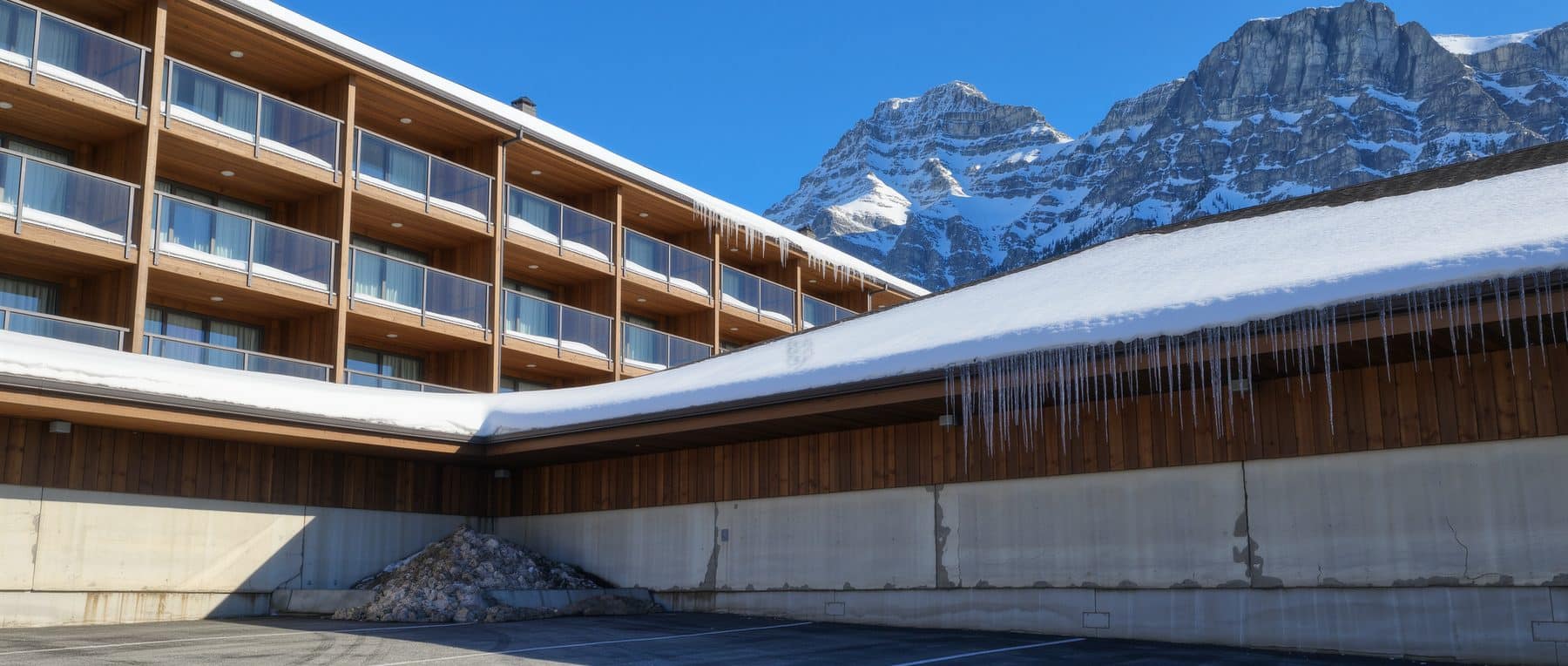
- Alberta's statute says special levy, not special assessment. Section 39.1(2) allows one for urgent repairs, an operating shortfall, topping up the reserve fund, a capital improvement or satisfying a judgment.
- The share is set by unit factor, not by square footage. On a $900,000 levy a unit holding 45 of 10,000 unit factors owes $4,050 and one holding 120 owes $10,800.
- A board can pass a special levy without an owner vote. Only a capital improvement requires a special resolution first.
- Unpaid contributions carry interest up to 18% a year and can be secured by a caveat that ranks and is enforced like a mortgage.
- The estoppel certificate is where a levy against your unit shows up. It costs at most $200, or $300 rushed, and the corporation has 10 days to produce it, so a 7-day condition period is too short.
A special assessment condo bill in Alberta is not legally called a special assessment at all. The Condominium Property Act calls it a special levy: a one-time contribution a board approves by resolution, on top of your monthly fee, split among owners by unit factor. It is due when the resolution says it is due, the arrears attach to the unit rather than to the person, and in a Bow Valley building the weather brings the bill forward. Here is how it works in Alberta and what to check in Canmore.
What is a special assessment on a condo?
It is a one-time charge to owners for something the operating budget and the reserve fund cannot cover, and in most cases the board can pass it without asking owners to vote. On a $900,000 building-wide special assessment, the owner of a unit holding 45 of the building's 10,000 unit factors owes $4,050 and the owner of a 120-factor unit owes $10,800. The common triggers are a roof, deck or building envelope replacement, sudden water ingress, an insurance deductible after a claim, a cost overrun on a planned project, or a legal judgment against the corporation. It is not your recurring condo fee, which pays for insurance, snow clearing, management and the monthly contribution to the reserve.
The two are linked, though. A building that has kept fees artificially low for a decade is usually the building that sends the letter.
Special levy or special assessment: what Alberta actually calls it
Alberta's statutory term is special levy, and most of what you will read online is written to Ontario's Condominium Act and its status certificate, which does not apply here. The rest of the statute, and what else in it binds a buyer, is set out in the guide to Alberta condo law for buyers. Section 39.1(2) of the Condominium Property Act lists the purposes a special levy may serve:
- unexpected and urgent maintenance, repair or replacement of corporation, common or managed property
- an unexpected shortfall in the operating account
- topping up the reserve fund to meet the reserve fund plan
- a capital improvement, subject to a special resolution
- satisfying a judgment against the corporation
- any other purpose the regulations provide for
The board's resolution must set out the purpose, the total to be levied, the method of determining each unit's share and the date it is payable, or, where the levy is payable in instalments, the dates each instalment falls due. As soon as possible after passing it, the board must tell every owner five things under section 39.1(4): the purpose, the total, the method of splitting it, that owner's own share, and the payment date or the instalment dates. If the amount collected exceeds what the work costs, the surplus goes into the reserve fund rather than back to owners.
Why Canmore condo buildings levy special assessments sooner
Three mountain mechanisms work on a Bow Valley envelope, which is why a Canmore reserve fund study tends to put envelope components on a shorter clock than the same building would carry on the prairie. Freeze-thaw cycling works water into deck membranes, stucco control joints and parkade slabs. Snow load and ice damming stress low-slope roofs and eaves. UV at altitude bleaches sealants, wood and finishes years early.
| Component | Why a Bow Valley building brings it forward | What to look for in the study |
|---|---|---|
| Deck and balcony membranes | Repeated freeze-thaw under standing snowmelt | Membrane age and whether decks have been re-coated once already |
| Low-slope roof and eaves | Snow load and ice damming through a long winter | Remaining life versus the fund balance for that line |
| Stucco, cladding and sealants | UV at altitude plus wet-dry cycling at control joints | Any note of moisture testing or envelope consulting |
| Parkade slab and ramp heating | Road salt and meltwater tracked in from November to April | Whether ramp heat is on the inventory at all |
| Boilers and common-area heating | Longer heating season than the provincial average | Age against the manufacturer life used in the report |
Under the Condominium Property Regulation the study must inventory everything that may need repair or replacement in the next 30 years, estimate condition, timing and cost, and be redone on or before five years from the last approved plan. Compare buildings on that document, not on the fee. The Canmore condo buildings hub sets out how ages and construction types differ across town.
How much does a condo special assessment cost, and how is it split by unit factor?
Your share is your unit factor share, not your square footage and not your municipal assessment. Unit factors are set on the condominium plan and total 10,000 across the building. A board can use another basis only if the bylaws provide for it and the regulations allow it. Do not confuse this with your Town of Canmore property assessment, which is a separate municipal valuation and has no bearing on the split.
| Total levy | Unit at 45 of 10,000 factors | Unit at 80 factors | Unit at 120 factors |
|---|---|---|---|
| $400,000 | $1,800 | $3,200 | $4,800 |
| $900,000 | $4,050 | $7,200 | $10,800 |
| $1,800,000 | $8,100 | $14,400 | $21,600 |
Set the figure beside the purchase. On the 2025 Canmore average apartment condo of $814,000, a $7,200 share is under one percent of the price, and on the average townhouse at $1.15M it is smaller again. Run it through the buyer cost calculator alongside your closing costs rather than treating it as a separate shock.
A levy does not have to land as one cheque, and it does not have to land at all. Section 39.1(1)(d) lets the resolution set instalment dates instead of a single due date, and the notice to owners under section 39.1(4)(e) has to repeat them, so a $10,800 share can arrive as a schedule rather than a single demand. The corporation also has a borrowing power: section 37(4) of the Act lets it borrow to carry out its duties, and the regulation requires a resolution of owners once a loan plus the year's other outstanding loans pass 15% of the corporation's revenue, with a board able to give a lender a statement of its remaining borrowing room. A corporation that borrows rather than levies changes what you are buying. The cost arrives inside a higher monthly fee for years, and it shows up as a loan on the information statement rather than as an amount levied against your unit on the estoppel certificate, so a building with no special assessment on record can still be paying for a roof.
Can the board levy one without an owner vote, and can you refuse to pay?
Yes to the first, no to the second. Section 39(1)(c) lets a board approve a special levy by its own resolution. Owners vote only where the purpose is a capital improvement, which needs a special resolution before the board may approve the levy. Urgent repairs, operating shortfalls, reserve top-ups and judgments do not.
Non-payment is expensive. The corporation may charge interest, capped by regulation at 18% a year, and sue for the debt plus reasonable collection and legal costs. It can require a tenant in possession to pay rent straight to the corporation. Your mortgagee may pay the arrears and add them to the mortgage. It can register a caveat against your title, which becomes a charge with the same priority as a mortgage under the Land Titles Act and may be enforced in the same way.
A chargeback is a different animal. Under section 39.01 it is levied on one owner whose act or omission caused the damage, and it is capped at the lesser of the corporation's insurance deductible limit and the actual costs plus the reasonable related service costs of the repair. A special levy falls on everyone by unit factor; a chargeback falls on you alone. Ask your insurance broker whether your unit owner policy carries loss assessment coverage, and what it responds to.
It certifies the contributions payable, arrears and interest owing as of its date, and it is conclusive proof of those things in favour of whoever requested it. It does not promise that no levy passes the week after. If the minutes show an envelope study underway or a fee-increase debate on the table, ask the manager directly whether a levy is contemplated, and put the answer in writing before conditions come off.
Reading the reserve fund study, the minutes and the estoppel certificate
Alberta gives you a specific paper trail and a price list. The corporation has 10 days to respond to a written request. An estoppel certificate under section 43.2 costs at most $200, or $300 if you need it inside three days. Most other documents are capped at $10 each or $0.25 a page, whichever is greater, with $20 more each for a rush. The full document list and its deal-breakers are covered in the Canmore condo buying guide, and the order to read them in when the clock is short is set out in the guide to condo document review in Alberta.
- 1Give yourself more than 10 daysThe statutory response window is 10 days on its own. A condition period shorter than about 14 business days can expire before the documents even arrive.
- 2Read the reserve fund report firstNote the date of the last study, the components due inside five years, the recommended annual contribution and whether the board is actually collecting it.
- 3Read two years of board and general minutesWater ingress, envelope consultants, insurance claims and levy debates appear here months before a resolution does.
- 4Check the information statementIt states the reserve fund balance, the basis of contributions, any known structural deficiencies, current loans and the unit factors.
- 5Order the estoppel certificate for your unitIt is where arrears and amounts levied against that specific unit are certified. $200, or $300 rushed.
Before a client waives conditions, a local REALTOR® asks the manager for two documents by name: the special levy resolution itself, and the invoice or contract behind it. A levy with a signed scope, a contractor and a payment schedule is a number you can negotiate around. A levy that exists only as a discussion in the minutes is a number nobody can price yet, and that is the one worth slowing down for.
Tourist homes and hotel condos carry a longer reserve inventory
Nightly-rental buildings have more to replace. The reserve inventory can include a pool plant, hot tubs, a front desk and lobby, commercial laundry, guest corridors and heavier lift use, none of which an owner-occupied block has to fund at all. A longer inventory tends to mean a larger levy, and it arrives on top of a heavier tax bill: the 2026 tourist-home rate is 0.832% of assessed value against 0.457% for a primary residence, and hotel condos assessed as non-residential pay 0.957%. Model the levy inside the yield, not beside it, using the Canmore hotel condo guide and the Canmore property tax rates.
There is a parallel trap, but only for second-home owners from outside the province. The Livability Tax sits inside the municipal rate, and provincial legislation exempts any property owned wholly or partly by an Alberta resident whatever it is used for, which is why the taxed base shrank from roughly 2,260 properties to about 819. A non-Albertan's non-primary residence pays 0.833% rather than 0.457%, which on a $1.2M unit is $10,002 against $5,479, a gap of $4,523 a year before any levy lands. Stack a levy instalment on top of that in the year the work is done and the holding cost of the unit changes shape, which is worth modelling before you buy rather than after the resolution arrives.
Buying or selling a Canmore condo when a special assessment is pending
Deal with it in the contract, because the statute is unkind to whoever is left holding the unit. Section 39.2 lets the corporation recover a contribution from the person who was an owner when the resolution passed and the person who is an owner when the action is instituted, jointly and severally, so a seller does not simply walk away and a buyer does not simply inherit a clean slate.
The workable answers are a price reduction equal to the levy, a holdback from the sale proceeds held by the lawyers until the corporation is paid, or the seller paying it out on closing with the estoppel certificate confirming a zero balance. Which one you get depends on how firm the number is. If you are selling a second home in Canmore into a market reporting 68 days on market across all property types in July 2026, expect buyers to price an unquantified levy more harshly than the levy itself.
Should you buy a special assessment condo in Canmore?
Usually yes, when the number is known. A special assessment condo with a quantified levy is a priced problem; an unfunded reserve is an unpriced one.
- The number is known and can be taken off the price or held back on closing
- The work is being done, so the component is new the day you take possession
- A thin buyer pool prices a live levy harshly, which can leave the discount larger than the bill
- A board willing to levy is usually a board that reads its own reserve fund report
- You pay the money within months of possession, on top of closing costs
- Scope can grow once the envelope is opened up, and a second levy can follow
- Resale is harder while the work is visible and the levy is on the estoppel
- Lenders and insurers may ask questions that delay a purchase
Compare it against the alternative on the shortlist. A townhouse complex with no elevator and no parkade has a shorter reserve inventory than an amenity building, which is one of the real differences behind the townhome, condo and half-duplex comparison, and it shows up across the Canmore condos for sale market.
What this means if you are buying
On any Canmore condo, treat the reserve fund report as the price-relevant document and the monthly fee as the summary. Build a condition period of at least 14 business days so the 10-day statutory window cannot swallow it, order the estoppel certificate for your specific unit, and read the last two years of minutes yourself. If a special assessment condo levy has already passed, get the resolution and the contract, then negotiate a holdback or a price adjustment rather than walking away from a building you like. If none has passed but the envelope components are due inside five years and the fund is thin, price the coming levy in now, because a priced problem is one you can still negotiate.
A local REALTOR® will tell you which documents to order, what the reserve fund report is really saying and how to price a levy into your offer. Free, no obligation.
Frequently asked
Can an Alberta special levy be paid in instalments?
Yes, if the board resolution says so. Section 39.1(1)(d) requires the resolution to state either the date the levy is payable or, where it is payable in instalments, the dates each instalment falls due, and section 39.1(4)(e) requires the same detail in the notice sent to every owner. Ask for the resolution during your condo document review before you assume one cheque.
Can a condo corporation borrow instead of levying owners?
It can. Section 37(4) of the Condominium Property Act lets a corporation borrow money to carry out its duties, and the regulation requires a resolution of owners once that loan plus the year's other outstanding loans pass 15% of the corporation's revenue. A loan pushes the cost into the monthly fee for years instead, so check the information statement for existing borrowing before you compare one building's condo fees with another's.
What is the difference between a special levy and a special assessment in Alberta?
They are the same thing. Special assessment is the everyday term, and it is what boards, buyers and most of the internet still say. Alberta's Condominium Property Act uses special levy, in section 39.1, and the board resolution that creates one must set out the purpose, the total amount, the method of splitting it and the payment date or the instalment dates. Ask a Canmore property manager for the special levy resolution by that name.
Are condo special assessments tax deductible in Canada?
Not on a home you live in. On a rental property the Canada Revenue Agency lets you deduct condominium fees representing your share of upkeep, repairs, maintenance and other current expenses of the common property. A levy that restores something to its original condition tends to be current, while one that improves the property beyond it is capital and is added to your cost base. Ask an accountant.
What happens if I do not pay a condo special assessment?
The corporation can charge interest, capped at 18% a year by regulation, and sue for the debt plus reasonable collection and legal costs. It can require a tenant to pay rent directly to the corporation, and your mortgage lender may pay the arrears and add them to your loan. It can also file a caveat that ranks like a mortgage and can be enforced like one.
Who pays the special assessment if the condo sells before it is due?
Section 39.2 lets the corporation recover the amount from whoever owned the unit when the resolution passed and whoever owns it when the action is started, jointly and severally. In practice the arrears follow the unit, so the buyer inherits the problem. Settle it in the contract with a price reduction or a holdback, and confirm the position on the estoppel certificate.
- Condominium Property Act, RSA 2000 c C-22, current as of 14 May 2026 (ss. 37, 39, 39.01, 39.1, 39.2, 40, 43.2, 44)
- Condominium Property Regulation, AR 168/2000 (ss. 20.52, 20.53, 23, 24, 30, 31.7, 31.8, 76)
- Government of Alberta, Condo Law Alberta: Special Levy
- Government of Alberta, Condo Law Alberta: Reserve Fund
- Canada Revenue Agency, T4036 Rental Income (current and capital expenses)
- Town of Canmore: Taxation Rates for 2026
Keep reading

Tell us what you’re looking for and get a straight answer, usually the same day.