Canmore Condo Fees: What Is Normal and What They Cover
What Canmore condo fees typically include, why mountain buildings and tourist-home complexes cost more to run, and the reserve-fund and document questions Alberta law lets you ask before you buy.
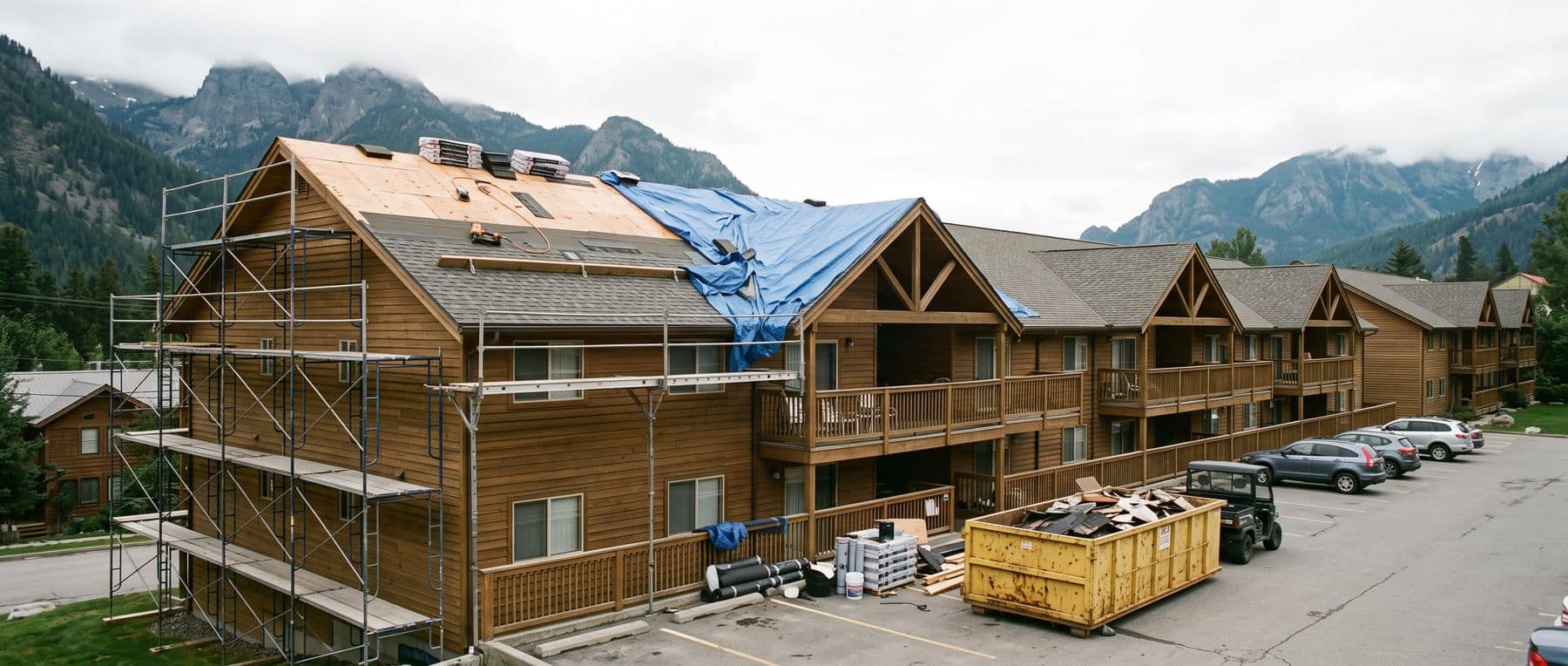
- Fees are set by the condo corporation’s annual budget divided by unit factors, not by square footage alone. Two similar units in different buildings can differ by hundreds a month.
- In Canmore, snow removal, roof and deck maintenance and building insurance in a mountain climate are the big line items.
- Alberta law requires a reserve fund study by a qualified provider, updated at least every five years, and a funding plan. Low fees plus a thin reserve fund equals a special assessment waiting to happen.
- You are entitled to the information statement, budget, financial statements, bylaws, minutes, insurance certificates and reserve fund report. Maximum document fees are set by regulation.
- Tourist-home and hotel-condo buildings carry higher fees and often a rental-pool or furnishing arrangement on top.
Canmore condo fees, what American buyers would call HOA fees, are the carrying cost buyers argue about most and understand least. There is no published town average, fees for two similar two-bedroom units can differ by several hundred dollars a month, and the cheapest building on paper is sometimes the most expensive to own. This post explains what drives the number in Canmore specifically, what the fee does and does not include, what a reserve fund is and why it matters more in a mountain climate, and which documents Alberta law entitles you to see before you commit. The full condo buying guide covers bylaws and rental rules.
How much are Canmore condo fees?
Fees are the corporation’s annual budget divided among owners by unit factor, a share set on the condominium plan that roughly tracks unit size, so the building sets the number, not the unit. In Canmore the spread runs from small self-managed townhome complexes with no amenities, through apartment-style buildings with elevators, underground parkades and bulk-metered heat, to tourist-home and hotel-condo buildings with pools, hot tubs and staffed front desks. Across current listings that spread runs from a few hundred dollars a month at the low end to four figures at the top, wide enough that a town-wide figure tells you nothing. Work from the fee stated on each listing and the budget behind it.
| Building type | What pushes fees up | What to ask |
|---|---|---|
| Townhome complex, self-managed | Little: snow clearing, insurance, exterior maintenance | Who does the books, and when was the last reserve fund study? |
| Apartment condo, professionally managed | Elevator, parkade, common heating, management contract | Are heat and water included? What is the reserve fund balance per unit? |
| Newer buildings (Spring Creek, Three Sisters) | Amenity rooms, underground parking, larger insurance premiums | Is the reserve fund still on its first-cycle plan? |
| Tourist-home / hotel-condo buildings | Pool, hot tub, front desk, cleaning, rental pool, commercial insurance | What do the rental-pool and furnishing agreements cost on top? |
Read the fee against what it includes. A $600 fee with heat, water and a healthy reserve fund can be cheaper to own than a $400 fee in a building that has deferred its roof.
What a Canmore condo fee does to the monthly carrying cost
Judge the fee as one line of three. On an $814,000 apartment, the 2025 Canmore average, property tax at the 2026 primary-residence rate of 0.457% is $3,720 a year ($310 a month); at the non-primary rate of 0.833%, which applies when no owner on title is an Albertan, it is $6,781 ($565 a month). Add your own contents and liability policy on top.
| Monthly condo fee | Fee plus tax, primary residence | Fee plus tax, non-primary owner | Annual difference between the two |
|---|---|---|---|
| $400 | $710 a month ($8,520 a year) | $965 a month ($11,580 a year) | $3,060 |
| $600 | $910 a month ($10,920 a year) | $1,165 a month ($13,980 a year) | $3,060 |
| $900 | $1,210 a month ($14,520 a year) | $1,465 a month ($17,580 a year) | $3,060 |
Two things fall out of that table. A $200 difference in fee is $2,400 a year, which is real but smaller than the $3,060 the tax class adds for an out-of-province owner. And a well-funded reserve behind a $600 fee protects you from a special assessment condo that can run to five figures in a single letter, which no fee comparison shows.
What do Canmore condo fees cover?
Typically: the corporation’s building insurance (deductibles have risen sharply across Alberta), snow removal and landscaping, common-area electricity and heating, water and sewer where the building is bulk-metered, property management, repairs to common property, and the monthly contribution to the reserve fund. In Canmore the snow-removal line is real money: parkade ramps, roofs and walkways from November to April.
Not covered: your property tax (see Canmore property tax 2026), your own unit contents and liability insurance including the deductible the corporation may charge back to you, in-suite utilities that are separately metered, and special assessments. Individually titled parking stalls and storage units also receive their own small tax notice from the Town.
What is a reserve fund and why does it matter here?
A reserve fund is the corporation’s savings for repairing or replacing depreciating common property: roofs, decks, siding, boilers, elevators, parkade membranes, over the next 30 years. Alberta’s Condominium Property Regulation requires the corporation to retain a qualified reserve fund study provider to inventory the components, estimate their condition, replacement timing and cost, recommend the funding needed, and produce a written report; the board must then approve a reserve fund plan showing how owners’ contributions will cover it, and update the study on or before five years from the last one.
Mountain buildings depreciate faster than city buildings: freeze-thaw on decks and stucco, snow load on roofs, UV at altitude. When the fund is short, the board raises fees, borrows, or levies a special assessment. A one-time bill to each owner that can run to tens of thousands of dollars.
Buyers sort listings by fee and favour the cheapest. Sometimes the cheap building is simply lean; often it is underfunding its reserve. If the reserve fund report shows major components due within five years and the balance is a fraction of the plan, the seller may be leaving right before the special assessment. Compare the fund balance and the plan, not just the monthly fee.
Which documents should you review before buying a Canmore condo?
Section 20.52 of the regulation lists what a corporation must provide on request, and section 20.53 caps what it can charge:
- 1Information statement ($100 maximum)Lawsuits and demands over $5,000, the reserve fund balance, the contributions and how they were set, known structural deficiencies, loan details, unit factors.
- 2Estoppel certificate ($200 maximum)Confirms the seller’s fee, any arrears and any special assessments levied or pending against the unit.
- 3Budget and financial statementsIs the operating budget balanced? How much of the fee goes to the reserve? Are there surpluses or deficits year to year?
- 4Reserve fund report and planDate of the last study, components due in the next five to ten years, the recommended contribution and whether the board is actually collecting it.
- 5Bylaws, rules and resolutionsPets, rentals, age restrictions, tourist-home use, renovations, parking. A corporation’s bylaws can prohibit what the Town’s zoning allows.
- 6Minutes: general meetings and board meetingsTwo years’ worth. Water ingress, insurance claims, fee-increase debates and pending projects show up here first.
- 7Insurance certificate and standard insurable unit descriptionCoverage limits, deductibles and what the corporation insures versus what you must.
Other documents cost at most $10 each in electronic form, with a small surcharge if you need them within three days. Make your offer conditional on a satisfactory review of these documents, with enough days for your lawyer or a condo document reviewer to read them. The buying a condo in Canmore post lists the deal-breakers people find late.
How are tourist-home and hotel-condo fees different?
Higher, and structured differently. Nightly-rental buildings carry the amenities guests expect, heavier wear, commercial-grade insurance and often a rental pool with a management company that takes a share of revenue and sets furnishing standards. Some fees include items an owner-occupier would never use. On top of that, tourist homes pay the tourist-home property tax rate (0.0083179 of assessed value in 2026, about 1.8× a primary residence’s total bill) and need a business licence per unit to rent nightly. Model all of it together with the hotel condos post and the buyer cost calculator.
A local REALTOR® asks two questions of every property manager before a client waives conditions: what have fees done in each of the last three years, and what did snow removal cost last winter. A steady 3% to 5% increase with a funded reserve is normal. A flat fee for five years followed by a study that says the roof is due is not, and the minutes usually show the board knew.
What this means if you’re buying
Budget the fee as one line of a three-line carrying cost: condo fee, property tax and insurance, and judge it against what it includes and how well the reserve is funded, not against the cheapest listing on the page. Request the full document package under section 20.52, make the offer conditional on reviewing it, and read the reserve fund report and the last two years of minutes yourself even if a professional reviews the rest. For tourist-home buildings, add the rental-pool agreement and the tourist-home tax rate before you decide whether the yield is real. The condos for sale page explains how buildings across town differ, and it is worth remembering that Canmore condo fees follow the building and its reserve fund, not the unit you fell for.
A local REALTOR® will tell you which questions to put to the manager and what the reserve fund report is really saying. Free, no obligation.
Frequently asked
How much are condo fees in Canmore?
There is no published average. Fees are the building’s annual budget divided among owners by unit factor, so they depend on age, amenities, whether heat and water are included, and how well the reserve fund is funded. Expect the lowest fees in small self-managed townhome complexes and the highest in tourist-home and hotel-condo buildings with pools, hot tubs and staffed front desks. Compare the monthly figure stated on the listings you are actually shortlisting rather than a town-wide average.
Are condo fees the same as HOA fees?
Mostly, yes. HOA fees is the American term; in Alberta the monthly payment to a condominium corporation is called a condo fee or condo contribution, and it funds the building's operating budget and reserve fund. A few master-planned areas also charge a separate community association fee, so check the title and the condo documents for both before you offer.
What do condo fees cover in Canmore?
Typically building insurance, snow removal and landscaping, common-area electricity and heating, water and sewer where the building is bulk-metered, property management, repairs to common property and the monthly contribution to the reserve fund. They do not cover your property tax, your unit contents and liability insurance, in-suite utilities that are separately metered, or special assessments.
What is a reserve fund and how often is it studied?
A savings account the condo corporation must keep for repairing or replacing common property such as roofs, decks, boilers, elevators and parkades. Alberta’s Condominium Property Regulation requires a reserve fund study by a qualified provider, a written report, a board-approved funding plan and an updated study on or before five years from the last one.
What condo documents can I get before buying in Alberta?
Section 20.52 of the Condominium Property Regulation lists them: an information statement (lawsuits, reserve fund balance, contributions, structural deficiencies, loans, unit factors), the budget, financial statements, bylaws, general and board meeting minutes, insurance certificates and policies, management and recreational agreements, rules, resolutions, professional reports and the reserve fund report and plan. Fees are capped: $200 for an estoppel certificate, $100 for the information statement, $10 per electronic document.
Are condo fees higher for tourist homes in Canmore?
Usually. Nightly-rental buildings run pools, hot tubs, fitness rooms, front desks and heavier cleaning and maintenance, and many operate rental pools with furnishing standards. Owners also pay the tourist home property tax rate, 0.0083179 of assessed value in 2026, which is separate from condo fees but lands in the same carrying-cost budget.
Keep reading

Tell us what you’re looking for and get a straight answer, usually the same day.