Canmore Foreclosures: How Judicial Sales Work in Alberta
Canmore foreclosures are rare and sold by court-supervised judicial sale, not a trustee auction. How the Alberta process works and why bargains are uncommon.
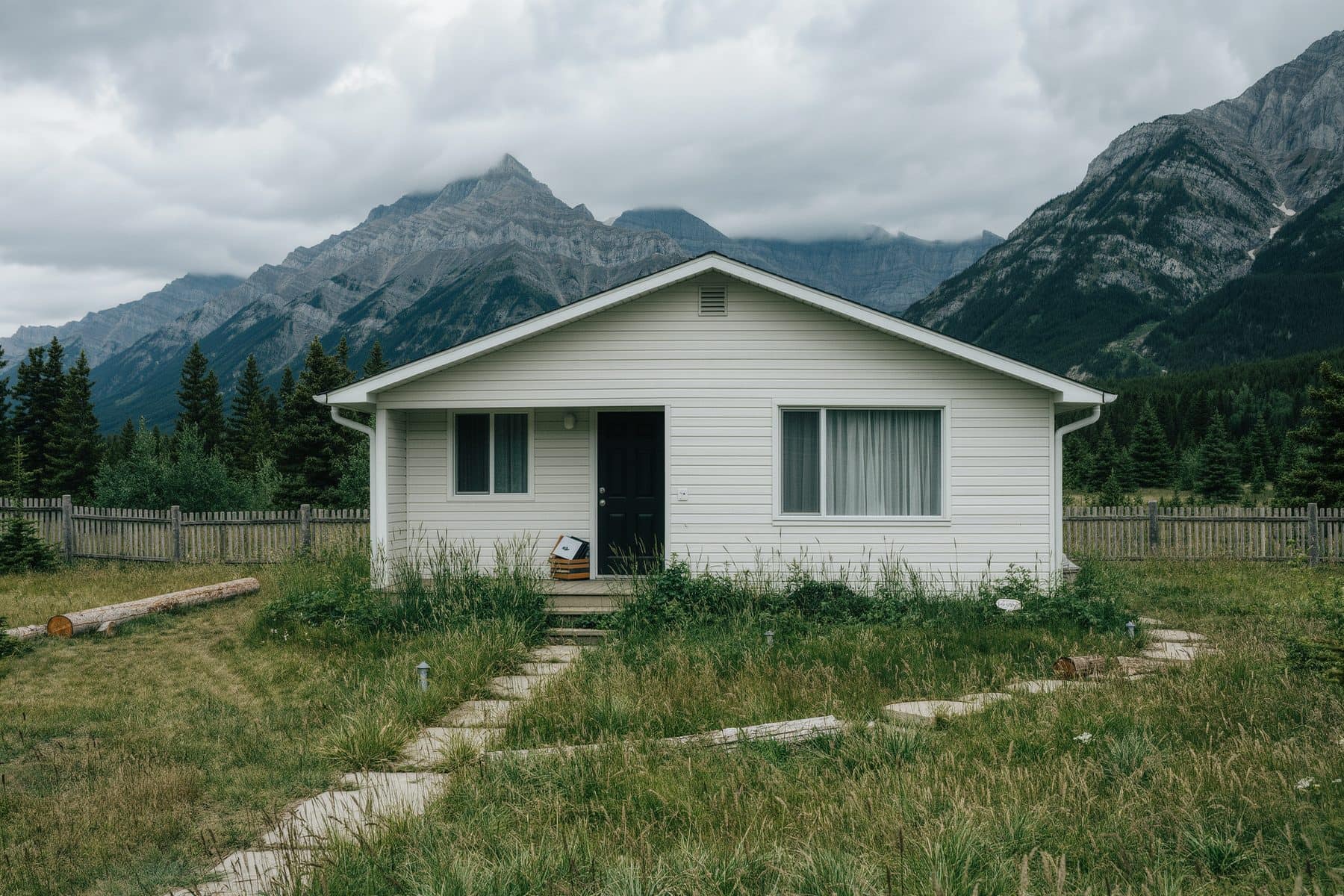
- Alberta uses a court-supervised judicial sale. Ontario, PEI, Newfoundland and New Brunswick use power of sale, where the lender sells without a court (Torys LLP).
- The Law of Property Act sets the redemption period at six months from the order for land other than farm land, and one year for farm land; the court can shorten or extend it (s.41).
- Rule 9.32 of the Alberta Rules of Court lets the court offer the property for sale at a price it considers appropriate, and any listing agreement has to be approved by the court and attached to the order.
- Sale contracts in a foreclosure generally exclude representations and warranties, so the condition of the property, permits, encroachments and condo documents are all your problem.
- Alberta had 1,519 mortgages three or more months in arrears out of 570,601 in May 2026, a rate of 0.27%, below the 0.29% national rate (Canadian Bankers Association).
- With 483 residential sales in Canmore in 2025 and detached homes averaging about $2.15M, most defaulting owners here have equity and sell on the open market instead.
People search for Canmore foreclosures expecting the thing they have seen in American listings: a bank-owned house priced to move. Alberta does not work that way. Here a lender who wants its money back has to sue, and the Court of King's Bench of Alberta controls the process from the first filing to the order that confirms the sale. That changes the timeline, the price, the paperwork and the risk. This post explains the actual mechanics, what you give up as a buyer, and why the bargains people expect rarely appear in a market this tight.
Are there Canmore foreclosures worth looking for?
Occasionally, but they are scarce, and no public body publishes a count by town. What can be measured is arrears. In May 2026 the Canadian Bankers Association counted 1,519 Alberta mortgages three or more months in arrears out of 570,601, a rate of 0.27%, against a national rate of 0.29% and Ontario's 0.32%. Alberta is not a province with a default problem, and foreclosures are correspondingly thin on the ground.
Layer Canmore's own market on top. There were 483 residential sales in 2025, detached homes averaged about $2.15 million and prices rose roughly 8% on the year (canmorealberta.com). In a market where values have risen, a borrower who falls behind almost always has equity, and an owner with equity lists the property and sells it rather than losing control of the process. That is the single biggest reason genuine distressed pricing does not show up here. It also explains why the Canmore foreclosures that do reach a judicial sale are often the awkward ones: an estate in dispute, a corporate holding, a unit with a title problem, a building mid-way through a contested special assessment condo.
Three different things get filed under Canmore foreclosures in casual conversation. A judicial sale is a mortgage enforcement action in the Court of King's Bench. A tax recovery sale is a municipality selling for unpaid taxes under the Municipal Government Act. A trustee or power-of-sale auction is the Ontario model and does not exist in Alberta for these purposes. If a listing or a website promises an auction of bank-owned Alberta homes, read it sceptically.
How the Alberta judicial sale process actually works
Foreclosures in Alberta are governed by sections 37 to 50.1 of the Law of Property Act and Rules 9.30 to 9.36 of the Alberta Rules of Court. The sequence looks like this.
- 1Default and statement of claimThe lender files a statement of claim in the Court of King's Bench of Alberta and serves the borrower. This is a lawsuit, not an administrative process, and it starts a court file that the borrower can respond to.
- 2Affidavit of value and titleBefore applying for a redemption order, an order that the property be offered for sale, a foreclosure order, an order confirming sale or an order of possession, the lender must file an affidavit of value (Rule 9.30) and a certified copy of all current titles to the land (Rule 9.31).
- 3Redemption orderThe court states the amount owing and fixes a redemption period. Section 41 of the Law of Property Act sets six months from the date of the order for land other than farm land, and one year for farm land. The court may shorten or extend it having regard to the debtor's ability to pay, the value of the land, whether it has been abandoned, the lender's security and the debtor's earning capacity.
- 4Judicial listingIf the borrower does not redeem, the court can order the property listed. Rule 9.32 lets the court offer the property for sale at a time and place, in a manner and at a price that the court considers appropriate, and where [a realtor](/canmore-realtor/) is used the listing agreement must be approved by the court and appended to the order.
- 5Offers go to the court, not the sellerOffers are put before the court. Rule 9.33 requires the court to consider the nature of the property, its value, the existing market, the amount owed on the lender's security and prior charges including municipal taxes and condominium assessments, plus all offers or tenders made.
- 6Order confirming saleThe sale is only real once the court grants an order confirming it. Where property is offered for sale by tenders filed in court, Rule 9.34 requires the application to be scheduled for hearing not more than one month after the date set for receipt of tenders.
The practical consequence for a buyer is that your offer is a proposal to a judge, not an agreement with a seller. There is no negotiation over an inspection deficiency, no seller to ask about the furnace, and a gap between offer and confirmation during which a better offer can appear.
Why the court approving the price kills most of the discount
The court's job in a judicial sale is not to give a buyer a deal. It is to realise a fair value for the benefit of the borrower and of subsequent creditors, who are paid from any surplus. Torys notes that where there is equity in the property there is a bias towards judicial sale precisely because it generates proceeds for later encumbrancers, and that the court will likely refuse a judicial sale where the debt exceeds the value of the land.
That is the mechanism that removes the bargain. A price materially below market is a price the court has a reason to reject. What you may get instead is a motivated process, a vacant property and a seller with no emotional attachment. Those are real advantages. They are not the 30% discount people imagine.
Two Alberta features are worth knowing while you are reading the file. Section 40 of the Law of Property Act restricts the lender's remedy to the land and bars an action on the covenant for payment, which is why Alberta borrowers rarely face a deficiency judgment. Section 43 carves out mortgages given by a corporation and high-ratio mortgages insured under the National Housing Act or by a licensed mortgage insurer, where that protection does not apply.
As-is, no representations: what you are actually buying
The contracts used in foreclosures generally exclude any representations or warranties, meaning the plaintiff promises nothing about the property before, at, or after possession (Kahane Law Office). Kahane's own list of the things that bite buyers is a useful due-diligence checklist: structures encroaching onto a neighbour's land or a right of way, breaches of restrictive covenants, work that was never properly permitted, uninhabitable conditions, missing or broken appliances and mechanical systems, condition that has changed since you viewed, material latent defects, stigma, health hazard orders and delayed possession.
Read that list next to what a normal Canmore purchase gives you and the trade becomes clear:
| Normal Canmore sale | Judicial sale |
|---|---|
| Seller property disclosure and a seller you can question | No representations or warranties |
| Real property report with municipal compliance, negotiable | Not provided; encroachment and permit risk sits with you |
| Condominium documents ordered and often paid for by the seller | Order and pay for them yourself; corporation has 10 days to respond, estoppel capped at $200 |
| Conditions on financing, inspection and documents | Conditions weaken your offer against unconditional bids |
| Firm possession date | Possession can be delayed; vacant possession is not guaranteed |
For a condo in particular, the reserve fund study, the bylaws and any special assessment history matter more here than anywhere else, because nobody is going to hand them to you. The checklist in what to check when buying a condo in Canmore applies with the volume turned up. Title insurance is the standard mitigation for the encroachment and permit exposure, and your Alberta lawyer should be involved before you write, not after.
The working rule on distressed Alberta stock: assume the mechanical systems have not been serviced, assume the property has been unoccupied through at least one winter, and price a contingency for a frozen line or a failed boiler before you decide the listing is cheap. In the Bow Valley an empty house in February is a specific risk, not a hypothetical one.
Finding them, and the alternatives that usually work better
Judicially listed properties in Alberta are marketed like any other listing, through the MLS® System operated by the local real estate board and syndicated to the public portals, usually with a court-approved listing agreement and a note that the sale is subject to court approval. There is no separate official register of Canmore foreclosures to subscribe to. Where to search, and what each source leaves out, is covered in Canmore MLS® listings.
In practice most buyers hunting distress do better watching ordinary supply. Homes here took a median 68 days to sell in July 2026 with a 97.8% sold-to-list ratio, and stale listings, estate sales and price reductions are far more common than court files; the pattern is set out in Canmore days on market. Before you set a budget on any of it, check the real entry point in the average house price in Canmore and the transaction costs in closing costs in Canmore, then run the numbers through the buyer cost calculator.
What this means if you're buying
If Canmore foreclosures are the reason you started looking here, treat them as a niche rather than a strategy. Canmore foreclosures are almost never available at any given moment, the court approves the price so the discount is small, and the sale strips out the disclosure, the report and the conditions that normally protect you. The buyers who do well at a judicial sale are the ones who can pay cash or have financing fully arranged, who inspect and read documents before offering, who carry a repair contingency, and who are content to lose several files before winning one. Everyone else is better served by a patient search of ordinary listings with a local agent reading the condo documents and the assessment class.
Read alongside the step-by-step guide to buying here, which is written for people doing this from outside the valley and covers the disclosure, the report and the conditions a judicial sale takes away. Keep a standing eye on Canmore foreclosures if you want to, but build the search around ordinary listings, because that is where the value in this valley actually turns up.
Fifteen minutes with a local REALTOR® on how court-approved sales are handled here, what the as-is terms really mean, and where better value usually sits. Free, no obligation.
Frequently asked
How do foreclosures work in Alberta?
By judicial sale. The lender files a statement of claim in the Court of King's Bench, files an affidavit of value and certified copies of title (Rules 9.30 and 9.31), and asks for a redemption order. The Law of Property Act gives the borrower six months to redeem for non-farm land. If the borrower does not, the court orders the property listed and later grants an order confirming sale.
Does the court really set the price?
It approves it. Rule 9.32 says the court may offer secured property for sale at a time and place, in a manner and at a price that the court considers appropriate, and a listing agreement must be approved by the court and appended to the order. Rule 9.33 requires the court to weigh the nature and value of the property, the existing market, and amounts owed including municipal taxes and condominium assessments.
Are foreclosures cheaper than normal listings?
Usually not by much. The court is trying to get close to fair market value for the benefit of the borrower and subsequent creditors, not to hand a buyer a discount. What you gain in price you often give back in risk, because the sale excludes representations and warranties and you inherit whatever condition, permit and encroachment problems the property has.
Are there many foreclosures in Canmore?
Very few, and no public body publishes a count by town. The Canadian Bankers Association reported 1,519 Alberta mortgages three or more months in arrears in May 2026, 0.27% of 570,601 mortgages. In a market where the Canmore average house price for detached homes was about $2.15 million in 2025 and prices rose about 8%, an owner in trouble almost always has equity and sells normally.
Can I put conditions on a foreclosure offer?
You can write them, but competing offers without conditions are stronger, and the court is choosing between offers on the day. Do your inspection, document review and financing work before you offer, not after. Buying a foreclosed condo means buying the condominium documents yourself; Alberta caps an estoppel certificate at $200 and gives the corporation 10 days to respond.
Can the lender come after me for the shortfall in Alberta?
Usually not the borrower, which is why Alberta foreclosures behave differently. Section 40 of the Law of Property Act restricts the lender's right to the land itself and bars an action on the covenant for payment. That protection does not apply to mortgages given by a corporation, or to high-ratio mortgages insured under the National Housing Act or by a licensed mortgage insurer.
- Alberta Rules of Court, Alta Reg 124/2010, Part 9 Division 5 (Foreclosure Actions)
- Law of Property Act, RSA 2000 c L-7 (Alberta King's Printer)
- Torys LLP: Foreclosure proceedings and available remedies for mortgage holders and other creditors
- Court of King's Bench of Alberta
- Canadian Bankers Association: Number of Residential Mortgages in Arrears, May 2026
- Kahane Law Office: Risks of buying a foreclosure in Alberta
- Canmore Alberta: Canmore real estate 2025: a return to balance
Keep reading

Tell us what you’re looking for and get a straight answer, usually the same day.