The Canmore Housing Declaration: Who Must Declare, and by When
The Canmore housing declaration is due by 11:59 p.m. on 31 December each year. Miss it and, unless an Alberta resident is on title, your home is taxed at the higher residential rate.
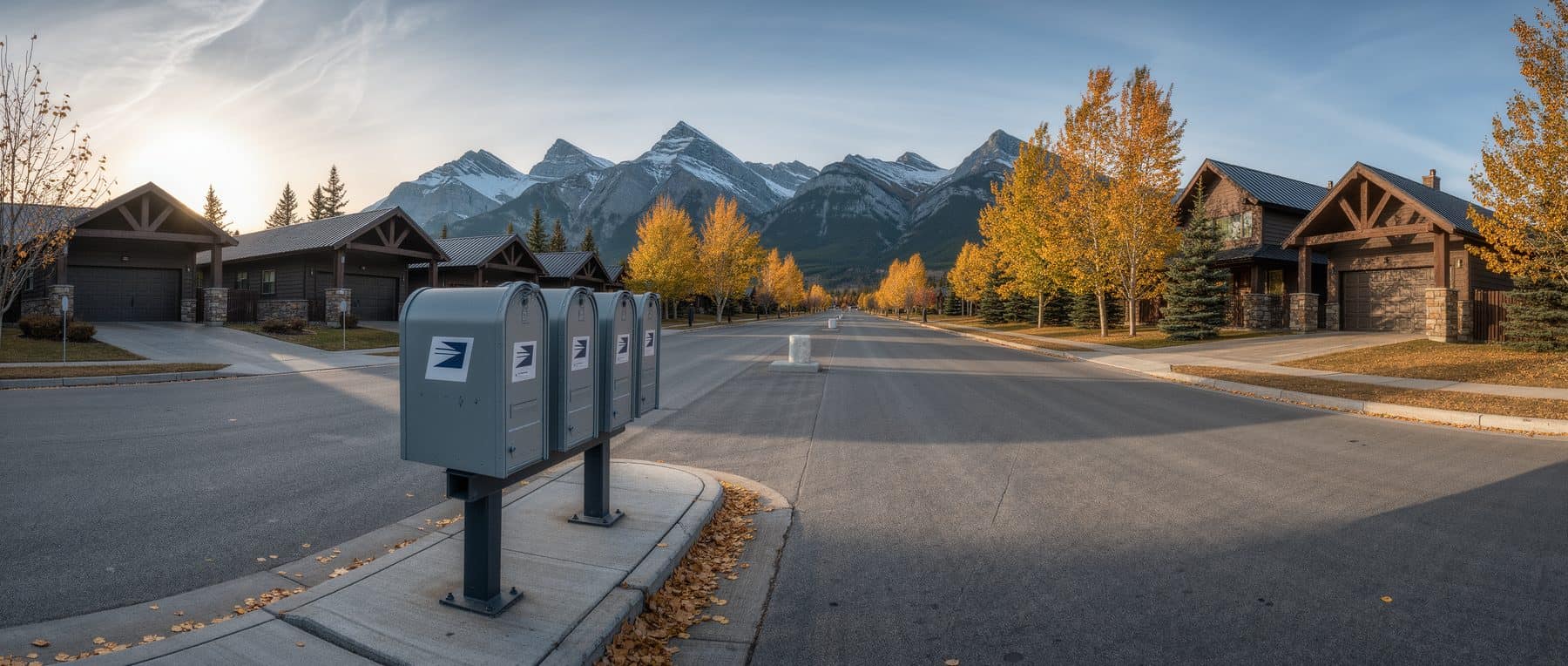
- Deadline: 11:59 p.m. on 31 December, every year, one declaration per residential tax roll. Access codes are reset annually and cannot be re-issued after 4:30 p.m. on 30 December.
- No declaration means automatic assignment to the residential non-primary subclass and the loss of your right to file an assessment complaint for that tax year. Alberta residents sit outside the higher rate under 2026 provincial legislation, but the exemption applies to the subclass rather than to the filing obligation, so they still declare.
- The primary residence test is 183 cumulative days in the calendar year including 60 consecutive days, by the owner or a long-term tenant. One primary residence per person.
- A property bought part-way through 2026 inherits the assessment code and tax subclass the previous owner left on it, so ask about the declaration at conveyancing.
- Tourist homes cannot be declared. On 2026 rates the gap between the two residential subclasses is 0.377% of assessed value, or $4,523 a year on a $1.2 million home.
The Canmore housing declaration is due by 11:59 p.m. on 31 December every year, one declaration for every residential tax roll in town. File it and your property stays in the primary residential subclass, 0.457% of assessed value on 2026 rates. Miss it and you lose the right to complain about your assessment for that tax year, and unless an Alberta resident is on title the Town also assigns the property to the residential non-primary subclass at 0.833%. This is the process written from the owner's side of the letterbox rather than the Town's.
What the Canmore housing declaration is, and when it is due
It is the Town of Canmore's annual primary residence declaration, the administrative step that decides which of two residential tax subclasses your property sits in for the coming year. The Town's own name for the wider policy is the Livability Tax Program; the declaration is the part you actually have to do something about.
The deadline is fixed and repeats: 11:59 p.m. on 31 December, annually. It is not a one-time registration. A declaration made in 2025 does nothing for the 2027 tax year, because access codes are reset every autumn and every tax roll starts each cycle undeclared.
One declaration covers one tax roll. If you own a house and a separately titled parking stall, or two units in the same building, each roll that carries a dwelling needs its own answer. Owners of several Canmore properties are the group most likely to declare one and forget another, because the letters arrive in the same envelope run but the codes are different.
The declaration asks how the dwelling was used in the calendar year now ending, and the answer is applied to the tax notice that arrives the following May or June. That lag is the source of most confusion: the form you complete in December 2026 sets the subclass on the bill you pay in June 2027. If you want to see what either subclass does to your own numbers, run them through the Canmore property tax calculator before you file rather than after the notice lands.
What happens if you do not declare
Missing the Canmore housing declaration costs you two things, and the second is the one owners underestimate. Undeclared properties are assigned to the residential non-primary usage subclass and taxed at the higher residential rate, unless an Alberta resident is on title, in which case provincial legislation keeps the higher rate off the property whatever the form says. You also lose the ability to file a complaint about your property assessment for that taxation year, and that second consequence falls on every undeclared owner, Albertan or not.
The tax consequence is arithmetic. On 2026 rates, the difference between the two residential subclasses is 0.377% of assessed value, which is $4,523 a year on a $1.2 million assessment.
The assessment consequence is less visible and can cost more. Canmore assessments moved 12.5% for 2026, complaint notices go out in late February and the complaint deadline falls in early May with a $50 filing fee. In a year when values move sharply, the right to argue that the Town has your square footage, your finish level or your comparables wrong is worth real money, because a successful complaint reduces every levy on the roll rather than just the municipal portion. Give that right up by forgetting a form and you carry the assessment as issued, correct or not. Our guide to the Canmore property assessment process covers what a complaint actually involves.
There is no reversing it after the fact. The declaration window closes with the calendar year, and the subclass is set when the assessment roll is prepared. The remedy for a genuinely wrong subclass is a conversation with the Town rather than a late declaration, and it is a conversation you would rather not need.
What counts as a primary residence: the 183-day and 60-day tests
A dwelling qualifies when someone lives in it as their primary residence for at least 183 cumulative days in the calendar year, and at least 60 of those days are consecutive. The occupant can be the owner or a tenant. A person may have only one primary residence.
The 183 days do not have to be continuous, which is why the second test exists. Sixty consecutive days rules out the pattern the program is aimed at: an owner who assembles a large annual day count out of long weekends and school holidays without the property ever being anyone's actual home.
The Town is explicit that the 60-day requirement does not mean the owner or renter cannot go away for a weekend or on vacation. Ordinary absences do not break the count. What the Town is testing is where your life is based, not whether you were physically present every night.
Evidence follows the same logic. The address on your Government of Alberta driver's licence or motor vehicle operator's licence, the address the Canada Revenue Agency uses for your income tax correspondence, and the address your mail is delivered to should all be the Canmore property. If they point somewhere else, the declaration is difficult to support in an audit.
How to submit your declaration: the letter, the tax roll number and the access code
The Canmore housing declaration is completed online, and the two things you need to open it both arrive by post. The Town mails a primary residence declaration letter to qualifying residential property owners in late October, and that letter carries the tax roll number and the access code for that year.
- 1Watch for the letter in late OctoberOne letter per qualifying residential tax roll, mailed to the address the Town has on file. Owners who live elsewhere should check that the Town holds a current mailing address, because the letter is not forwarded indefinitely and there is no email equivalent.
- 2Find your tax roll numberIt is printed on the letter and on your annual property tax notice. If you own several Canmore properties, match each roll number to the right address before you start, since the codes are property-specific and not interchangeable.
- 3Take the access code from the same letterCodes are reset annually, so last year's code will not work. Treat the letter as the year's paperwork rather than junk mail, and photograph it if you are going to be away over the winter.
- 4Answer the occupancy questions onlineWho occupied the dwelling, whether that was the owner or a tenant, and whether the 183-day and 60-day tests were met. Landlords answer no to owner occupancy and yes to the rental question.
- 5Claim an exemption if one appliesSale, new construction, permitted renovations, death, hospitalization or care, an order prohibiting occupancy, or a catastrophic event. Every one of these still requires a declaration to be filed.
- 6File before 11:59 p.m. on 31 DecemberEarlier is better. The Town's ability to help with access codes ends at 4:30 p.m. on 30 December, so a problem discovered on New Year's Eve has no solution.
Keep a record. A screenshot of the confirmation screen, or the confirmation email if one is issued, is what you will want if the subclass on next year's assessment notice does not match what you filed.
Lost access code, and the 4:30 p.m. hard stop
Contact the Town's Housing Action Team at housingaction@canmore.ca or on 403.678.1594 and ask for a reset, in the first half of December rather than the last week. The hard stop matters more than the process: the Town has stated that effective 4:30 p.m. on 30 December it will no longer be able to re-issue access codes, which leaves roughly 31 hours on the clock and no way to file the Canmore housing declaration if the letter is lost. An owner who returns from a Christmas trip on 30 December and starts looking for the envelope has already missed the only door.
The owners most at risk are the ones whose mail sits unopened. If you live in Vancouver or Toronto and the Canmore mailbox is checked once a month, the letter can go unread from late October until January, and the price of that is the higher rate on the next tax notice. For an Alberta owner the price is smaller but still real: a subclass to unwind by correspondence and no right to complain about the assessment for that year. Either way, ask the Town to hold your out-of-town mailing address on the tax roll, or set a calendar reminder for the first week of November to go and look for the envelope. Buyers relocating in the same year should read the guide to buying in Canmore from out of town for the other Canmore paperwork that follows the same pattern.
Why Canmore asks: the numbers behind the declaration
The Town's case is a gap between who owns Canmore's housing and who lives in it. On the Town's Housing Action pages, about 25% of homes are not occupied by a permanent resident. The declaration is how the Town sorts one group from the other, and 100% of the extra revenue is set aside for the affordable and below-market homes the Town says it needs, 3,400 of them by 2041. Behind that sits the ordinary arithmetic of a resort town where wages and prices have separated.
- Homes without a permanent resident
- About 25%
- Town of Canmore, Housing Action
- Median household income
- $106,000
- Canmore town, 2020 income year, 2021 Census of Population
- Average detached sale price
- $2.15M
- 2025 year-end average sold price, detached homes (483 residential sales in total)
- Average rent, all unit types
- $2,319
- CMHC Rental Market Survey, October 2025. One-bed $1,858, two-bed $2,438
- Median assessed value, residential
- $1.04M
- Town of Canmore, Housing Action. Median residential condominium $761,000
Those numbers explain the politics. A median household income of $106,000 does not buy a $2.15 million detached house, the average rent of $2,319 a month absorbs a large share of that income, and vacancy is thin on either of the two figures in circulation: the Town cites a 0.9% rental vacancy rate on its Housing Action pages, while CMHC measured 1.8% across Canmore's 630 purpose-built rental units in October 2025. Whether the Canmore housing declaration changes any of it is a separate argument, and the fuller policy case sits on the Canmore Livability Tax explainer. What is not arguable is that filing it is the difference between two tax rates on your own property. Our page on why Canmore real estate is so expensive sets out how the supply side got here.
Exemptions that still need a declaration
Seven exemptions exist, and this is the point owners get wrong most often: an exemption is something you claim on the Canmore housing declaration, not a reason to skip it. A property that qualifies for an exemption but files nothing is still an undeclared property.
| Exemption | What it covers |
|---|---|
| Recent sale | The property was sold to an arm's length party in the previous taxation year |
| New construction | The dwelling was newly constructed and occupation and normal use were not possible |
| Repairs or renovations | The unit was undergoing permitted repairs or renovations that prevented occupancy |
| Death of the owner | The owner died within the last two years |
| Hospital or care | The owner is hospitalized or has been placed in a long-term or supportive care facility |
| Order prohibiting occupancy | A written order was in force that prohibited occupancy of the dwelling |
| Catastrophic event | The unit was affected by a catastrophic event that prevented occupancy |
Two of these carry practical detail worth knowing in advance. The renovation exemption depends on the work being permitted, which means a development or building permit on file with the Town, so a long unpermitted interior project does not qualify. The new-construction exemption turns on whether occupation was possible, which for a building finishing in stages is a question about your unit rather than the building as a whole. If you are buying pre-construction, the new construction condos guide explains how occupancy and possession dates diverge in Canmore projects.
Landlords, businesses, family trusts and estates
The ownership structure on title does not decide the outcome. The Town's position is that the ownership type of a property does not determine eligibility; it is based on how the property is used. A dwelling occupied by a person as their primary residence qualifies whether the title is held by an individual, a company, a partnership or a trust.
Landlords have the simplest path. On the Canmore housing declaration, answer no to the owner-occupancy question, yes to the rental question, and confirm that the tenant occupies the unit as their primary residence on the 183-day and 60-day tests. A twelve-month lease to someone working in the Bow Valley satisfies the program completely, which is why some owners buying a second home in Canmore from Calgary have moved from occasional personal use to a long-term tenancy.
Corporately held properties follow the same test. A house owned by a numbered company and lived in year-round by a director is a primary residence; the same house used for six weekends a year is not. Family trusts are treated the same way: the question is whether an occupant normally lives there and carries out their daily life there.
Estates need attention because two rules can apply at once. Where the owner died within the last two years, the estate can claim the death exemption, and it must still file a declaration each year to do so. Executors dealing with a Canmore property from another province should put the late-October letter on their own checklist, since it goes to the address on the tax roll and not to the lawyer handling the estate.
If you buy or sell in Canmore this year, who declares?
The Canmore housing declaration does not travel with the property in the way buyers assume. New owners purchasing in 2026 inherit the assessment code and tax subclass of the previous owner. If the seller was an out-of-province owner whose weekend condo sat in the non-primary subclass, that subclass is what lands on your first tax notice, whatever you intend to do with the place.
There is a route out. The property sale exemption applies where 100% of the legal ownership of the property transferred that year and the purchaser or a tenant immediately occupied a dwelling unit with the intention that it be their primary residence. Two conditions in one sentence, and both are strict: a partial transfer between related parties does not count, and immediately means what it says rather than after a six-month renovation.
That is what makes a late-year possession date the awkward case. A buyer taking possession in October, November or December cannot reach 183 days in the calendar year that is ending, so the ordinary test is out of range and the sale exemption is the only path, which in turn means moving in rather than leaving the property empty until spring. A buyer who closes on 15 November, spends Christmas there and formally relocates in March has a weaker claim than one who moves in on possession day.
Buyers routinely assume that a home the sellers lived in full-time arrives already classified as a primary residence. It arrives with whatever assessment code and subclass the previous owner left on the roll, and the declaration you needed was the one for the calendar year that closed after possession. Put a question about the current subclass and the seller's most recent declaration into your conditions, get the answer in writing before you waive, and diarize the late-October letter for your first year of ownership. The first tax notice is the wrong place to discover the answer.
Ask your lawyer to raise it at conveyancing. The subclass affects the tax figure used for the adjustment on the statement of adjustments, and a property sitting in the non-primary subclass at 0.833% produces an adjustment built on roughly twice the annual tax of a primary residence. Sellers have the mirror problem: a second home being marketed while classified non-primary shows a higher tax line on the listing, which buyers price in. Our guide to selling a second home in Canmore covers how that reads to a purchaser.
Tourist homes and why they cannot be declared
A tourist home cannot be declared a primary residence. The Town is unambiguous: to qualify, a property cannot be in the Tourist Home subclass. That holds even when an owner lives in the unit full-time, because the ability to declare personal use for tax purposes was removed and all tourist homes are now taxed at the same rate whether or not someone lives in them.
The arithmetic is close enough to be confusing. On 2026 rates a tourist home pays 0.00831790 of assessed value and a non-primary residence pays 0.00833462, a difference of less than two thousandths of a percentage point. So a tourist-home owner who lives in the unit pays fractionally less than an out-of-province owner of an identical residential condo. They are simply in a class where the declaration is not available to them at all.
The change of use window is where this becomes a decision rather than a fact. A streamlined change of use lets an owner convert a tourist home to residential, and the Town has waived the conversion fees until 31 December 2026. Convert, and the property joins the residential class and becomes eligible to be declared. Do not convert, and it stays in the Tourist Home subclass indefinitely.
Two things to weigh before converting. Conversion is one-way and irreversible, and since 11 March 2025 Tourist Home is no longer a permitted use in Canmore's established residential districts; it remains permitted only in Silvertip's STR-1 and STR-2 districts and on the Three Sisters Village parcels identified in that Area Structure Plan. Existing tourist homes keep their status, so what you give up by converting cannot be bought back. Read the tourist home tax comparison and the conversion process guide together before the fee waiver expires, because the two decisions are the same decision.
Alberta residents: exempt from the rate, not from the declaration
Yes, Alberta residents are outside the higher rate, and no, that does not excuse them from filing. Bill 28, the Municipal Affairs and Housing Statutes Amendment Act, 2026, introduced on 2 April 2026 and given Royal Assent on 14 May 2026, prohibits higher residential property tax subclasses based on occupancy status for Albertans. Where a municipality establishes a residential subclass for non-primary residences, that subclass does not apply to a property owned wholly or partly by an individual who is an Alberta resident.
The exemption is applied to the subclass, not to the filing obligation. The Town still asks every residential owner to declare, so an Alberta resident files by 31 December like everyone else and treats the legislation as a backstop rather than a reason to leave the form alone. What the exemption does not restore is the assessment-complaint right, which is forfeited by not declaring whether or not the higher rate could ever have reached your property.
In practice a Calgary family's weekend condo is outside the higher rate even if it stands empty most of the year, while an identical unit owned entirely from Ontario or the United States is not, a distinction the non-resident buyers guide unpacks further. What the carve-out did to the Town's revenue, and what counts as Alberta residency in the first place, are set out in do Albertans pay the Canmore vacancy tax.
How to check which subclass you are in today
The subclass is printed on your annual assessment notice, which the Town mails in late February, and that notice is the document to check before you assume anything. It names the subclass assigned for the coming tax year and sets out the steps to follow if the assignment is wrong. If yours reads residential non-primary and you believe it should not, raise it with the Town in writing as soon as the notice arrives, with the evidence of Alberta residency or occupancy attached, at housingaction@canmore.ca or on 403.678.1594, and note the early-May complaint deadline in case the correction is not made in time. A buyer's agent asking on your behalf before you waive conditions is asking the listing side for the same document.
Audits, supporting documents and the $10,000 fine
A Canmore housing declaration may be audited for up to three years, and false or misleading declarations may result in fines of up to $10,000 plus payment of the higher taxes and penalties that would have applied. That is the Canmore housing declaration enforcement regime in one sentence, and the three-year reach is the part worth planning around.
Keep the evidence, and keep it for the same three years. The documents that support a declaration are ordinary: an Alberta driver's licence or motor vehicle operator's licence showing the Canmore address, CRA income tax correspondence addressed there, utility accounts, and the mail delivery address. For a landlord, the lease and the tenant's own address evidence do the same job.
Raise the subclass question at the offer stage rather than at conveyancing, because by conveyancing there is nothing left to negotiate. The ask is simple: confirm the current assessment subclass on the roll, confirm whether the sellers filed a primary residence declaration for the current year, and confirm the mailing address the Town holds. On a late-year possession, also ask the buyer's lawyer to flag the tax adjustment, since a non-primary subclass roughly doubles the annual figure the adjustment is calculated from.
The audit risk is not evenly spread. An owner whose licence, tax correspondence and mail all sit at a Canmore address has nothing to prepare. An owner declaring a Canmore property as a primary residence while holding a driver's licence and a homeowner grant in another province is the profile an audit is designed to find, and the second property in the other province is usually what surfaces first. If your circumstances are genuinely unusual, a split family, a rotational work schedule, a year spent partly abroad, put the facts in front of an accountant before you file rather than after the audit letter.
What missing the Canmore housing declaration costs, by assessed value
The gap between the two residential subclasses is 0.377% of assessed value on 2026 rates: 0.00456554 for primary residential against 0.00833462 for residential non-primary. Both totals already include the provincial education requisition, the seniors requisition for Bow Valley Regional Housing and the Vital Homes levy, so these are all-in annual figures rather than the municipal portion alone.
| Assessed value | Primary residential (0.457%) | Non-primary residential (0.833%) | Annual difference |
|---|---|---|---|
| $814,000 (2025 average apartment condo) | $3,716 | $6,784 | $3,068 |
| $1,150,000 (2025 average townhouse) | $5,250 | $9,585 | $4,334 |
| $1,200,000 | $5,479 | $10,002 | $4,523 |
| $2,150,000 (2025 average detached) | $9,816 | $17,919 | $8,104 |
Two observations from that table. The difference scales with assessment, so the declaration is worth roughly a month's rent on a condo and roughly $8,100 on an average detached house, and Canmore assessments rose 12.5% for 2026, which pushes every one of those numbers up next cycle. And the difference is large enough to appear in due diligence: a non-primary subclass on the roll changes the carrying-cost model a buyer builds, changes the tax line a lender sees in a debt-service calculation, and changes the number a future purchaser deducts from what they will pay you.
Set against the whole bill the picture is calmer than the headlines suggest, because a declared primary residence in Canmore pays 0.457% where Calgary's 2026 residential rate is 0.665%. That comparison reverses entirely if the declaration is missed. Work your own figure with the property tax calculator before you file the Canmore housing declaration, and read the full Canmore property tax breakdown for where each component of the rate goes.
What this means if you are buying or owning in Canmore
The Canmore housing declaration takes a few minutes and is worth thousands, so put 31 December in your calendar and the first week of November beside it, because the letter arrives in late October and the Town cannot help you after 4:30 p.m. on 30 December. Check that the Town holds the mailing address you actually read. If you own more than one roll, tick them off individually. If you are buying, ask for the current subclass and the seller's most recent declaration in writing before you waive conditions, and if you are taking possession late in the year, discuss the sale exemption with your lawyer while you still have time to satisfy it. If you own a tourist home, decide on conversion before the fee waiver ends on 31 December 2026, because after that the same decision costs money.
Our partner realtor asks the listing side for the current assessment subclass and the seller's most recent Canmore housing declaration before you write the offer, so the first tax notice holds no surprises. Free, no obligation.
Frequently asked
What is the Canmore housing declaration deadline?
Declarations are due by 11:59 p.m. on 31 December annually. The Town mails a letter in late October carrying your tax roll number and a fresh access code, and the declaration itself is completed online. There is no grace period and no partial credit: an undeclared property is assigned to the non-primary residential subclass for the following tax year at 0.833% of assessed value.
Is there a Canmore housing declaration PDF, or is it online only?
The declaration is an online form. The Town's mailed letter carries the tax roll number and access code you need to open it, and the answers are recorded against that roll. If you cannot complete it online, contact the Housing Action Team on 403.678.1594 or at housingaction@canmore.ca before the last week of December rather than in the final days, when access codes can no longer be re-issued.
What should I do if I have lost my access code?
Contact the Town's Housing Action Team at housingaction@canmore.ca or 403.678.1594 and ask for a reset. Do it early. Codes are reset annually and the Town has stated it can no longer re-issue access codes after 4:30 p.m. on 30 December, which leaves roughly 31 hours before the deadline with no way in. Owners who spend winter away from their mailbox are the ones this catches.
Do I still qualify for the primary residence tax rate if I go away on vacation or to visit family elsewhere?
Yes. The test is 183 cumulative days in the calendar year including a stretch of 60 consecutive days, and the Town is explicit that the 60-day requirement does not mean an owner or renter cannot go away for a weekend or a holiday. What matters is that Canmore is genuinely where you live: your Alberta driver's licence, your CRA correspondence and your mail all point at the address.
How do I complete the declaration if I am a landlord renting to a full-time resident?
Answer no to the owner-occupancy question and yes to the rental question, then confirm that your tenant occupies the unit as their primary residence. A tenant who lives there 183 cumulative days including 60 consecutive days keeps the property in the primary residential subclass. Nightly and weekly guests do not count, and long-term rental use is the route most out-of-town owners take.
Do Alberta residents still have to file the Canmore housing declaration?
Yes. Bill 28, the Municipal Affairs and Housing Statutes Amendment Act, 2026, prohibits a higher residential subclass based on occupancy for property owned wholly or partly by an Albertan, but the exemption is applied to the subclass and not to the filing obligation. The Town asks every residential owner to declare by 31 December. If your assessment notice in late February still shows the non-primary subclass, email housingaction@canmore.ca or call 403.678.1594.
- Town of Canmore: Livability Tax Program, Primary Residence Declaration
- Town of Canmore: Declare your primary residence to qualify for a lower residential tax rate
- Town of Canmore: Housing Action
- Town of Canmore: Taxation Rates for 2026
- Town of Canmore: Tourist Homes
- Town of Canmore: Livability Tax Program can move forward with an approach tailored for Albertans
- Statistics Canada: Census Profile, 2021 Census, Canmore, Town, Alberta
- Government of Alberta: Modernizing municipal legislation across the province (Bill 28)
- Rural Municipalities of Alberta: Bill 28 Receives Royal Assent
Keep reading

Tell us what you’re looking for and get a straight answer, usually the same day. Free, and no obligation.
Assessed value × the right class: residential, tourist home, or non-primary residence.
Property tax calculator