The Canmore Housing Shortage, Explained
Inventory, rental vacancy, the Livability Tax and Three Sisters Village: where the Canmore housing shortage actually stands in 2026, and what it means.
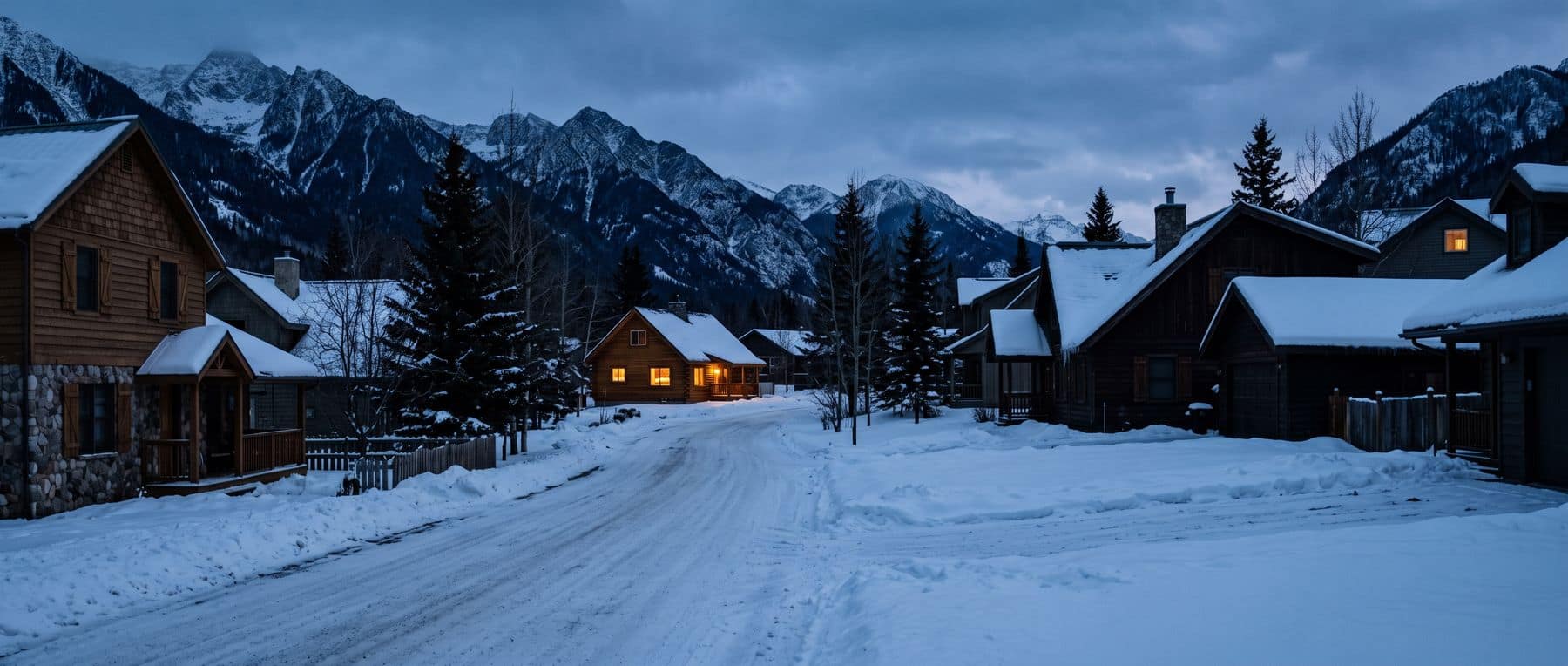
- Two shortages, one town: a severe shortage of homes residents can afford, and no shortage of $1M-plus listings, around 146–160 were active in August 2026.
- Rental vacancy is 0.9% (Town) to 1.8% (CMHC purpose-built, October 2025); a healthy market is about 3%. Median rent was $2,400 in 2026 (CBC).
- The 2021 Census counted 9,173 dwellings and 6,804 occupied by usual residents: about 2,369 are second homes, vacant or otherwise not a primary residence.
- Canmore needs about 3,400 affordable or below-market homes by 2041 (Bow Valley HNA); Canmore Community Housing has delivered 300-plus with 144 under construction.
- Supply is coming: Three Sisters Village phase one (700–1,075 units, 400-plus rentals), Moustache Lands (250–350 non-market rentals) and tourist-home conversions.
Is Canmore experiencing a housing shortage? Ask a nurse at the hospital or a chef on Main Street and the answer is an immediate yes: rental vacancy is under 1%, median rent is $2,400, and the town’s own plan calls for 3,400 affordable homes it does not have. Ask a buyer scrolling 150 listings priced above $1 million and the answer looks like no. Both are right, and understanding why is the key to reading this market. The Canmore housing shortage is a shortage of homes residents can afford, sitting inside a town where a quarter of the housing stock is nobody’s primary residence.
Is the Canmore housing shortage real?
For residents, yes, by every measure the Town and the region use. The 2023 municipal housing needs assessment reported rental vacancy at 0% across all unit sizes and 2022 median asking rents of $1,880 for a one-bedroom and $2,699 for a two-bedroom (Canmore Community Housing survey). By October 2025 the purpose-built vacancy rate had eased to 1.8% across 630 units (CMHC via CBC), the Town cites 0.9% market-wide, and median rent had reached a record $2,400, up $725 since 2022 (CBC, July 2026).
- Rental vacancy, purpose-built
- 1.8%
- October 2025, 630 units (CMHC via CBC); Town cites 0.9% overall
- Median rent
- $2,400
- record high, 2026; +$725 since 2022 (CBC)
- Homes not occupied by a permanent resident
- ≈ 25%
- Town of Canmore; 26% per 2021 Census via CBC
- Affordable homes needed by 2041
- ≈ 3,400
- Bow Valley HNA via Town of Canmore
- Living wage
- $38.80 / hr
- highest in Alberta
- Active listings, August 2026
- ≈ 146–160
- median ask $1.2M (REW)
Why a town with 9,173 dwellings has a shortage
The 2021 Census counted 9,173 private dwellings in Canmore and 6,804 occupied by usual residents (Town of Canmore community statistics). The difference: about 2,369 homes, 26% of the stock, is second homes, part-time residences, nightly rentals and vacant units. Those homes exist; they just do not house anyone who works here. The Bow Valley housing needs assessment projects the non-permanent population growing from 6,751 to 9,229 between 2022 and 2032, requiring 928 more dwelling units, a 37% increase in the absentee share of demand on top of what residents need.
Three forces pull housing away from residents:
- Second-home money. Income earned elsewhere outbids Canmore wages; the 2023 assessment describes remote workers and retirees absorbing “previously available homeownership and rental units at price points that local workers can’t afford.”
- Short-term rentals. 2,543 short-term rental listings were active in June 2026, up 5% year over year (CBC), concentrated in tourist-home and visitor-accommodation buildings.
- No land. Canmore cannot build its way out on greenfield land; the approved Three Sisters lands are the last major parcel. See why Canmore real estate is so expensive.
Buyers hear “housing shortage” and expect bidding wars. In 2026 the opposite was true above $800,000: listings were up sharply, condo averages were down about 9% year over year in June, and asking prices were well below 2025 levels. The competition is at the bottom: sub-$600,000 residential condos, Vital Homes, anything a local household can finance. Do not overpay for a $1.5 million townhome because the town has a shortage of $400,000 rentals.
What is being done about it
The Town, Canmore Community Housing and the private sector are all moving, on different timelines:
| Measure | What it does | Scale and status (2026) |
|---|---|---|
| Livability Tax Program | Higher tax rate (~0.4% of value) on non-primary residences; revenue to affordable housing | $4.4M expected in 2026 from ~819 properties after the provincial Albertan exemption (CBC) |
| Vital Homes (Canmore Community Housing) | Below-market ownership and rental for eligible residents | 300-plus homes delivered; 144 under construction (Town) |
| Moustache Lands | Non-market rental with YWCA Banff | 250–350 units planned (Town) |
| Purpose-built rental grants | Municipal tax grant of 75% for up to 10 years | Requires 95% of units for long-term primary residents (Town) |
| Tourist-home freeze and conversion | No new tourist-home use in the established neighbourhoods since March 11, 2025; fee-free conversion to residential | Waiver runs to December 31, 2026 (Town) |
| Three Sisters Village, phase one | Market and non-market homes on 29.1 ha | 700–1,075 units, 400-plus rentals, ≥10% affordable; first completions from 2026 (Rocky Mountain Outlook) |
| Approved area structure plans | Non-market and entry-level units forecast | ~1,940 units across ASPs approved in the last four years (Town) |
The Livability Tax is smaller than planned. Council first expected $10.3 million a year from about 2,260 properties; after the province exempted any property with an Alberta resident on title, the base shrank to about 819 properties and $4.4 million (CBC, July 2026): enough for a project every few years, not 3,400 homes by 2041. The Livability Tax guide covers who pays.
Three Sisters Village: the supply that matters
The one change big enough to move the numbers is the Three Sisters Mountain Village build-out. Phase one, 700 to 1,075 units on 29.1 hectares including townhomes, stacked townhomes, apartments and tourist homes, with 400-plus rental units and at least 10% affordable (up to 20% with density bonusing): began completing in 2026, with five further phases and up to about 7,000 homes for 15,000 people over decades (Rocky Mountain Outlook, CBC). Against a town of about 6,800 occupied dwellings, that is transformative for the rental and entry-level market and slow for everything else. The Three Sisters Village page and the new developments page track phases and pricing.
A local REALTOR® sees the shortage most clearly in two places: legal secondary suites, which rent instantly and change what a detached home is worth to a local buyer; and residential-zoned one- and two-bedroom condos under $700,000, which draw multiple offers even in a soft month because they are the only product a Canmore household can carry. If you are competing there, be pre-approved and quick. If you are shopping above $1 million, take your time.
What it means for the market
The shortage supports rents and entry-level prices; it does not support the top of the market, which is set by out-of-town buyers and was loosening through 2026. Expect continued pressure on rents until Three Sisters Village and the non-market projects deliver at scale, continued policy attention on second homes and short-term rentals, and a gradual shift of tourist-home units into the resident pool as owners convert before the fee waiver ends. The first-time buyers guide explains Vital Homes eligibility, and the market overview tracks inventory monthly.
What this means if you’re buying
If you are a resident or a worker, the Canmore housing shortage is real and the tools built for you: Vital Homes, secondary suites, residential condos under $700,000, are competitive; get on the CCH waitlist and get pre-approved. If you are a market buyer, 2026 is a year of choice at the top and softness in condos, so negotiate, and understand that the town’s policy direction is toward occupied homes: a long-term tenant, or your own primary residence, is the position the rules reward.
The complete buyer's process for Canmore puts this in order with deposits, conditions, financing and possession, whichever side of the Canmore housing shortage you end up buying on.
Fifteen minutes with a local REALTOR® on the Canmore segment you are buying in, competitive or negotiable. Free, no obligation.
Frequently asked
Is Canmore experiencing a housing shortage?
Yes, for residents. The rental vacancy rate is under 1% by the Town’s measure and 1.8% for purpose-built rentals (CMHC, October 2025), median rent reached $2,400, and the regional housing needs assessment identifies a need for about 3,400 affordable or below-market homes by 2041. For buyers at market prices there is no shortage of Canmore homes for sale in 2026, inventory rose sharply, but almost nothing is priced for a local income.
What is the rental vacancy rate in Canmore?
About 0.9% across the market, according to the Town of Canmore’s housing page, and 1.8% for the town’s 630 purpose-built rental units in October 2025, according to CMHC via CBC. The 2023 municipal housing needs assessment reported vacancy at 0% across all unit sizes. A balanced rental market is usually taken to be around 3%.
Why is there a housing shortage in Canmore when so many homes are empty?
Because about a quarter of the housing stock is not lived in full-time. The 2021 Census counted 9,173 private dwellings but only 6,804 occupied by usual residents; the rest are second homes, part-time residences, short-term rentals and vacant units. Those homes count as supply on paper but not as housing for the workforce, which is what the Livability Tax and the tourist-home changes are trying to shift.
How many homes does Canmore need?
The Bow Valley Regional Housing needs assessment (approved October 2024) is the basis for the Town’s figure of about 3,400 new affordable or below-market homes by 2041. Approved area structure plans in the last four years forecast about 1,940 non-market or entry-level units, and the non-permanent population is projected to grow 37% between 2022 and 2032, adding demand on top.
What is Canmore doing about the housing shortage?
The Livability Tax (expected to raise $4.4 million in 2026 for affordable housing), Canmore Community Housing’s Vital Homes program (300-plus homes delivered, 144 under construction), the Moustache Lands project with YWCA Banff (250–350 non-market rentals), grants covering 75% of municipal property tax for up to 10 years on purpose-built rentals, a freeze on new tourist-home use since March 2025, and fee-free Canmore tourist home conversion until December 31, 2026.
Does the housing shortage mean prices will keep rising?
Not automatically. The shortage is at the affordable end; the market end had rising inventory, softer condo prices and lower sales volume in 2025–26. New supply from Three Sisters Village and policy pressure on second homes both push against price growth in the townhome and condo segments, while detached homes on the sunny side remain scarce.
- Town of Canmore: Housing Action
- CBC: Canmore vacancy tax to collect $4.4M for affordable housing (July 2026)
- Town of Canmore: Community statistics (2021 Census)
- Town of Canmore: Housing needs assessment (HNA-0011, March 2023)
- Bow Valley Regional Housing: Bow Valley Housing Needs Assessment (approved October 2024)
- Rocky Mountain Outlook: First phase of large Canmore residential development approved
- Town of Canmore: Tourist homes
- REW: Canmore, AB market statistics (August 2026)
Keep reading

Tell us what you’re looking for and get a straight answer, usually the same day.