Land Titles Search in Alberta: How to Do One and Read a Canmore Title
A land titles search in Alberta costs from $17.50 by legal description. What a title shows, and the caveats and covenants Canmore buyers must read.
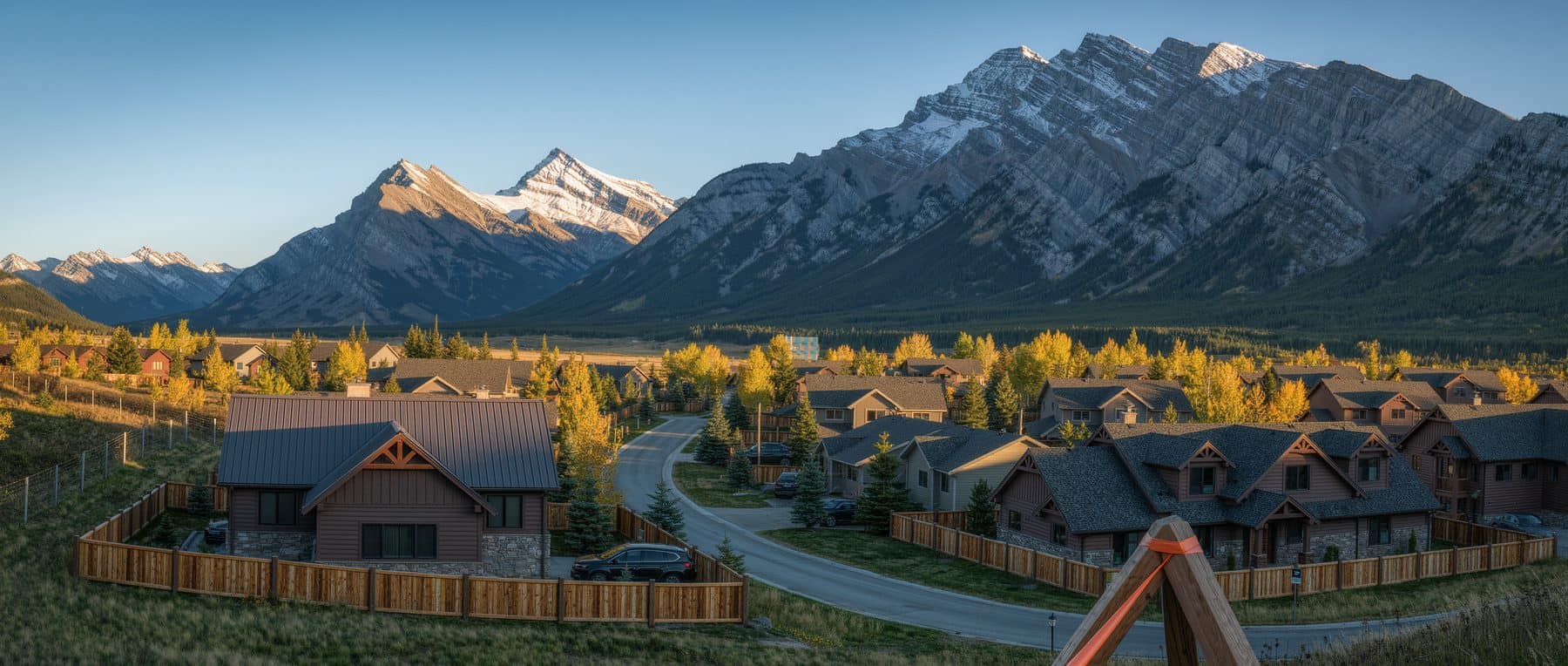
- The statutory fee for an electronically generated certified copy of a certificate of title is $10 under the Tariff of Fees Regulation, AR 120/2000, s 14. Registry agents add a service fee, so retail prices run from $17.50 by legal description at West-End Registries to $32.00 at In & Out Registry Services in Edmonton, both checked September 2026.
- You can search by legal description, title number or LINC number. Searching by municipal address starts at $23.50 at West-End Registries in September 2026, because the address has to be matched to a parcel first, and some municipalities charge extra for that lookup.
- Owner-name searches are not open to the public. The Name Search Regulation, AR 207/1999, s 2 sets eight eligibility criteria, and the fee is $15 for a summary list where names are found, or $10 for a report finding none.
- The instrument list is the part that costs buyers money: caveats, easements, utility rights of way and restrictive covenants each do something different to what you can build and use.
- On Canmore's designated undermined land you do see the hazard on title. Section 11 of the Canmore Undermining Review Regulation, AR 34/2020, makes the developer file a caveat with the Registrar of Land Titles within 90 days of receiving the undermining report and review certificate.
A land titles search in Alberta takes about five minutes and costs from $17.50. The register is public, so you order a current certificate of title through SPIN2, the ARLO portal or an authorised registry agent, search by legal description, title number or LINC number, and a PDF arrives by email. The part nobody explains is how to read the thing. This guide covers what the certificate contains, then works line by line through the caveats, covenants and hazard registrations that show up on Canmore titles.
How to do a land titles search in Alberta in three routes
There are three practical routes, and they differ in effort rather than in what you get back. SPIN2, the Spatial Information System, is the long-standing self-serve option and suits people who search often enough to keep an account funded. ARLO, the Alberta Registry for Land Online, has been available since 29 May 2025 and adds plan, block and lot searching, Alberta Township Survey descriptions and a map interface. An authorised registry agent will run it for you and email the result, which is the sensible choice for a buyer running one or two searches. Land Titles offices in Edmonton and Calgary also take requests directly.
If all you have is a street address, which is the normal position for an out-of-town buyer with no MLS® sheet and no tax notice, start on ARLO's map: find the parcel, read its plan, block and lot off the map, and then order the title against that legal description rather than paying an agent to match the address for you.
- 1Find the legal description or LINCIt is on the MLS® listing sheet, the tax notice, or the seller's own title. A Canmore condo reads as a plan number plus a unit; a detached lot reads as plan, block and lot. The LINC is the ten-digit Land Identification Numeric Code generated under the Land Titles Act, printed at the top left of every Alberta title issued since 1988, and it identifies the parcel more precisely than any address does.
- 2Pick your routeRegistry agent for a one-off, SPIN2 or ARLO if you will run several. All three return the same certified current title.
- 3Order the current certificate of titleYou get a PDF showing the registered owner, the legal description, how title is held, the last transfer with its consideration, and the full instrument list.
- 4Order the instruments that matterThe certificate lists registration numbers only. A copy of each registered document is a separate order at the $10 statutory fee, and the covenant or right of way is where the detail lives.
- 5Read it against the zoningTitle tells you what is registered. The Land Use Bylaw tells you what use is permitted. You need both before you write an offer.
What a land title certificate actually shows you
The land titles search Alberta offers the public returns a current certificate of title, which is one page of facts plus a list. It carries the title number, the LINC, the short legal description, the municipality, the registered owner or owners with their address for service, how title is held, the registration number and date of the transfer that created the title, and the consideration stated on that transfer. Below the ownership block sits the register of instruments: every mortgage, caveat, easement, utility right of way, restrictive covenant, builders' lien and court registration that affects the parcel, each with its own registration number and date.
Alberta operates a Torrens system, and the Government of Alberta holds the original titles, documents and plans and carries the legal responsibility for the validity and security of the registered information. In practice that means the certificate is the authoritative statement of ownership. It is not a statement of condition, of boundaries on the ground, or of what you may do with the property.
What a land titles search in Alberta costs
The statutory fee is small. Under the Tariff of Fees Regulation, AR 120/2000, section 14, an electronically generated certified copy of a certificate of title is $10, a copy of a registered document is $15, a digital copy of a plan is $2 and a paper copy is $3. Registry agents add a service fee on top of that, which is why retail pricing varies between one agent and the next.
| What you order | Statutory fee (AR 120/2000) | What a registry agent charges (September 2026) |
|---|---|---|
| Current certificate of title, by legal description, title number or LINC | $10 | $17.50 at West-End Registries, $32.00 at In & Out Registry Services |
| Current title searched by municipal address | $10 | From $23.50, higher where the municipality charges for the address lookup |
| Copy of a registered instrument (caveat, covenant, easement) | $10 | $32.00 per document search at In & Out Registry Services |
| Copy of a survey or condominium plan | $2 digital, $3 paper | Agent service fee on top |
| Owner-name search, where you are eligible | $12 summary list, $2 nil report | Agent service fee on top |
Use the legal description if you have it: plan, block and lot for a detached lot, plan and unit for a condominium, or the ten-digit LINC. Those three search cleanly and cost the base fee, and the result comes back in minutes. A municipal address is the route people reach for and the one that costs more, because the address has to be matched to a parcel before the register can be searched. In September 2026 West-End Registries charged $23.50 for an immediate address search and warned that some municipalities add a fee for supplying the legal description, with Calgary condominiums needing a manual lookup. If the listing gives you a plan and unit, use it.
Registration is the other side of the ledger and it is a separate cost at closing. Alberta charges no land transfer tax; instead the Land Titles levy on a transfer is $50 plus $5 per $5,000 of value, with the same formula on a mortgage principal, and a caveat registration is $40 on the fee schedule effective 1 October 2026. Model the whole closing bill with the buyer cost calculator and the Canmore closing costs post.
Can anyone do a title search in Alberta, and can you search by owner name
Anyone can run a land titles search in Alberta against a given parcel. You need no consent, no reason and no connection to the property, and the owner is not told. That is the point of a public register: a buyer, a neighbour, a lender or a journalist can all confirm who owns what.
Owner-name searches are different. A name search under section 17 of the Land Titles Act is restricted, and the Name Search Regulation, AR 207/1999, lets the Registrar run one only where the applicant meets at least one of eight criteria: searching your own name, holding the subject's written consent, holding a registered or registerable instrument against that person's interest, being a police officer on duty, acting under a court order, acting for the Crown, acting as agent for someone in the consent or instrument categories, or acting for the Real Estate Council of Alberta in an investigation. So you can find out who owns 100 Mountain Street, but you cannot idly list everything a named person owns in the Bow Valley.
The LINC is the number to keep for later. It is generated under the Land Titles Act and belongs to the parcel rather than to the owner or the postal address, so it carries through sales, mortgages and changes of name, and it will not send you to the wrong unit in a condominium building the way a street address can. Write it down the first time you search, and every later search on that property is one field long.
The most expensive mistake buyers make with a title search is treating it as a use permit. Title tells you what is registered against the parcel. Zoning tells you what you are allowed to do there, and the two answer different questions. Since 11 March 2025 Tourist Home is no longer a permitted use in Canmore's established residential districts; it remains permitted only in Silvertip's STR-1 and STR-2 districts and on the Three Sisters Village parcels identified in that Area Structure Plan. A title with nothing objectionable on it will still not let you run a nightly rental in a residential district. Check the Canmore Land Use Bylaw for buyers and the tourist home zoning guide alongside the title.
Caveats, easements and utility rights of way on a Canmore title
What matters is knowing which entries constrain you and which are noise. The instrument list on an Alberta land titles search is not a warning list; most of what sits on it is ordinary, and the entries that should stop you are rarely the ones with the alarming names.
| Instrument | What it is | What it means for you as a buyer |
|---|---|---|
| Mortgage | The seller's registered loan, showing the principal registered, not the balance | Discharged on closing by the seller's lawyer. Normal. |
| Caveat | A notice that someone claims an interest in the land | Read the document. It can be a builder's contract, a covenant, an option, a lease or a spousal interest. The label tells you nothing. |
| Easement | A registered right for one parcel to use part of another, often for access or drainage | Permanent, runs with the land, survives your purchase. Find out where it sits on the plan. |
| Utility right of way | A registered strip in favour of a utility or the Town, commonly for water, sewer, gas or power | You cannot build over it. It can quietly remove the corner of the yard where you planned a garage or a hot tub. |
| Restrictive covenant | A registered promise limiting what may be built or done on the parcel | Binds you, not just the seller, and often outlives the developer who registered it. |
| Builders' lien | A registered claim for unpaid work on the property | Must be dealt with before closing. Ask your lawyer, not the seller. |
| Certificate of lis pendens | Notice that the land is the subject of a court action | Treat as a stop sign until your lawyer explains it. |
| Condominium plan reference | Ties the unit to the plan and its unit factor | Sets your share of common property and your share of the condo fee. |
The rule of thumb is simple. Mortgages and liens leave on closing. Easements, utility rights of way and restrictive covenants do not, and they are the ones to order a copy of, at the $10 statutory fee plus whatever your agent charges to pull it.
Restrictive covenants: what they stop you building in the Bow Valley
A restrictive covenant is a private rule registered against the land, and it can be stricter than the Land Use Bylaw. On newer Three Sisters and Silvertip parcels, builder and developer covenants commonly control exterior finishes and colour palettes, roof materials, minimum floor area, height and massing, fencing, landscaping, and the window of time in which you must start and finish construction after buying the lot.
None of that appears on the certificate itself. You see a registration number labelled restrictive covenant, and you have to order the document to learn that your steel-and-glass plan is not permitted, or that you owe a deposit to an architectural review committee. If you are buying land or planning a rebuild, read the covenant before the offer, not after. The buying in Canmore hub sets out where this fits in the sequence.
Undermining caveats and hazard registrations you only see in Canmore
Yes, on designated undermined land the mining legacy does reach the certificate, and it reaches it as a caveat. Section 11 of the Canmore Undermining Review Regulation, AR 34/2020, in force 1 April 2020, requires the developer to file a caveat with the Registrar of Land Titles within 90 days of receiving an undermining report and the applicable review certificate, and that caveat must describe the undermining and related conditions and the landowner's duties in respect of them. So on those parcels you will see an entry in the instrument list, you order the caveat document for the $10 statutory fee plus the agent's charge, and it tells you what you are taking on.
Two limits are worth knowing. The regulation applies only to the designated land mapped and described in its Schedule 1, which is the former coal-mine holding rather than the whole town, so a lot outside that boundary will not carry one of these caveats. And where a report recommends mitigative measures, sections 5(2) and 6(2) bind the developer and any future landowners to carry them out and to have an engineer certify that they were carried out, which means the obligation transfers to you along with the title.
Behind the caveat sits the two-seal process the Town describes: an engineer signs and seals the original report, and an independent third-party reviewer signs and seals a letter of compliance. Section 9(3) of the regulation requires Canmore to retain a copy of every undermining report, compliance certificate and review certificate and to make them available at a public location inside the town, so ask the Town what is on file for that address before you write an offer, and budget for engineering ahead of a development permit. Steep creek hazard mapping under Land Use Bylaw section 7.8 is the opposite case: it constrains what you build without necessarily appearing as an encumbrance you would recognise on the certificate at all.
Our partner realtor's habit on Canmore land and rebuild purchases is to pull the current title and the covenant document during the shortlist, before any offer is written. It costs less than a tank of fuel, and a utility right of way running through the only flat part of a lot, or a covenant setting a construction start deadline the buyer cannot meet, is exactly the kind of thing it catches while walking away is still free.
Condominium titles: unit factors, and the four things title never tells you
A Canmore condominium title looks like any other, with one addition: the unit factor. That is your share of the common property and, in most corporations, the basis on which your monthly contribution is calculated. It is the number that explains why two similar two-bedroom units in different buildings pay very different fees.
What a condominium title will not tell you: the current condo fee, the state of the reserve fund, whether a special assessment has been levied or is being discussed, and what the bylaws permit. None of that is registered. It lives in the document package you are entitled to request under Alberta's Condominium Property Regulation, and it is the reason a title search is a starting point rather than due diligence. The condo buying guide lists what to ask for.
Nor does the register carry the tax side, which for an out-of-province owner is the largest recurring number in the deal. The certificate says nothing about the Town's Livability Tax declaration or the subclass the property will be taxed in once you own it, and a unit declared non-primary pays a materially higher rate than the same unit lived in year round. Settle that question with the Canmore Livability Tax guide rather than the title.
Three more things title does not do. It does not show where the buildings actually sit on the parcel, which is the job of a Real Property Report with a stamp of compliance, so read the Real Property Report explainer alongside this. It does not compensate you when the register itself turns out to be wrong, when an old lien resurfaces or when a previous owner built without a permit, which is the gap title insurance in Alberta is sold to cover. And it does not police foreign ownership. Alberta's own rules restrict controlled land, meaning private rural land, rather than parcels inside a town like Canmore. The one that reaches Canmore buyers is federal: the Prohibition on the Purchase of Residential Property by Non-Canadians, which applies in census agglomerations, Canmore among them, and currently runs to 1 January 2027. The non-Canadian buyer rules set out the exemptions.
How title is held is worth a moment for couples buying a second home. Joint tenancy gives each owner a right of survivorship, so a deceased owner's share passes to the surviving owners. Tenancy in common does not: that share goes to the estate. The certificate states which applies, and changing it later is a registration, not a conversation. Read the ownership block for one more thing while you are there: if the title is in one spouse's sole name and the couple lives in the property, Alberta's dower rights mean the other spouse's consent is needed before it can be sold or mortgaged, and a release of dower rights is its own $25 registration.
What this means if you are buying in Canmore
Run the land titles search yourself, early. Order the current certificate of title by legal description or LINC for $17.50, then order a copy of each easement, utility right of way and restrictive covenant listed, at $10 statutory each plus the agent's fee. Read those against the Land Use Bylaw, because title and zoning answer different questions. For a condominium, treat the unit factor as the only useful number on the page and go to the document package for the rest. If you are buying privately with no agent pulling title for you, as the selling without a realtor post explains from the other side, the land titles search Alberta lets anyone run is the cheapest piece of diligence available to you. Budget registration separately in the full cost of buying. Read the title alongside the assessment: the class printed on the notice drives the annual bill, which the Canmore property tax guide works through rate by rate.
Send us the address and a local REALTOR® will run a land titles search in Alberta with you and read the instrument list line by line before you write an offer. Free, no obligation.
Frequently asked
Can anyone do a title search in Alberta?
Yes. The register is public, and you do not need the owner's consent, a reason, or any connection to the property. Order a current certificate of title by legal description, title number or LINC number and the owner is never notified. The one restriction is the owner-name search, which Alberta limits to eight categories of applicant such as the person searched, someone holding written consent, police and parties acting under a court order.
How can I find land titles online in Alberta?
Three routes. SPIN2, the long-running Spatial Information System, suits repeat users with an account. ARLO, the Alberta Registry for Land Online, has been available since 29 May 2025 and adds plan, block and lot and map-based searching. An authorised registry agent will run a one-off search for you and email the PDF, which is what most buyers want. Land Titles offices in Edmonton and Calgary also take requests by phone.
How much does it cost to do a land title search in Alberta?
The statutory fee is $10 for an electronically generated certified copy of a certificate of title, set by the Tariff of Fees Regulation, AR 120/2000. Registry agents add a service fee on top. In September 2026 West-End Registries charged $17.50 by legal description and from $23.50 by municipal address, and In & Out Registry Services in Edmonton charged $32.00 a search. See the wider closing cost breakdown.
Can you search Alberta land titles by owner name?
Not as a member of the public. A name search under section 17 of the Land Titles Act is restricted, and the Name Search Regulation, AR 207/1999, lets the Registrar run one only for an applicant who meets at least one of eight criteria, such as searching your own name or acting under a court order. Where a search is permitted, the fee is $12 for a summary list and $2 for a nil report.
Does an Alberta land title show how much the owner paid and how much they owe?
It shows what they paid, not what they owe. The certificate records the registration date and the consideration stated on the last transfer, which is why sale prices are traceable. A mortgage appears as a registered instrument with the principal amount registered at the time, not the current balance, and a discharged mortgage drops off. Alberta charges no percentage transfer tax, as the land transfer tax post explains.
Why should I do a land titles search myself if my lawyer pulls title before closing?
Because your lawyer usually searches after your conditions are gone. A $17.50 land titles search before you write the offer tells you whether the parcel carries a restrictive covenant, a utility right of way through the yard you planned to build in, or an undermining registration. That is a cheap way to find a deal-breaker while you can still walk away, and it matters most for private sales with no agent on either side.
- Government of Alberta: Find land titles, documents or plans
- Alberta King's Printer: Tariff of Fees Regulation, AR 120/2000, s 14 (searches and other services)
- Government of Alberta: Land Titles and Surveys common documents fee schedule
- Government of Alberta: Land titles overview (ownership types)
- Alberta King's Printer: Name Search Regulation, Alta Reg 207/1999, s 2 (criteria)
- Government of Alberta: LINC number instructions (Premises Identification Program)
- Town of Canmore: Undermining
- Alberta King's Printer: Canmore Undermining Review Regulation, AR 34/2020, ss 9 and 11
- Government of Alberta: Foreign ownership of land
- West-End Registries: Online Alberta land title searches (fees, checked September 2026)
- In & Out Registry Services: Alberta land title searches (fees, checked September 2026)
Keep reading

Tell us what you’re looking for and get a straight answer, usually the same day.