Canmore Land Use Bylaw for Buyers: What the Zoning Letters Mean
What the Canmore Land Use Bylaw district codes mean for a buyer, why tourist home is a use rather than a zone, and how to check any address quickly.
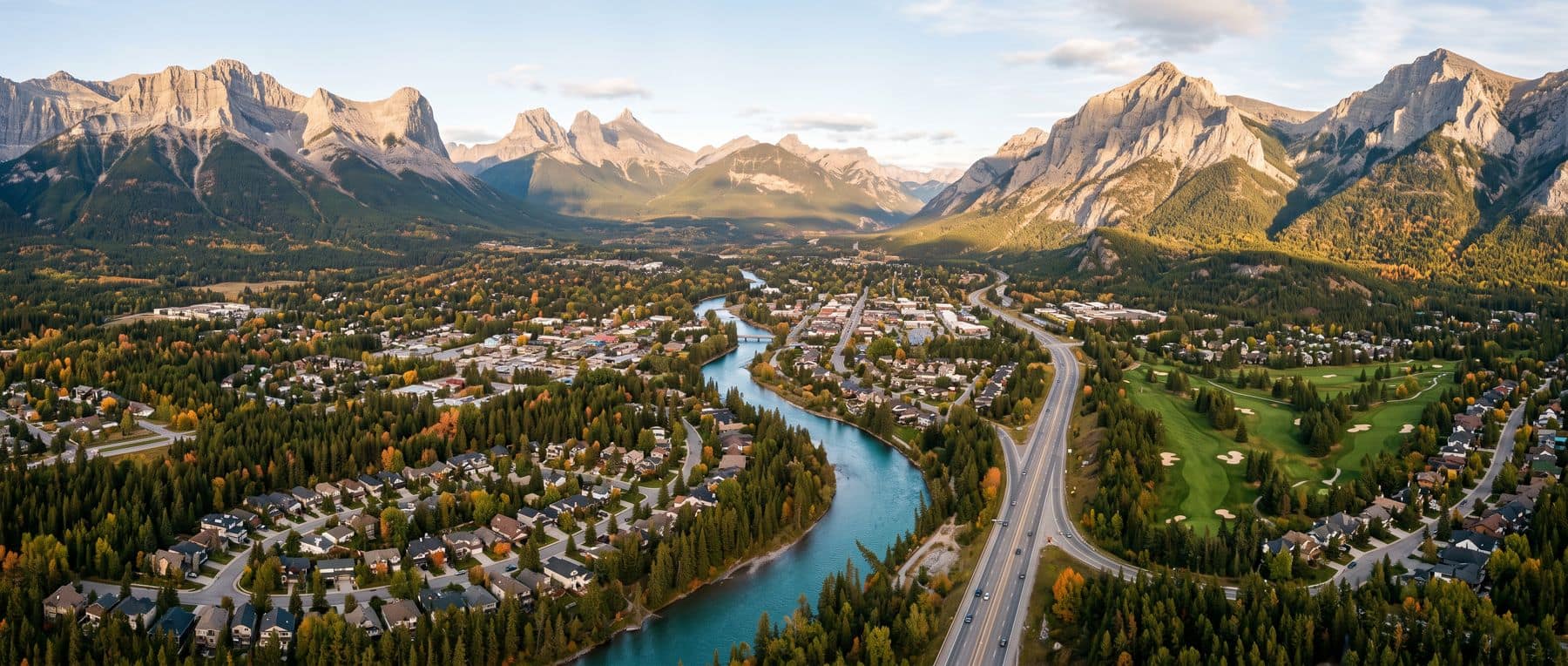
- Residential districts run R1 (detached, standard lot) to R5 (apartment). Silvertip, Stewart Creek and Three Sisters have their own variants.
- ‘TH’ and ‘VA’ are not zones. A tourist home is a permitted-by-development-permit use that now survives only where it already existed; visitor accommodation means hotels, in commercial districts.
- Since March 11, 2025 new tourist homes can be created only in Silvertip’s STR districts and Three Sisters Village; existing ones continue in nine listed districts and can convert to residential fee-free until December 31, 2026.
- Each district lists permitted uses (approval expected) and discretionary uses (approval at the Development Authority’s judgement).
- The interactive community map shows the district and the assessment code for every parcel. Code 21 means tourist home.
The Canmore Land Use Bylaw decides what you can do with a property before the price, the view or the condo board ever come into it. Listings quote codes: R1, R2A, R3, TC, BVT-G, DC, and buyers from Calgary or Ontario reasonably assume they mean what they mean at home. Mostly they do not. This post decodes the district letters in Bylaw 2018-22, explains why "tourist home" and "visitor accommodation" are uses rather than zones, and shows how to check any address before you book a showing.
What is the Canmore Land Use Bylaw?
Bylaw 2018-22 is Canmore’s zoning bylaw, maintained as an office consolidation that folds in every amendment since 2018: more than thirty of them, including the 2020 Three Sisters Direct Control district, the 2024 steep-creek rules and the 2025 removal of tourist homes. It runs to fifteen sections: administration, general regulations, residential districts, commercial districts, industrial, miscellaneous, overlays, use-specific rules, signage, green building, architectural and urban design standards, Perpetually Affordable Housing regulations, definitions, Direct Control districts and the district maps.
Every district lists permitted uses, which the Development Authority is expected to approve if the regulations are met, and discretionary uses, which it may approve or refuse. Almost everything: a new house, a secondary suite, a change of use, and a tourist home, needs a development permit.
What do the residential zoning codes mean?
| Code | District | What it means for a buyer |
|---|---|---|
| R1 | Residential Detached | Single detached homes on standard lots of 460–920 m²; detached dwelling with an accessory dwelling unit is permitted, without one it is discretionary |
| R1A / R1B (‑E, ‑W) | Detached Small-Lot / Detached Plus (Entry-Level, Wide Lot) | Same idea, different lot sizes and building envelopes; R1B allows larger homes |
| R2 | Residential Two-Unit | Duplexes and half-duplexes, plus detached homes with ADUs |
| R2A | Residential Low Density | Low-density mix; the standard district for much of the newer family housing |
| R3 | Residential Comprehensive Multiple Unit | Townhouses, stacked townhouses and apartment buildings on larger, comprehensively planned lots |
| R4 | Residential Medium Density | Apartments and townhouses, with small neighbourhood-serving commercial allowed since 2025 |
| R5 | Residential Apartment | High-density apartment buildings |
| STR-1 / STR-2 | Silvertip Residential | Silvertip’s own low-density and comprehensive residential districts |
| R1B-SC, R2A-SC, R3 SC, R3/R4/R2A TSMV | Stewart Creek and Three Sisters variants | Same families of use with site-specific regulations for those areas |
| TPT-CR | Teepee Town Comprehensive Redevelopment | The redeveloping blocks between downtown and Bow Valley Trail |
| EHD / MHP / MHR | Employee Housing; Manufactured Home Park; Manufactured Dwelling | Restricted-tenure or manufactured housing; check the restrictions |
| DC | Direct Control | Site-specific rules approved by Council; read the DC bylaw, not the district table |
Commercial districts matter to buyers too, because that is where nightly accommodation lives and where commercially zoned property trades: TC (Town Centre), GD and GD-2 (Gateway), BVT-C / BVT-T / BVT-G (Bow Valley Trail), CRD (Commercial Resort) and TS-RA1 (Three Sisters Resort Accommodation). Apartments above shops downtown and the hotel-condo corridor along Bow Valley Trail are in these districts, not in R zones.
Where do tourist homes and visitor accommodation fit?
They are uses, not districts, which is the single most misread thing in Canmore listings. The Land Use Bylaw distinguishes three accommodation types:
| Type | Definition (Town of Canmore) | Where | Nightly rental? |
|---|---|---|---|
| Residential dwelling unit | A home for people who live there | All R districts and many commercial districts | No |
| Tourist home | "A dwelling unit operated as a temporary place to stay … includes all vacation rentals"; assessment code 21 | Only where one already exists; needs its own development permit and a business licence per unit | Yes, with licence |
| Visitor accommodation | Hotels and motels: short stays up to 30 days, centralized booking, nobody may live there | Commercial districts | Yes |
Section 1.8.0.2 of the bylaw says a tourist home "constitutes a separate and additional development of a dwelling unit and requires a development permit for its operation." Since March 11, 2025 the bylaw no longer lists tourist home as a permitted use anywhere, so new ones cannot be created and residential units cannot be converted back. Existing tourist homes may continue in nine districts named in section 1.16.0.7: TPT-CR, TC, GD, GD-2, BVT-C, BVT-T, BVT-G, the Town Centre 1 Creekside DC and the Canmore Hotel DC. Conversion to residential is streamlined and fee-free until December 31, 2026, and irreversible. The tourist-home zoning guide and the three-zonings comparison go deeper.
No Canmore Land Use Bylaw district is zoned for nightly rental. A listing that says so usually means the unit has a tourist-home development permit, or that someone hopes it does. Two units in the same R3 or BVT-G building can be in different classes. Ask for the development permit, the business licence number (required in all marketing since 2025) and check the assessment code yourself. Operating or advertising a tourist home without a permit is an offence under the bylaw.
How do I check the zoning of a Canmore property?
- 1Open the interactive community mapClick the parcel. The property panel shows the land use district and, under the annual assessment, the roll number and code. The two digits (and sometimes a letter) after the dash tell you whether it is assessed residential, tourist home (21) or commercial.
- 2Read the right rulebookFor an R or commercial district, the district section of Bylaw 2018-22. For a DC district, the site-specific Direct Control bylaw. For Three Sisters, also the Area Structure Plan.
- 3Ask the seller for permitsDevelopment permit for any tourist home, suite or addition; business licence for nightly rental; a Certificate of Conformance if one exists.
- 4Confirm with the TownPlanning and Development answers zoning questions through the online form or planning@canmore.ca. Put anything material in writing before you waive conditions.
What other Land Use Bylaw rules affect what you can build or change?
- Accessory dwelling units (secondary, garden and garage suites) are allowed in all low-density residential districts and within duplexes, with one parking stall per unit. This is why an R1 home with a legal suite is a permitted use and one without is discretionary. The Town is nudging owners to add suites.
- House size is capped at 325 m² (3,500 sq ft) on lots under 930 m².
- Steep Creek Hazard Overlay districts restrict new development in high-hazard zones and require a hazard and risk assessment in moderate zones. The overlay maps rate individual lots along creeks such as Cougar Creek. A lot in the overlay can still be bought and lived on, but rebuilding or expanding gets harder. See building in Canmore for how this affects lots.
- Lane access must be used for driveways where a residential lane exists.
- PAH density bonusing (section 12 of the Land Use Bylaw): a developer who provides one Perpetually Affordable Housing unit on site may build three additional market units, which is how much of the new multi-family stock gets built.
A local REALTOR® pulls the interactive-map panel for every property before booking a showing and sends the district and assessment code to the client with the listing. Half the "can I rent it nightly" and "can I add a suite" questions are answered before anyone drives out, and the tax class is known before the property tax calculator gets used.
What this means if you’re buying
Read the Canmore Land Use Bylaw district code as a starting point, not a promise. R tells you the housing form; it does not tell you whether nightly rental is legal, whether a suite is permitted or whether the lot sits in a hazard overlay. Before you write an offer, check the map for the district and assessment code, get the development permit for any use you are paying a premium for, and confirm anything material with Planning in writing, for condos, add the bylaws and the condo document review, because a condo corporation’s own rules can prohibit what the Town allows.
For the rates behind these figures, see the Canmore property tax guide. Zoning and tax class travel together: the Canmore Land Use Bylaw sets what a property may be used for, and the assessment code on the same parcel sets what it costs to hold. Reading the districts on the ground starts with the Canmore zoning map, which explains what each code on the Town map permits.
Send a local REALTOR® the address. They will pull the Canmore Land Use Bylaw district, the assessment code and any permits on file and tell you what the property can and cannot be used for. Free, no obligation.
Frequently asked
What is the Canmore Land Use Bylaw?
Bylaw 2018-22 is the Town of Canmore’s zoning bylaw. It divides the town into land use districts, lists the permitted and discretionary uses in each, and sets rules on lot size, setbacks, height, house size, accessory dwelling units, signage, hazard overlays and design standards. It has been amended many times since 2018, including the March 2025 removal of tourist homes as a permitted use.
What does R1 zoning mean in Canmore?
R1 is the Residential Detached District: single detached homes on standard lots (460 to 920 square metres) with provision for an accessory dwelling unit. A detached dwelling with an ADU is a permitted use; one without an ADU is discretionary. R1A is the small-lot version and R1B ‘Detached Plus’ allows larger homes, with entry-level and wide-lot sub-districts.
Can I run a short-term rental in an R3 or R4 building in Canmore?
Only if the specific unit already has a tourist-home development permit and the building sits in one of the districts where existing tourist homes may continue. Zoning letters alone do not tell you. Check the assessment code on the interactive community map (code 21 = tourist home) and ask the seller for the development permit and business licence.
How do I find the zoning of a property in Canmore?
Open the Town’s interactive community map, click the parcel and read the land use district and the assessment roll code. Then confirm with the Planning and Development Department at planning@canmore.ca if anything hinges on it. A Certificate of Conformance from the Town confirms a use complies with the bylaw.
What is a Direct Control district?
A DC district is a site-specific set of rules approved by Council for one development, used where the standard districts do not fit. Three Sisters Village, Spring Creek Mountain Village, Van Horne and several Palliser Lane affordable-housing sites all have them. The DC bylaw for that site, not the general R or C district rules, governs what can be built and how it can be used.
- Town of Canmore: Land Use Bylaw (overview and key highlights)
- Town of Canmore: Revised Land Use Bylaw 2018-22, office consolidation (PDF)
- Town of Canmore: Accommodation Types (visitor accommodation, tourist homes, residential)
- Town of Canmore: Tourist Homes (March 2025 bylaw change, conversion fee waiver)
- Town of Canmore: Interactive Community Map
Keep reading

Tell us what you’re looking for and get a straight answer, usually the same day. Free, and no obligation.
Assessed value × the right class: residential, tourist home, or non-primary residence.
Property tax calculator