Real Property Report: What It Is and Who Pays
A Real Property Report is the survey an Alberta seller provides with municipal compliance. What it shows, who pays, and what a deck over a setback costs.
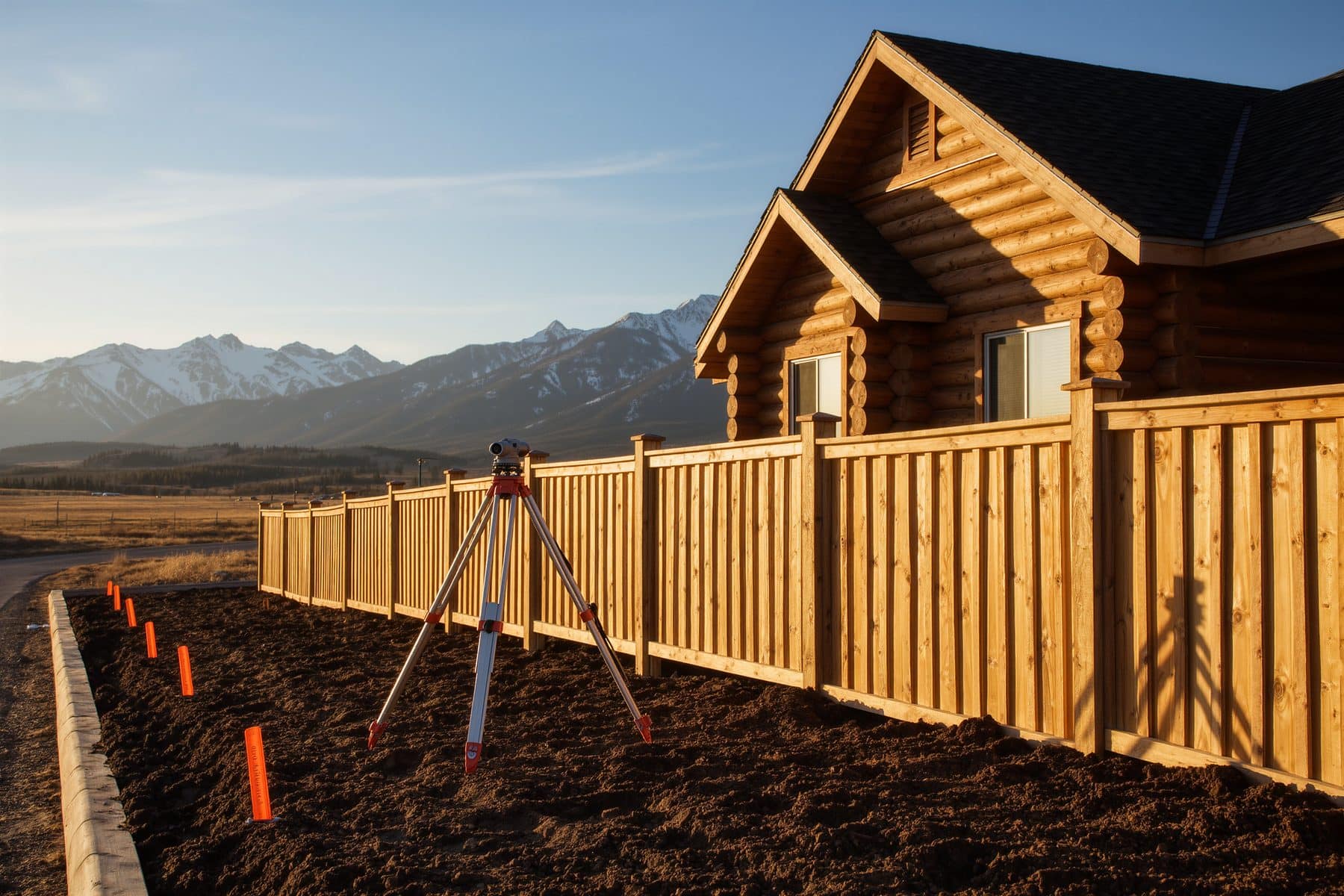
- A Real Property Report is prepared by an Alberta Land Surveyor and shows boundaries, all visible improvements, structures crossing into neighbouring lots or public land, and registered easements and rights-of-way.
- The survey on its own is only half the document. The municipality reviews it and returns it stamped compliant, non-compliant, or legally non-conforming, with a covering letter.
- Canmore's 2026 fee for a stamp of compliance is $113 per residential unit and $135 per non-residential application.
- Canmore prefers an RPR no older than two years, accepts one two to five years old with a statutory declaration that nothing has changed, and refuses one five years or older.
- The Alberta Land Surveyors' Association publishes no price list for the survey itself, stating only that prices vary with property size and complexity. Get quotes.
- The standard Alberta residential purchase contract puts the RPR with evidence of compliance on the seller. Substituting title insurance requires the buyer's agreement, not a unilateral decision.
The Real Property Report is the document most Alberta buyers have never heard of until three weeks before possession, when a lawyer asks whether one exists. It is a survey with a municipal endorsement attached, it is conventionally the seller's job to produce, and on a Canmore property with a deck built close to a setback it is the single document most likely to hold up a closing. Here is what it shows, what it costs, and what happens when it comes back stamped the wrong way.
What a Real Property Report is, and what it shows
A Real Property Report is a legal document prepared by an Alberta Land Surveyor that shows the boundaries of a property and the location of visible improvements relative to those boundaries. The Alberta Land Surveyors' Association, the regulator for the profession, lists what a report contains:
- the legal description and municipal address of the property
- the certificate of title number and the registered owners
- the location and dimensions of all visible improvements, including the house, garage, shed and fences, relative to the property boundaries
- structures crossing into neighbouring lots or public land
- easements and rights-of-way registered on title
That last pair is why the document matters beyond a sale. Nothing else in a typical conveyancing file tells a buyer that the neighbour's fence sits eighteen inches inside the line, or that a utility right-of-way crosses the back third of the lot.
The Association also warns that a landowner should not use a Real Property Report to establish boundaries in the field, for instance before building a fence, because of the risk of misinterpretation or measurement error by a non-surveyor. It is evidence, not a set of stakes.
Why the compliance stamp is the half that matters
A survey alone tells you where things are. It does not tell you whether the municipality is content with them. That is the compliance stamp, and on a sale it is the part that causes trouble.
The Town of Canmore defines a stamp of compliance as confirmation that the buildings shown on a Real Property Report submitted for a specific property are compliant with the land use regulations of the applicable land use district, and that all construction on site was completed under a valid permit.
Two tests, not one. The building has to sit where the bylaw allows, which means the setbacks and site coverage in the applicable district of the Canmore Land Use Bylaw, and it has to have been built with a permit. A shed that respects every setback but went up without a development permit fails the second test.
The Town returns the report stamped one of three ways, with a covering letter giving the detail:
| Outcome | What it means | Effect on a sale |
|---|---|---|
| Compliant | Improvements meet the land use district regulations and were permitted | Closing proceeds normally |
| Legally non-conforming | Predates the current rules and is grandfathered | Usually acceptable to lenders, but read the covering letter |
| Non-compliant | Something breaches the bylaw or was built without a permit | Needs a variance, removal, or a negotiated fix before closing |
Canmore also applies age limits. Reports submitted for a stamp are preferably no older than two years. A report two to five years old must be accompanied by a statutory declaration stating that no changes have been made to the property since the time of survey. Reports five years or older are not accepted at all, because the review has to reflect the current state of the property.
One practical note: the Town does not supply copies of existing Real Property Reports through its file-search service and directs owners to a land surveyor instead. There is no central registry of them in Alberta either. If the seller cannot find theirs, it is gone.
This is the most common non-compliance in the Bow Valley, and it almost never surfaces until an RPR is ordered. A deck extended by a previous owner, a shed placed against a rear fence, a hot tub platform, a retaining wall: any of them can sit inside a required setback or have gone up without a development permit. When the report comes back non-compliant, the seller has three routes, none of them fast. Apply for a variance, which in Canmore carries a fee of $367 per variance where the Land Use Bylaw limits discretion and $227 where it does not, on top of the permit fee. Remove the structure. Or negotiate a price reduction or holdback with the buyer. Order the Real Property Report the week you decide to sell, not the week the lawyer asks.
Who pays for a Real Property Report on an Alberta sale
The seller, conventionally. The standard Alberta residential purchase contract requires the seller to provide the buyer with a current Real Property Report showing the property's improvements, together with evidence of municipal compliance or non-conformance, as part of the closing documents. It is a seller cost, sitting alongside legal fees and commission in what it costs to sell in Canmore, and commission itself is negotiable and set by no board.
The common workaround is title insurance. Where no current report exists and producing one would be slow or expensive, the parties can agree that the seller provides a title insurance policy instead, which covers financial loss if a compliance or permit problem surfaces later. It is genuinely useful. It is also not a survey: it tells you nothing about where the boundaries run or whether the neighbour's garage is on your land.
Two cautions. A seller cannot unilaterally substitute title insurance where the contract calls for an RPR with compliance; the buyer has to agree to the amendment. And the buyer's lender and the proposed insurer may have requirements of their own. Settle this before conditions come off, not after.
What a Real Property Report costs in Alberta
The honest answer on the survey itself is that no reliable price is published. The Alberta Land Surveyors' Association does not publish a fee schedule, and its own guidance says only that prices vary depending on property size and complexity, and encourages the public to discuss a project with a surveyor before it starts. The factors it lists as driving cost are: the availability of survey evidence defining the boundaries, current and historical title searches, other surveys in the area, the surveyor's experience and available resources, travel and accommodation, and application, endorsement, approval or record-searching fees.
Travel and accommodation are not a footnote in the Bow Valley. A surveyor working out of Calgary is an hour each way from Canmore, and further to Exshaw or Lac des Arcs. Get two or three quotes on the specific parcel rather than assuming a Calgary figure applies here.
The municipal side is published and small. Canmore's 2026 fee schedule sets the stamp of compliance at $113.00 per residential unit and $135.00 per non-residential application. That is the endorsement only, not the survey.
| Component | Who supplies it | Canmore 2026 cost |
|---|---|---|
| The survey and drawing | An Alberta Land Surveyor | Not published; quote required |
| Stamp of compliance, residential | Town of Canmore | $113.00 per unit |
| Stamp of compliance, non-residential | Town of Canmore | $135.00 per application |
| Variance request, discretion limited in the Land Use Bylaw | Town of Canmore | $367.00 per variance |
| Variance request, discretion unlimited | Town of Canmore | $227.00 per variance |
Treat the Real Property Report as a condition-period item rather than a closing item. Asking a seller for the existing report and its compliance stamp while conditions are still on gives a buyer two things: time to read the covering letter, and leverage if it says non-compliant. Asked for two weeks before possession, the same document has become a problem with no room to solve it. On older Canmore properties, particularly where a previous owner added a deck or a garage, the report is worth requesting before an offer rather than after.
How it plays out on a Canmore sale
Canmore adds a few local wrinkles to a standard Alberta process.
Lot geometry is irregular. A great deal of Canmore housing sits on parcels shaped by the creeks, the escarpment and the original mine-town street grid rather than on tidy rectangles. Improvements sit closer to boundaries than they would in a Calgary suburb, so the margin for error is thinner.
Additions accumulate. Bow Valley homes acquire decks, ski storage, hot tubs, carports and retaining walls over decades of ownership, and not all of them were permitted at the time. The permit test in the compliance review catches these even when the setback test does not.
Condominiums are different. In a bareland condominium the unit boundaries are defined by the condominium plan, and what a buyer needs is not always a conventional Real Property Report. Ask the lawyer early which document applies to the specific title.
And the timeline is not yours to control. A surveyor has to attend the site, prepare the drawing, and then the Town has to review it. Snow cover complicates a winter survey of ground features. Building the report into the schedule at the start of a listing is the whole trick, and it belongs in the same early conversation as the Canmore selling process and pricing.
What a Real Property Report means if you are buying or selling in Canmore
If you are selling, find your Real Property Report now and check its date. Under two years old and unchanged, you are probably fine. Two to five years old, budget for a statutory declaration. Five years or older or missing entirely, order a new one before you list, because a non-compliance found in week one is a manageable problem and the same non-compliance found in the final fortnight is a price negotiation. If you are buying, ask for the report and the compliance letter during the condition period and read the letter rather than the stamp. And factor the survey into your side of the ledger only if you have agreed to, since it normally sits on the seller's. Either way, the document belongs in the plan alongside the rest of what a Canmore purchase costs. This page is general information and not legal advice; your real estate lawyer should confirm what your specific contract and title require.
The Real Property Report is one line in that arithmetic, and the rest of it, from closing costs to the tax classes, lives in the buying hub.
Fifteen minutes with a local REALTOR®: whether your existing report is still usable, what the compliance stamp is likely to say, and how to sequence it so it never delays a closing. Free, no obligation.
Frequently asked
What does a Real Property Report show?
The Alberta Land Surveyors' Association lists the contents: the legal description and municipal address, the certificate of title number and registered owners, the location and dimensions of all visible improvements such as the house, garage, shed and fences relative to the boundaries, any structures crossing into neighbouring lots or public land, and easements and rights-of-way registered on title. It is the only document that shows where a Canmore property's boundaries actually run.
Who pays for the Real Property Report in Alberta?
Conventionally the seller, because the standard residential purchase contract requires the seller to deliver a current RPR with evidence of municipal compliance or non-conformance as part of closing. It is a seller's closing cost, alongside legal fees and commission. See what it costs to sell in Canmore for where it sits in the overall figure.
How much does a Real Property Report cost?
The survey itself has no published price. The Alberta Land Surveyors' Association states only that prices vary with property size and complexity, and lists the factors that drive them: available survey evidence, title searches, other surveys in the area, the surveyor's resources, travel and accommodation, and endorsement or record-search fees. Travel matters in the Bow Valley. Get two or three quotes rather than trusting a number from a blog. The municipal stamp is separate and published, and both belong in your view of what a Canmore purchase costs.
What is a stamp of compliance?
The Town of Canmore describes it as confirmation that the buildings shown on an RPR comply with the land use regulations of the applicable land use district and that all construction on site was completed under a valid permit. It is requested by lenders and buyers before a transfer. The RPR comes back stamped compliant, non-compliant, or legally non-conforming. Zoning questions feed directly into it, which is why the Canmore Land Use Bylaw is worth understanding before you build anything.
How old can a Real Property Report be?
Technically an RPR does not expire, but it becomes outdated when improvements change. Canmore prefers one no older than two years. Between two and five years it must be accompanied by a statutory declaration that no changes have been made since the survey. Five years or older will not be accepted, so a decade-old report in the file drawer is not usable for a sale. Check the date at the same time you plan out the Canmore selling process.
Can title insurance replace a Real Property Report?
Sometimes, by agreement. Title insurance is commonly substituted when no current RPR exists, because it covers financial loss if a compliance or permit problem surfaces later. It does not survey the land, so it tells you nothing about where the boundaries are. A seller cannot swap it in unilaterally where the contract calls for an RPR with compliance; the buyer has to agree, and the buyer's lender and insurer may have their own requirements. Discuss it before firming up, alongside your other closing costs in Canmore.
- Alberta Land Surveyors' Association: Real Property Reports (definition, contents, validity, and the statement that prices vary with property size and complexity)
- Alberta Land Surveyors' Association: How Much Does a Survey Cost? (no published price list; factors affecting cost)
- Town of Canmore: Other Services, Planning (stamp of compliance definition; compliant, non-compliant or legally non-conforming outcomes; two-year preference, statutory declaration at two to five years, refusal at five years; the Town does not supply copies of RPRs)
- Town of Canmore: 2026 Master Fee Schedule (Stamp of Compliance, residential $113.00 per unit; non-residential $135.00 per application; variance request fees)
- Real Estate Council of Alberta: Real Property Reports information bulletin
Keep reading

Tell us what you’re looking for and get a straight answer, usually the same day.