Harvie Heights Airbnb rules: what MD of Bighorn Bylaw 10-26 allows
A Harvie Heights Airbnb is not permitted: MD of Bighorn Bylaw 10-26 allows Home-Based Business Major with a 10% cap and no short-term rental.
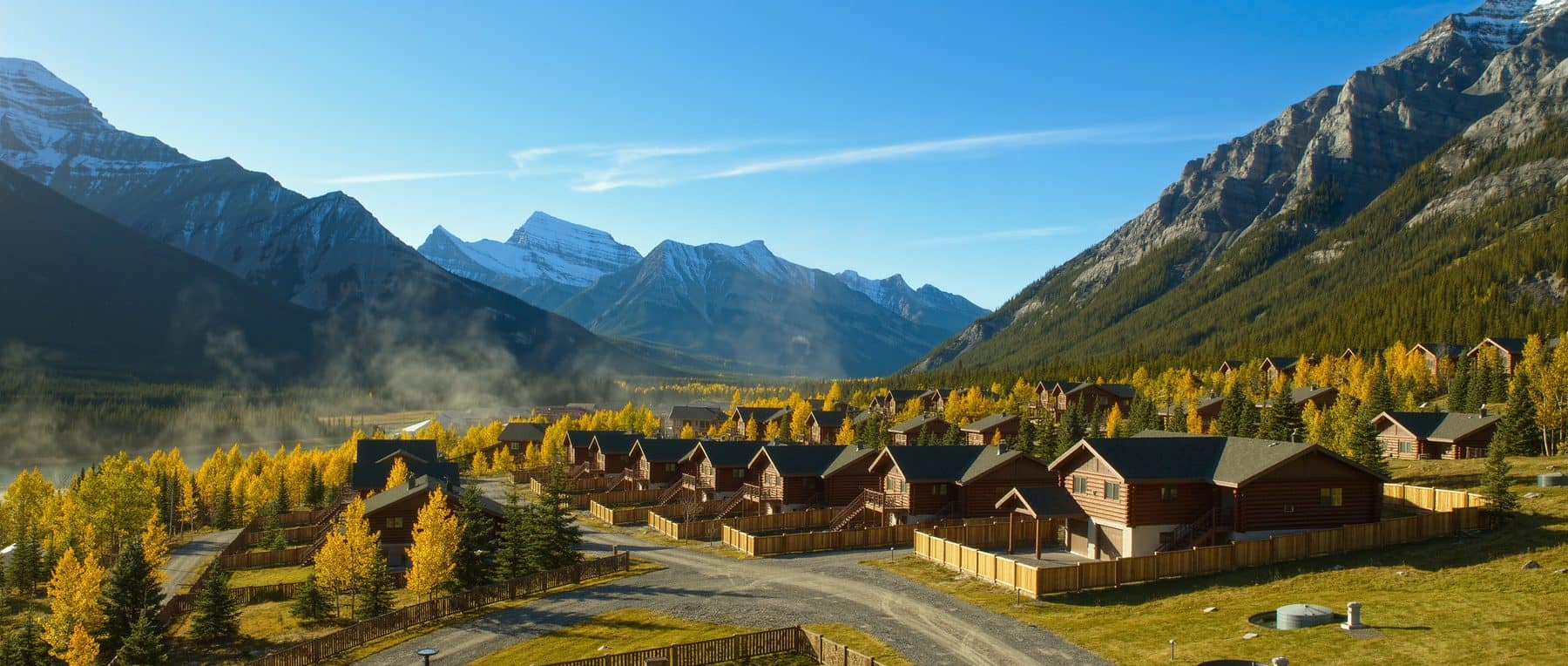
- Harvie Heights is in the MD of Bighorn, not the Town of Canmore, so Canmore's tourist-home regime and Livability Tax do not apply in either direction.
- Land Use Bylaw 10-26 replaced Bylaw 09-Z/18 on 13 July 2026, cutting 32 land use districts to 18 and adding Major Home-Based Business to Harvie Heights under a 10 per cent cap.
- Short-term rental as a listed use went to Lac des Arcs, not Harvie Heights: a discretionary use in a primary resident's single detached home, capped at 10 per cent of developed single detached dwellings.
- The hamlet's hotels and visitor accommodation sit on the highway commercial strip, which is zoned for exactly that and priced as commercial land, and a booking platform does not check zoning before it publishes anything else.
- Income Tax Act section 67.7 denies expense deductions on a non-compliant short-term rental for income earned after 2023, so a disallowed operation is taxed on gross revenue.
A Harvie Heights Airbnb is not something you can simply set up in a house you buy there. Since MD of Bighorn Land Use Bylaw 10-26 passed second and third reading on 13 July 2026, replacing Bylaw 09-Z/18, the hamlet's residential districts allow a Major Home-Based Business under a 10 per cent cap but do not list short-term rental as a use. Nightly rental went to Lac des Arcs instead. The hamlet's listings pages will show you nightly rates, photographs and availability, and none of them will tell you whether that address is allowed to take a booking at all, so here is the part nobody publishes: what is legal, what it costs to get it wrong, and where nightly rental is genuinely permitted in this corridor.
Can you run a Harvie Heights Airbnb?
No, not from a residential lot. Harvie Heights is a hamlet of the Municipal District of Bighorn, which is where the council and the land use bylaw sit, roughly five minutes west of Canmore and the last community before the Banff National Park east gate, and its permitted and discretionary uses come from the MD's Land Use Bylaw rather than from anything the Town of Canmore does. In the rewrite that took effect in July 2026, the MD chose to open Harvie Heights to major home-based businesses and to leave short-term rental out, while granting it to a neighbouring hamlet. That was a deliberate distinction, not an oversight.
This matters more than most buyers expect, because the corridor's rules differ hamlet by hamlet. The Harvie Heights area guide covers what the hamlet is like to own in; this page covers only whether a Harvie Heights Airbnb is legal on the lot you are looking at.
What MD of Bighorn Bylaw 10-26 changed on 13 July 2026
Bylaw 10-26 is a full rewrite, not an amendment. It cut the MD's land use districts from 32 to 18, and it settled the two hamlet questions that decide this page: Lac des Arcs gained short-term rental as a listed use under a 10 per cent cap, Harvie Heights gained Major Home-Based Business under a 10 per cent cap and no short-term rental at all.
The rewrite followed a review that began in early 2025 with three rounds of public engagement, went to first reading on 23 April 2026 and to a public hearing on 19 May 2026, with second and third reading on 13 July. The draft council carried into that hearing also proposed a three-stream development permit system, in which some discretionary uses would be decided by the planning and development officer rather than the Municipal Planning Commission, and lower minimum dwelling sizes: in the R-1 districts covering Harvie Heights, Lac des Arcs and Benchlands, the minimum habitable ground floor area would drop from 92 square metres to 60. Council was told at first reading that it could still change any of it, and at least one councillor asked for the density and cap numbers to be revisited before final readings.
| Provision | Harvie Heights | Lac des Arcs |
|---|---|---|
| Short-term rental in a primary resident's single detached home (adopted) | Not added | Discretionary use, capped at 10 per cent of developed single detached dwellings |
| Major home-based business (adopted) | Considered, subject to a 10 per cent cap in the hamlet | Considered, subject to a 10 per cent cap |
| Accessory dwelling unit (as drafted at first reading) | Not permitted | Permitted, maximum one per parcel |
| Minimum habitable ground floor area, R-1 (as drafted at first reading) | Reduced from 92 m² to 60 m² | Reduced from 92 m² to 60 m² |
Read the first row twice. The MD looked at nightly rental in its hamlets, wrote a cap for it, and applied that cap to Lac des Arcs. The bottom two rows are marked as drafted for a reason: they come from the version given first reading in April, and only the adopted text tells you what survived. Ask the MD's planning department for it before you build a plan on a floor area or a second dwelling.
Home-Based Business Major and the 10 per cent cap, in plain terms
A major home-based business is a business run from a dwelling at a scale beyond a home office: it can bring clients, staff or vehicles to the property, so it is assessed and permitted individually rather than assumed. The 10 per cent cap reported for each hamlet limits how many such approvals the hamlet can carry, so approval depends partly on how many others got there first. In the Lac des Arcs case, the same 10 per cent was expressed as a share of developed single detached dwellings.
What it does not do is turn a house into accommodation. A home-based business permit covers the business described in the application. Renting bedrooms or the whole house to guests by the night is a different use with its own definition, and in Harvie Heights that use is not listed. Ask the MD's planning department for the adopted wording of the home-based business regulations, including any floor-area limit on the part of the dwelling used, before you plan around it.
Two questions land immediately after that one, and both are answered in the bylaw text rather than on any website. Bed and breakfast, or renting a room while you live in the house, is usually a separate listed use in a rural Alberta land use bylaw, so ask whether it appears in the Harvie Heights districts instead of assuming the short-term rental answer covers it. And ask where Bylaw 10-26 draws the line between short-term and long-term, because that definition is what decides whether a thirty-day booking counts as tenancy or as accommodation, and it is the first workaround every owner who gets a no goes looking for.
Why Harvie Heights Airbnb listings are still live, and what that costs an owner
Because the strip that carries most of the hamlet's visitor accommodation is zoned for exactly that, and platforms do not check zoning for the rest. The highway commercial district along Harvie Heights Road was described, in the framing the MD applied when it issued the Banff Legacy Inn permit, as allowing a mix of commercial uses in a mountain-village setting primarily oriented towards short-term visitor accommodation and related services for guests visiting the area for recreation. That wording predates the 2026 rewrite, so treat it as the district's purpose as it stood in 2023 and ask the MD what carried over.
In September 2023 the Municipal Planning Commission approved a development permit in that district for the Banff Legacy Inn at 950 Harvie Heights Road: 131 short-term visitor rentals in 12 stacked-townhouse buildings, with 193 parking stalls, 180 of them underground, on a site the commission was told was vacant and neighboured by several other hotels and visitor accommodations. Those 131 units are not open. Approval was three years ago and the developer's own occupancy date has moved to 2027. When they do open, one permitted project will put 131 Harvie Heights addresses on a booking platform on its own, all of them on commercial land priced accordingly.
There is a limit on that district nobody mentions when they redirect you to it. Under the bylaw applied to the Legacy Inn permit, the district could only accommodate visitors under short-term rentals not exceeding 75 days a year, and the approved plan did not include long-term accommodation; allowing flexible accommodation, short or long, would need a change of use approved by the Municipal Planning Commission. If you are underwriting an Airbnb on the commercial strip on year-round occupancy, get the current version of that limit in writing before you sign.
The rest is simpler. A booking platform does not check a municipal land use bylaw before it publishes a listing, guest reviews are not a compliance record, and a bylaw adopted in July 2026 has barely begun to work through complaint-driven enforcement. A live Airbnb calendar tells you a property is being advertised. It tells you nothing about whether the advertising is lawful. Nor should you assume the downside is only a stop order: Canmore fines unlicensed nightly operators $2,500 and $5,000, and the MD sets its own penalties under Bylaw 10-26, so ask the planning department what its enforcement schedule actually says before you price the risk.
The most expensive mistake here is treating a seller's booking history as proof of a right. Nightly revenue attached to a non-conforming use is not an asset that comes with the title. If the MD issues a stop order after you close, the revenue stops and the price you paid for it does not come back. Ask for the development permit number. If there is not one, you are buying a house, not a business. And if the seller says they were letting the house nightly before 13 July 2026, that raises a legal non-conforming question the MD is the only body that can answer. Put it to them in writing and get the answer before you pay anything for the booking history.
Harvie Heights vs Canmore vs Lac des Arcs vs Dead Man's Flats: where nightly rental is allowed
Four jurisdictions inside twenty minutes of driving, and four different answers. Lac des Arcs is the hamlet that gained the nightly-rental use Harvie Heights did not, and a Dead Man's Flats Airbnb is genuinely permitted, at the corridor's lower entry prices.
| Where | Rule-maker | Nightly rental of a dwelling |
|---|---|---|
| Harvie Heights, residential districts | MD of Bighorn, Bylaw 10-26 | Not a listed use |
| Harvie Heights, highway commercial strip | MD of Bighorn, highway commercial district | Visitor accommodation is the district's purpose; commercial land, commercial pricing, and a 75-day annual limit as the district read in 2023 |
| Lac des Arcs | MD of Bighorn, Bylaw 10-26 | Discretionary in a primary resident's single detached home, 10 per cent cap |
| Canmore | Town of Canmore Land Use Bylaw | Only Tourist Home and Visitor Accommodation properties, one business licence per unit |
| Dead Man's Flats | MD of Bighorn, Bylaw 10-26 | Visitor-accommodation and tourist-home style stock exists in the hamlet |
Canmore's own regime is the one most buyers arrive holding: since 11 March 2025, Tourist Home is no longer a permitted use in Canmore's established residential districts, remaining permitted only in Silvertip's STR-1 and STR-2 districts and on the Three Sisters Village parcels identified in that Area Structure Plan. Existing tourist homes keep their status, and conversion to residential is one-way and fee-free to 31 December 2026. The full explanation sits in the Canmore tourist-home zoning guide and in can you Airbnb in Canmore. For the revenue side of a compliant purchase, how much a Canmore Airbnb makes has the vendor data.
What lenders and insurers do with a Harvie Heights Airbnb plan
They price the risk, or they decline it, and neither reacts well to a nightly-rental plan on a lot the bylaw does not zone for it. Short-term rental property cannot be mortgage-insured, so lenders work from their own policy: 25 to 35 per cent down is standard practice on a purchase underwritten as a nightly rental, and the CMHC Second Home product that allows as little as 5 per cent down is unavailable here because it requires owner occupancy, prohibits rental use and caps lending value at $1.5M. The Canmore short-term rental mortgage guide sets out how lenders actually treat this.
The failure mode is predictable. A buyer who cannot get a rental approval applies as a second-home purchaser, gets the better rate, then lists the property. That is a misrepresentation to the lender. The insurance side is worse: a homeowner policy written on the basis of personal use is not a commercial accommodation policy, and an insurer that discovers undisclosed paying guests after a claim has grounds to deny it. Ask your broker, in writing, whether the policy covers nightly guest occupancy before anyone books.
Tax: MD of Bighorn rates, no Canmore Livability Tax, and CRA section 67.7
Being outside Canmore genuinely helps on annual tax. The MD sets its own rates under Tax Rate Bylaw 07-26, approved 12 May 2026, keeping a non-residential to residential ratio of 3.79 to 1 with an approximate 3.6 per cent municipal increase, and taxes are due 30 June. There is no Livability Tax, no 31 December declaration and no tourist-home subclass, so a Harvie Heights second home is taxed as an ordinary residence. In Canmore, the non-primary premium runs 0.377 per cent of assessed value a year, the gap between the 2026 primary residential rate of 0.457 per cent and the non-primary rate of 0.833 per cent. Be careful how much weight you put on that comparison, though: 2026 provincial legislation exempts properties owned wholly or partly by Alberta residents regardless of use, which shrank Canmore's Livability Tax base from roughly 2,260 properties to about 819. If you live in Alberta, the premium you are avoiding by buying in the MD is already zero.
Federal tax is where a non-compliant Harvie Heights Airbnb gets punished. Income Tax Act section 67.7 denies deductions against income earned after 2023 from a non-compliant short-term rental, meaning one operated where short-term rentals are not permitted at that location, or operated without the applicable provincial and municipal registrations, licences and permits. The transition relief that treated a rental compliant by 31 December 2024 as compliant for all of 2024 applied only to that year. On a hypothetical $60,000 of nightly revenue with $45,000 of mortgage interest, utilities, cleaning and management costs, a compliant operator is taxed on $15,000 and a non-compliant one on the full $60,000. Alberta's tourism levy is also payable at 6 per cent on accommodation booked after 31 March 2026, up from 4 per cent, and online brokers must register to collect it.
What a Harvie Heights property can legally earn instead
Three things, and one of them is not money. Long-term tenancy is unrestricted, and the nearest published rent benchmark is CMHC's October 2025 Canmore survey: $1,858 for a one-bedroom, $2,438 for a two-bedroom and $3,676 for three bedrooms or more, in a market with 1.8 per cent purpose-built vacancy. A major home-based business is now available subject to that 10 per cent cap. And personal use costs you nothing extra in vacancy tax, which for an owner from outside Alberta it would in Canmore.
The demand picture behind that third option is in the census. Of the hamlet's 152 dwellings, 81 are occupied by usual residents, which leaves 71, close to half the hamlet's housing stock, as second homes, seasonal places or empty on census day. That is the reason the second-home case here holds up, and also the reason the MD's hamlet politics are unenthusiastic about adding nightly rental on top of it.
- Canmore two-bedroom rent
- $2,438
- CMHC Rental Market Survey, October 2025, nearest published benchmark to the hamlet
- Purpose-built rental vacancy
- 1.8%
- CMHC, October 2025
- Harvie Heights dwellings occupied by usual residents
- 81 of 152
- 2021 Census, Statistics Canada designated place
- Canmore non-primary tax premium avoided
- 0.377%
- of assessed value per year for a non-Albertan owner, 2026 Town of Canmore rates
That last line is the honest investor case for the hamlet: with entry prices below the Town's, where the 2025 year-end average detached sale was $2.15M, it is a cheaper place to hold a second home than Canmore, not a place to run one as a business. The long-term rental investing guide covers the tenancy route, and investment properties covers the compliant alternatives.
Due diligence before you write an offer in Harvie Heights
It all turns on one thing: what the MD will put in writing about this specific parcel. A listing description, a seller's booking history and a neighbour's opinion are not evidence of a permitted use, and the diligence below exists to get the parcel-level answer on the record before your conditions come off.
- 1Get the MD's answer in writingEmail the MD of Bighorn planning department with the legal land description and ask, in one sentence, whether short-term rental is a permitted or discretionary use on that parcel under Bylaw 10-26. A phone call is not a record.
- 2Make the offer conditional on zoning and useA zoning condition drafted by your lawyer, not a verbal assurance from a listing. If the answer comes back no, you walk without penalty.
- 3Ask for the development permit, if any use is claimedAny lawful nightly operation has a permit number. Request the permit and any conditions attached to it, and confirm they survive a change of ownership.
- 4Confirm how the parcel is serviced, and what a change of use would costHarvie Heights is on piped municipal water and wastewater, supplied under service agreements between the Town of Canmore and the MD of Bighorn. Those connections are charged for: the Banff Legacy Inn developer was assessed an estimated $1.18 million in connection fees for a 132-unit visitor accommodation. Ask the MD what the parcel is connected to, whether the connection is paid, and what any intensification of use would trigger in fees.
- 5Put the insurance question to your broker in writingAsk whether the policy covers paying guests. Get the answer before conditions come off, not after the first booking.
- 6Price the exitA district that bars nightly rental narrows the buyer pool to owner-occupiers, second-home buyers and long-term landlords. Underwrite resale against what that pool pays in the hamlet and in Canmore, where the 2025 year-end average detached sale was $2.15M, not on a revenue story.
A local REALTOR® checks one thing first on any Harvie Heights enquiry that mentions rental income: whether the address sits on the highway commercial frontage or up in the residential streets. The two look identical in a booking photo and are worlds apart in what you are allowed to do. Commercial-strip accommodation is a different asset class with different financing, different insurance and a different buyer, and it is the only Harvie Heights address where nightly guests are the point of the property. It is not unlimited either: the district as it read in 2023 capped visitor stays at 75 days a year, so ask what the current wording says before you model occupancy.
What this means if you're buying
If a Harvie Heights Airbnb is why you are looking at the hamlet, change the target rather than the plan. Buy the hamlet for what it legitimately offers, which is space, quiet, park-gate proximity and, if you are buying from outside Alberta, no Canmore vacancy tax, and treat rental revenue as long-term tenancy or nothing. If the income is the point, look at Canmore's existing tourist-home stock, Lac des Arcs under its new discretionary use, or the corridor's visitor-accommodation buildings, and run the numbers before you fall for a property. Start with the tourist homes for sale inventory, model it in the tourist-home ROI calculator, and compare the hamlets on the Bow Valley areas guide.
A local REALTOR® will confirm what a specific parcel actually permits and show you the compliant alternatives in the corridor. Free, no obligation.
Frequently asked
Can you run an Airbnb in Harvie Heights?
Not in a residential home. MD of Bighorn Land Use Bylaw 10-26, adopted 13 July 2026, did not add short-term rental to Harvie Heights. The hamlet gained Major Home-Based Business under a 10 per cent cap instead, while nightly rental as a listed use went to Lac des Arcs. Nightly accommodation in Harvie Heights belongs to the highway commercial district, which is commercial land.
Is Harvie Heights part of Canmore?
No. Harvie Heights is a hamlet of the Municipal District of Bighorn, which has its own council, land use bylaw and tax rates, about five minutes west of town. That is why Canmore rules do not reach it: no Livability Tax, no primary-residence declaration, and no tourist-home tax class. It also means Canmore's tourist-home zoning cannot be used to justify nightly rental here.
Is investing in an Airbnb in Harvie Heights worth it?
The question does not get that far, because the use is not permitted in the residential districts. An investor underwriting nightly revenue on a Harvie Heights house is underwriting a plan a development officer can stop, a lender will not finance and an insurer may not cover. If nightly income is the point, buy where it is a listed use and model it in the tourist-home ROI calculator.
Why are there still Harvie Heights properties listed on Airbnb?
Three reasons. The hamlet's hotels and lodges sit on the highway commercial strip, where visitor accommodation is exactly what the district is for. Booking platforms do not verify municipal zoning before publishing a listing anywhere else. And a bylaw adopted in July 2026 has had little time to work through complaint-driven enforcement. A live listing is not evidence that the use is lawful.
Where near Canmore can you legally rent nightly?
In Canmore itself, only Tourist Home and Visitor Accommodation properties, each needing a business licence per unit. In the MD of Bighorn, Lac des Arcs gained short-term rental as a discretionary use in a primary resident's home under Bylaw 10-26, and Dead Man's Flats has visitor-accommodation stock. See can you Airbnb in Canmore for the Town's rules.
Does the Canmore Livability Tax apply to a Harvie Heights property?
No. The Livability Tax is a Town of Canmore program applied through Canmore's own tax rates, and Harvie Heights is outside the Town. An MD of Bighorn property pays MD rates with no vacancy declaration and no higher class for a second home. For a non-Albertan owner that avoids Canmore's 0.377 per cent non-primary premium; Alberta residents are exempt from the Livability Tax anyway.
- Rocky Mountain Outlook: MD of Bighorn land use bylaw overhaul heads to public hearing (Bylaw 10-26 draft, Harvie Heights and Lac des Arcs provisions)
- Municipal District of Bighorn: Land Use Bylaw
- Municipal District of Bighorn: Harvie Heights
- Rocky Mountain Outlook (via Western Wheel): Short-term rental townhomes gets development permit in Harvie Heights
- Canada Revenue Agency: Changes to rules for eligible deductions from short-term rental income (Income Tax Act s. 67.7)
- Government of Alberta: Tourism levy
- Town of Canmore: Tourist Homes
- Statistics Canada: 2021 Census Profile, designated places in the MD of Bighorn
Keep reading

Tell us what you’re looking for and get a straight answer, usually the same day. Free, and no obligation.
Nightly rate, occupancy, management fees, tourist-home tax and financing, cash flow, cap rate and break-even in one place.
Tourist-home ROI calculator