Selling a Condo in Canmore
Selling a condo in Canmore: the documents a buyer can demand by law and what they cost, the tourist-home disclosure that changes the buyer pool, special assessments, what commission and fees run on an $814,000 unit, and how to price a condo off its own building.
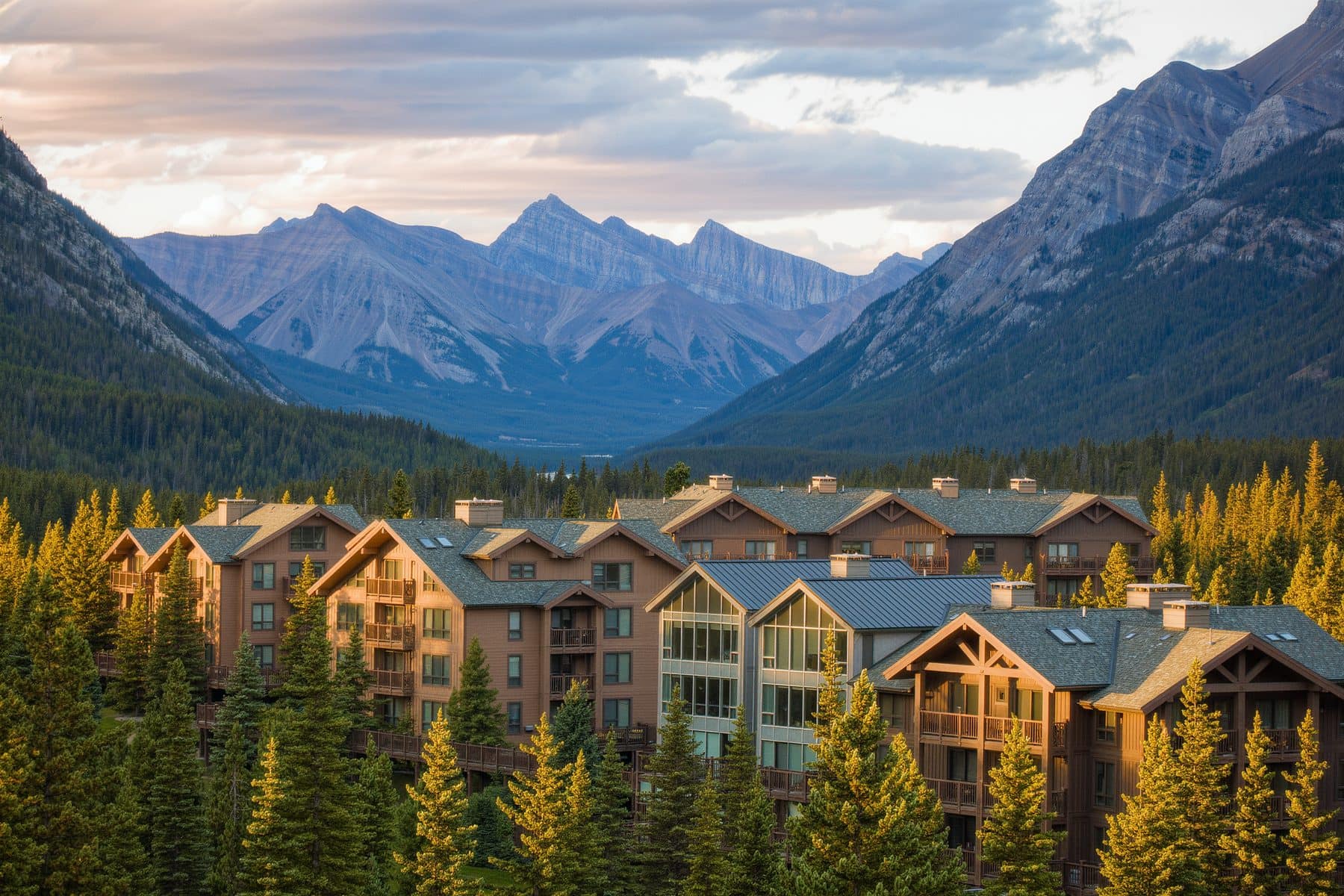
- Condos are the deepest part of the Canmore market: apartment condos averaged $814,000 across 2025, up 8%, and made up roughly 59 of the 154 to 160 listings on the portals in August 2026.
- The buyer is entitled by law to the condominium documents within 10 days of a written request. Order the estoppel certificate ($200, or $300 rushed) and the information statement ($100) before you list, not after an offer.
- The assessment class decides who can buy. A code 21 tourist home sells at a historic 20 to 30% premium but needs a buyer with 25 to 35% down; a residential unit sells to anyone, and since 11 March 2025 the two cannot be swapped in the established neighbourhoods except one way, tourist home to residential.
- Since February 2026 an insurance deductible can be charged back to a unit owner without a claim, up to $50,000 and on 90 days' written notice. A buyer's lawyer will ask whether any such notice is outstanding.
- On an $814,000 sale the usual 7% and 3% commission is $28,420 plus $1,421 GST. The legal work, mortgage discharge and adjustments add low four figures; a conventional condo unit needs no Real Property Report.
Selling a condo in Canmore is a documents sale before it is a staging sale. The unit you are selling is a small part of what the buyer is buying; the rest is a building, a budget, a reserve fund, a set of bylaws and, in this town, an assessment class that decides who is allowed to want it. Most of those are things you can have ready before the sign goes up, and the sellers who do are the ones whose deals close on the first offer. This guide runs the whole thing in the order it actually happens.
Why selling a condo in Canmore is a documents sale
Selling a condo anywhere starts with paper, and the estoppel certificate Alberta corporations issue under the Condominium Property Act is the document a buyer's lawyer will not close without: it states the unit's fee, arrears and any levy, and it binds the corporation.
Apartment condos averaged $814,000 across 2025, up 8% on 2024 (canmorealberta.com year in review), against a detached average of $2.15 million. They are the largest slice of what is for sale in any month: roughly 59 of the 154 to 160 listings on the main portals in August 2026 (REW / Realtor.ca, portal estimate). CREB® does not break Canmore inventory down by property type, but its board figures frame the whole market a condo sells into: 44 sales in September 2026 against 77 new listings, 161 active at month end and 3.66 months of supply, which is balanced rather than tight.
- Average apartment condo
- $814,000
- 2025 full year, +8% · canmorealberta.com
- Months of supply, all types
- 3.66
- September 2026 · CREB® (board)
- Active listings, all types
- 161
- September 2026 month end · CREB® (board)
- Typical days on market
- 68
- July 2026 · Wahi (portal estimate; CREB® publishes none for Canmore)
Most of what follows applies to selling a condo in Alberta anywhere, and how to sell a condo in Alberta is mostly how to sell its documents; the assessment class and the Livability Tax are the Canmore additions. Two things follow for a seller. The first is that a condo has company: whatever you list against, there are fifty-odd other units on the market and a buyer can walk. The second is that condos move fastest of any property type here when they are priced to their building, because the buyer pool under about $900,000 is the deepest in town and includes locals, Calgary second-home buyers and investors at once.
The documents the buyer can demand, and what they cost
Alberta's Condominium Property Regulation entitles a purchaser, or anyone with the owner's written consent, to a defined set of documents within 10 days of a written request, at fees the regulation caps. The practical list:
| Document | What it tells the buyer | Fee cap |
|---|---|---|
| Estoppel certificate | Your unit's monthly contribution, any arrears, any special levy passed, and the unit factor | $200, or $300 rushed inside three days |
| Information statement | Current fees, any pending legal action, any outstanding judgment, insurance in place | $100, or $150 rushed |
| Reserve fund study, plan and annual report | Whether the fund is on track for the roof, envelope and parkade, or a levy is coming | $10 each |
| Bylaws | Pets, rentals, age, use: the rules zoning does not set | $10 |
| Budget and financial statements | Whether the fees are covering costs | $10 each |
| AGM and board minutes | What owners have argued about for the last two years | $10 each, 25 cents a page past 40 in hard copy |
A reserve fund study is required at least every five years, and an alert buyer reads it before the listing photographs. Order the full set the week you decide to sell, for about $300 to $500 all in, and read it yourself first: the buyer's lawyer will, and anything in the minutes you did not know about is better found by you. The corporation has 10 days to respond, which is also 10 days a conditional offer can sit waiting if you leave it until then.
The assessment class decides who can buy your unit
This is the Canmore item, and it is the one that changes the arithmetic. Every titled dwelling on the Town's roll carries an assessment class, and for a condo it is one of three:
- Residential, taxed at 0.457% of assessed value in 2026 as a primary residence or 0.833% if it is not. Anyone can buy it, live in it or rent it long term; it cannot be rented nightly.
- Tourist Home, code 21, taxed at 0.832% all in, about 1.8 times a primary residence. It can be lived in, rented long term or rented nightly with a $150 Town business licence per unit. Historically it has sold at a 20 to 30% premium over a comparable residential unit, but the buyer pool is narrower: lenders want 25 to 35% down and treat the income as a business.
- Non-Residential Visitor Accommodation, the hotel-condo class on Bow Valley Trail and Kananaskis Way, taxed at 0.957% and not usable as anyone's residence. It sells as an investment, often inside a rental pool.
Since 11 March 2025 Tourist Home has not been a permitted use in Canmore's established residential districts, so a residential unit cannot be converted up, and a listing that hints it could is wrong. A tourist home can be converted down to residential, fee-free until 31 December 2026 and one way only. If you own a tourist home, the selling a tourist home guide covers what the designation is worth and the revenue records a buyer will ask for. If you are weighing conversion before a sale, do the sum on the premium first: giving up the designation to widen the buyer pool is a real strategy, but it is irreversible.
Buyers and their lawyers verify the assessment class on the Town's roll, not from the listing remarks. A unit marketed as "can be Airbnb'd" that turns out to be residential is a collapsed deal and, if the claim was written down, a complaint. Put the class and the business licence number, if there is one, in the marketing, and let the buyer confirm it.
The Livability Tax question a buyer will ask
From the 2026 tax year the Town charges the non-primary residential rate of 0.833% on any home that is not someone's primary residence for at least 183 days of the year, including 60 consecutive, unless an Alberta resident is on title. For a seller that produces two questions on every showing to an out-of-province buyer: what the unit's status was this year, and what the adjustment on possession day will be. Confirm whether you filed the primary residence declaration for the current year and have the tax notice to hand, because the buyer's lawyer will prorate the bill from it.
Special assessments, and the rule that changed in 2026
A special assessment is a one-off levy on every owner, by unit factor, when the reserve fund cannot cover a needed expense, and in a mountain climate the roof, the envelope and the parkade membrane are the usual causes. A buyer finds the warning signs in three places: the reserve fund study against its plan, the minutes, and the estoppel certificate, which must state any levy already passed. Disclose anything you know. A known assessment is a pricing conversation and often settles at the seller paying it on closing; a concealed one is a lawsuit after.
The rule that changed is insurance. Since February 2026 a condominium corporation can charge its insurance deductible back to the owner of the unit where a loss originated without filing a claim, up to a $50,000 ceiling, on 90 days' written notice. Ask your manager in writing whether any such notice is outstanding against your unit before you list, because the question is now standard on the buyer's side. The special assessment guide covers how levies are calculated and contested.
Pricing a condo off its building, not the town
The town-wide averages above are context, not a price. Canmore is five markets sharing a postcode, and inside the condo market the useful comparable is the last three or four sales in your own building or the near-identical building beside it, adjusted for floor, exposure and parking. A corner unit on the sunny north side of the valley and a ground-floor unit facing the parkade can sit twenty per cent apart in the same corporation. Fees matter in the same way: a buyer judges a Canmore condo fee against what it covers and how well the reserve is stocked, not against the lowest number in town, so a higher fee with a healthy reserve is not the handicap sellers assume.
The buyer pool is largely not local. About 26% of Canmore homes belong to people who do not live here full time, so a large share of your buyers are in Calgary, Vancouver or Toronto and will see the photographs before the unit. That makes the shot list, the season it is shot in, the floor plan and a video walkthrough part of the price rather than the budget, and it makes a listing that answers the three questions those buyers ask up front, class, fees, reserve, the one that gets the viewing booked around a flight.
If the question in your head is simply “what could I sell my Canmore condo for”, a free home evaluation from a local REALTOR® starts from your assessment and prices the unit against those building-level comparables. It is the right first step whether or not you then list.
What it costs, on an $814,000 unit
| Item | Typical figure | Notes |
|---|---|---|
| Commission | $28,420 + $1,421 GST | 7% on the first $100,000 and 3% on the balance, the common structure; negotiable, set by no board |
| Lawyer | Commonly about $700 to $1,000, plus GST and disbursements | Conveyancing, the discharge and the statement of adjustments |
| Mortgage discharge registration | $25 | Alberta Land Titles, Tariff of Fees Regulation s 11(5), from 1 October 2026 |
| Condominium documents | About $300 to $500 | Estoppel, information statement and the rest at the capped fees |
| Property tax and condo fee adjustments | Varies | Prorated to possession day; the Livability Tax position decides the rate used |
| Real Property Report | Not required | A conventional condo unit needs none; a bare-land condo does |
Against a sale price of $814,000 that is roughly $31,000 to $32,000 before any mortgage payout, or just under 4%. The cost of selling page runs the full itemisation and a $1.2 million example.
A resale residential condo is normally GST-exempt. A unit that was operated as a short-term rental business can be a different case under the CRA's rules on vacation properties, and the treatment depends on how it was used and registered. It is an accountant's question, and it is cheaper to ask it in the month before listing than in the week before closing.
The sequence, in order
- 1Order the documents and read themEstoppel, information statement, reserve fund study, bylaws, budget, financials, two years of minutes. Note anything a buyer will ask about and decide now how you will answer it.
- 2Confirm the class and the tax positionCheck the assessment class on the Town's roll, pull the 2026 tax notice, and confirm whether a primary residence declaration was filed for this year. If it is a tourist home, have the business licence and revenue records ready.
- 3Get the evaluationPrice against the last sales in your own building, adjusted for floor, exposure and parking. Decide whether a tourist-home premium or a residential buyer pool serves you better, and only then set the number.
- 4Market to a buyer who is not herePhotographs in the right season, a floor plan, a video walkthrough, and the class, fees and reserve position stated in the listing. Most viewings are booked around a flight.
- 5Offer, conditions, lawyer, keysA condo offer usually carries a document-review condition of a week or two; the documents you already ordered close it fast. Your lawyer handles the discharge, the adjustments and the transfer, and the selling process page runs the rest.
What this means if you are selling a condo in Canmore
Order the condominium documents the week you decide to sell and read them before anyone else does. Confirm the assessment class and your Livability Tax position, because those two facts decide which buyers can bid and at what rate the adjustments run. Price the unit off its own building, not the town average, and put the class, the fee and the reserve position in the listing so an out-of-town buyer can book a viewing with confidence. Then budget just under 4% of the price for commission, legal and registration, and let the selling guide carry you through the rest.
Selling a family house to move into a condo is its own sequence; downsizing in Canmore covers the order of work.
To see the net figure for your own unit, the sale-proceeds tool takes the price, commission, GST, legal fees, the mortgage payout and the adjustments and shows what reaches your account. Selling a condo in Canmore is a documents sale first and a pricing exercise second; have both ready before the photographs.
A free evaluation from a licensed Bow Valley REALTOR®, built on the last sales in your own building rather than a town-wide average. No obligation, and no listing agreement to sign to get it.
Frequently asked
What documents do I need to sell a condo in Canmore?
The set Alberta's Condominium Property Regulation entitles a buyer to within 10 days of a written request: the estoppel certificate, the information statement, bylaws, the current budget, the most recent financial statements, the reserve fund study and plan, insurance certificate, and the minutes of the last annual general meeting and board meetings. On top of that a Canmore buyer will ask for the assessment class and, if the unit is a tourist home, the Town business licence and any rental-pool or management agreement.
How much does it cost to sell a condo in Canmore?
Commission is the big line: on an $814,000 sale the common 7% on the first $100,000 and 3% on the balance comes to $28,420, plus $1,421 GST, split between the listing and buying brokerages. Then the lawyer, commonly about $700 to $1,000 plus GST and disbursements, sometimes more for a condo file, the Land Titles discharge of your mortgage at $25, the condo documents at roughly $300 all in, and adjustments for the year's property tax and condo fees. The cost of selling page itemises each.
Can I sell my Canmore condo as a tourist home if it is zoned residential?
No. Since 11 March 2025 Tourist Home has not been a permitted use in Canmore's established residential districts, so a residential unit cannot be marketed or sold as a nightly rental there, and a listing that promises it can be is wrong. The use survives only in Silvertip's STR-1 and STR-2 districts and on the Three Sisters Village parcels named in that plan. A unit that already carries the designation keeps it, and can be sold with it.
Do I need a Real Property Report to sell a condo?
Not for a conventional condominium unit, where the condominium plan and the estoppel certificate do the job a RPR explained does for a house. A bare-land condominium, where you own the lot under the unit, is treated like a house and will need a current RPR with the Town's stamp of compliance. Your lawyer will tell you which kind you own from the title.
What if the building has a special assessment coming?
Disclose it, because the buyer will find it. The reserve fund study shows whether the fund is tracking its plan, the minutes record any discussion of major work, and the estoppel certificate states any levy already passed. Since February 2026 corporations can also charge an insurance deductible back to a unit owner on 90 days' notice, up to $50,000, so ask the manager whether any notice is outstanding. A known assessment is a pricing conversation; a concealed one is a lawsuit.
- Government of Alberta: Condominium documents for owners, mortgagees and prospective purchasers (2026)
- Government of Alberta: Reserve funds: Condominium Property Act
- Government of Alberta: Supporting Alberta's condominium communities (deductible chargebacks, in force February 2026)
- Town of Canmore: Tax Rates 2026
- Town of Canmore: Tourist homes
- Town of Canmore: Business licences
- CREB®: Monthly Statistics Package, September 2026 (Canmore, page 12)
- canmorealberta.com: Canmore real estate 2025: a return to balance
- Wahi: Canmore housing market report (July 2026)
- Alberta: Tariff of Fees Regulation, AR 120/2000 (current as of 1 October 2026)
Keep reading
 SellingSelling a House in Canmore10 min read
 CalculatorCanmore Property Assessment Lookup and Free Home Evaluation
 SellingCost to Sell a House in Canmore: What It Actually Adds Up To9 min read
 SellingSelling a Tourist Home in Canmore8 min read
 Buyer guideBuying a Condo in Canmore10 min read
 Taxes & rulesCanmore Condo Fees: What Is Normal and What They Cover8 min read
 Property guidesSpecial Assessment on a Condo in Alberta: What Canmore Buyers Must Check12 min read
 Building profileCanmore Condo Buildings, Compared10 min read

A human evaluation from a licensed Bow Valley REALTOR®, built on real comparable sales, not an algorithm.